


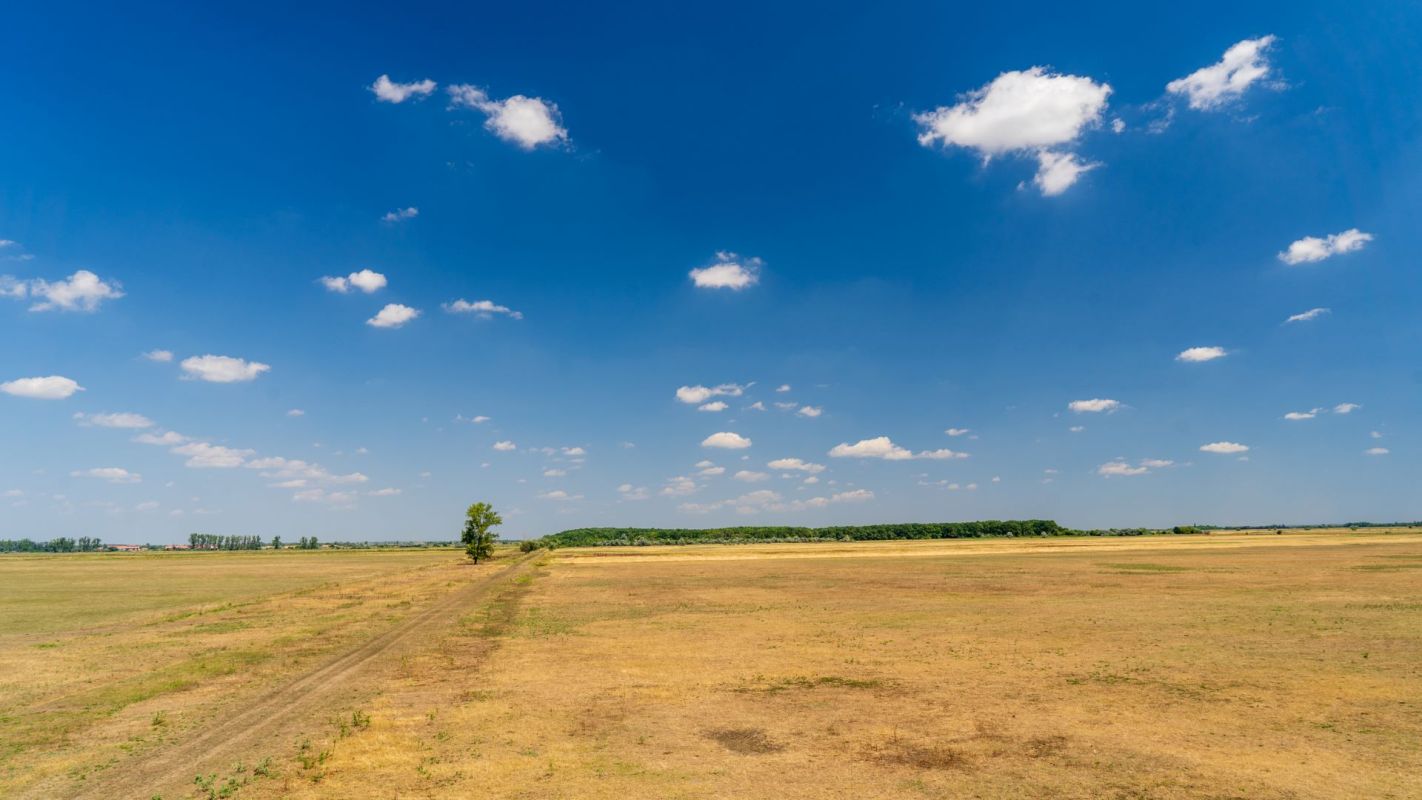
As climate irresponsibility and unsustainable global practices dry out the ecosystem of the Great Hungarian Plain, local farmers have been forced to take unexpected measures to protect their homes and their livelihoods.
What's happening?
Also known as the Homokhátság, the Great Hungarian Plain — a 20,000-square-mile region spanning the south of Hungary — has been suffering accelerated desertification in recent years, owing to poor water management and the broader impacts of a shifting climate.
"It's getting worse year after year," local farmer and landowner Oszkár Nagyapáti told the Associated Press.
Historically, the area would experience periodic flooding from the nearby Danube and Tisza Rivers, but today's Plain-dwellers have reported that the land is dry and cracked, with the region riddled by frequent drought.
Farmers who rely financially on the Plain's crop production have taken a major hit — as has Hungary's agricultural economic sector — now that the land has become virtually unlivable for many plants and animals.
Why is desertification alarming?
Hungary is far from the only region in the world to experience desertification. In late 2024, the United Nations reported that three-quarters of Earth's land has grown drier in some capacity over the past 30 years — in many cases, irreversibly so.
What we're seeing in Europe, Africa, Asia, and the Americas is the outcome of deeply ingrained poor environmental hygiene. Most of us contribute to the world's total carbon pollution without even thinking about it, from the vehicles we drive to the electricity we consume, and even the food we purchase.
Carbon pollution traps heat within the atmosphere and drives up temperatures. This leads to increasing evaporation and lowering humidity, which supercharges dangerous natural disasters like droughts and wildfires. These extreme weather events speed up the degradation and desertification of much of the planet.
"There was a point when I felt that enough is enough," continued Nagyapáti. "We really have to put an end to this."
What's being done about the Great Hungarian Plain?
After a 2017 study ascribed the critical state of the Great Hungarian Plain to "climatic changes, improper land use and inappropriate environmental management," a local volunteer team of "water guardians" — including Nagyapáti himself — has taken decisive action, using thermal water to help revive the land.
TCD Picks » Quince Spotlight
💡These best-sellers from Quince deliver affordable, sustainable luxury for all




|
How often do you worry about the quality of your drinking water? Click your choice to see results and speak your mind. |
 Never 👎
 These volunteers have worked to redirect the surplus and wastewater of a local thermal spa — which draws its thermal water from deep underground — onto the barren plain, mimicking the former flooding periods that the region experienced.
In addition, these water guardians hope that repeated exposure to scarce water will cultivate a microclimate similar to the area's natural climate by gradually putting humidity into the atmosphere.
Higher humidity may help keep temperatures lower and add moisture to overdried storm fronts, promoting a healthier and more fertile ecosystem that resembles what the Plain used to be.
Now that the water guardians have achieved some success in their flooding attempts, the group has expanded its membership and drawn the attention of Hungarian Prime Minister Viktor Orbán, who established a "drought task force" in 2025 to support the restoration.

Get TCD's free newsletters for easy tips to save more, waste less, and make smarter choices — and earn up to $5,000 toward clean upgrades in TCD's exclusive Rewards Club.
Cool Picks






