


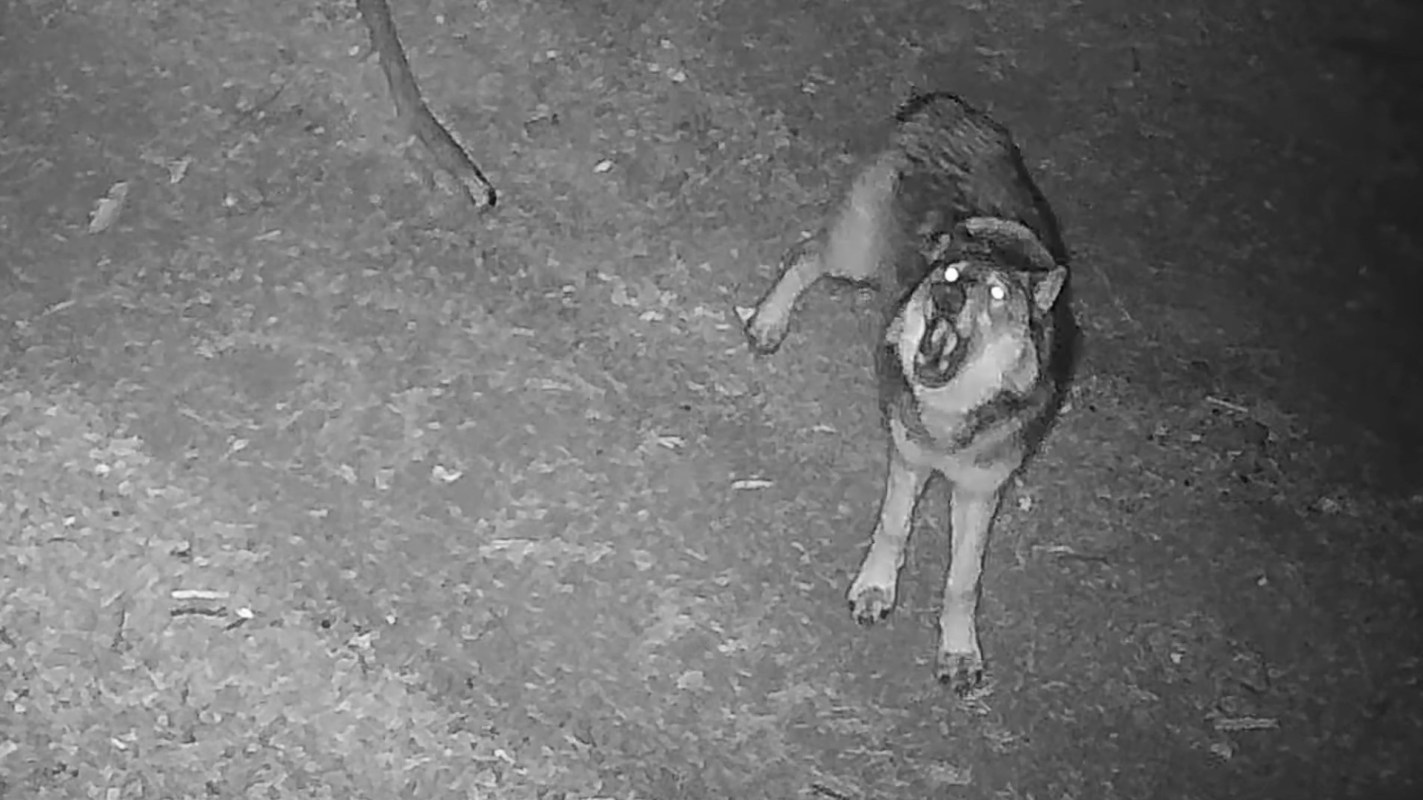
A 3-year-old gray wolf known as BEY03F has reportedly become the first documented wolf in Sequoia National Park in more than a century, according to the Los Angeles Times. The sighting marks another milestone in the species' comeback across the state.
Wildlife officials tracked the black-furred wolf south of Mt. Whitney on Sunday morning after she traversed terrain topping 13,000 feet.
"She did some hiking," Axel Hunnicutt, gray wolf coordinator for the California Department of Fish and Wildlife, told the LA Times.
BEY03F has already made history more than once. She also became the first wolf documented in Los Angeles County and the first known wolf in Inyo County in about a century in both places.
Officials believe her long journey is part of her process of searching for a mate and a territory of her own.
Gray wolves were wiped out in California by the 1920s, and their return has been slow and hard-won. The famous wolf OR-7 helped signal that comeback when he crossed into California from Oregon in 2011.
TCD Picks » Quince Spotlight
💡These best-sellers from Quince deliver affordable, sustainable luxury for all




Since then, the recovery has continued, and the state's first modern pack was established in 2015, according to the LA Times. By the end of last year, the statewide total had reached at least 55 wolves — roughly 10% more than the year before.
This return can be a very good thing for the environment. Wolves are apex predators, which means they help keep ecosystems in balance by influencing prey behavior and population levels. Healthier predator-prey dynamics can support stronger plant communities, improve habitat conditions for other wildlife, and contribute to more resilient landscapes, like in Yellowstone National Park.
That can matter for people, too. Thriving ecosystems support cleaner water, healthier forests, and richer biodiversity in public lands.
There are still real challenges. As the LA Times noted, wildlife advocates and ranchers alike know that wolves can come into conflict with livestock. State data shows vehicle strikes remain the leading known cause of wolf deaths in California. But for many conservationists, BEY03F's survival through hundreds of miles of travel is encouraging evidence that the species is reestablishing itself.
"Her travel patterns continue to demonstrate the unpredictable movements of a dispersing wolf seeking a mate and territory of its own," John Marchwick of California Wolf Watch said in a statement, according to the LA Times.
Amaroq Weiss, senior wolf advocate with the Center for Biological Diversity, said it is reassuring that BEY03F is "still alive and well" after such a long trek. And if a member of the public is lucky enough to spot a wolf in the wild, Weiss offered simple advice: wave your arms, yell and haze it away, do not feed it, and appreciate the moment.
"If you're lucky enough to see a wolf in the wild and you have your camera — I guess, your iPhone — with you, take a picture," Weiss said. "But the alternative to that is don't take a picture. Just soak in that moment."

Get TCD's free newsletters for easy tips, smart advice, and a chance to earn $5,000 toward home upgrades. To see more stories like this one, change your Google preferences here.







