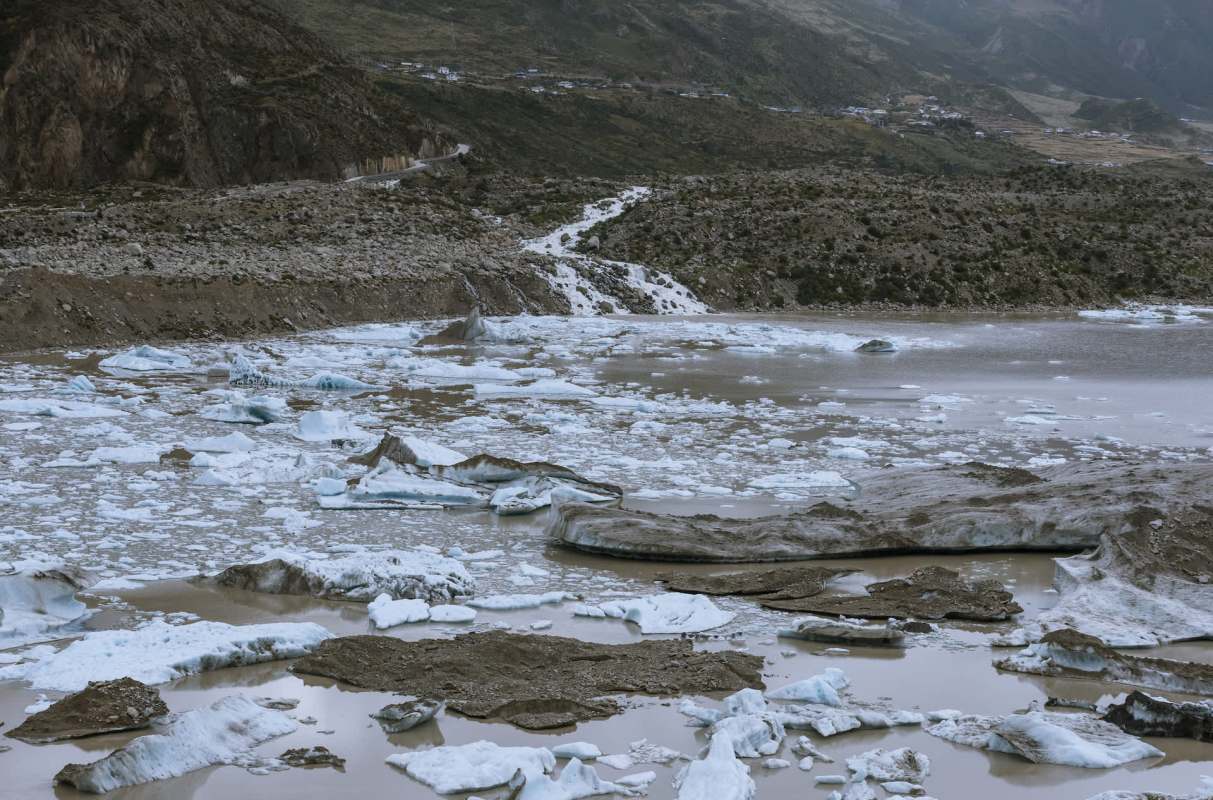
Following a deadly disaster earlier this summer caused by glacial melt, officials from China and Nepal have agreed to collaborate on combating the issue and potentially saving lives.
What's happening?
In July, a lake that had formed on top of a melting mountain glacier burst, causing massive flooding of the Bhote Koshi River in China and Nepal. At least 11 people died in each country, and 18 people remain missing in Nepal.
In the wake of that tragedy, Climate Home News reports, the Chinese and Nepalese governments have agreed to share information about such glacial lake bursts across the Himalayas.
Previously, there had not been much communication between the countries regarding warming global temperatures and their side effects, such as melting glaciers. But since the agreement, China has provided its glacial-lake information to Nepalese counterparts, which keeps officials hopeful that they can work together to avoid similar tragedies in the future.
"There is a need for proper monitoring," Himalayan glaciologist Mohan Bahadur Chand told Climate Home News. "If we can ensure effective monitoring, we can save human lives."
Why are glacial lake bursts important?
July's tragedy is one of the many consequences that can occur from melting glaciers, which is itself one of the many consequences of rising global temperatures.
TCD Picks » Quince Spotlight
💡These best-sellers from Quince deliver affordable, sustainable luxury for all




As humans burn more fossil fuels, the toxic pollution that is created traps heat within our atmosphere, causing the planet to reach record-breaking average temperatures. And as the planet gets warmer, not only do glaciers and ice caps melt more quickly, but other extreme weather events happen with more frequency or severity.
One study from earlier this year found that Himalayan glacier melt has caused local bodies of water to expand by 11% since 2011. These bodies of water are similar to the one that burst and flooded the Bhote Koshi River.
Another study showed that parts of Nepal now see more frequent and extreme rainfall events, making it more prone to potentially devastating landslides.
What's being done about glacial lake bursts?
Nepal has adopted early warning systems that have proven effective. In July's Bhote Koshi River disaster, Nepalese officials told Climate Home News that the warnings they received an hour before the floods hit Nepal gave them time to deploy forces, potentially saving hundreds of lives.
|
How often do you worry about the quality of your drinking water? Click your choice to see results and speak your mind. |
 Never 👎
 But although such warning systems are crucial, they also don't address the core problem of slowing the rate at which glaciers melt.
While that may seem like a daunting task, there are actions we all can take to make it a reality. By reducing our reliance on plastic or buying secondhand clothing from thrift stores, we can lower the amount of manufacturing-based pollution that is created, which can help keep our planet a little bit cooler.

Join our free newsletter for good news and useful tips, and don't miss this cool list of easy ways to help yourself while helping the planet.