


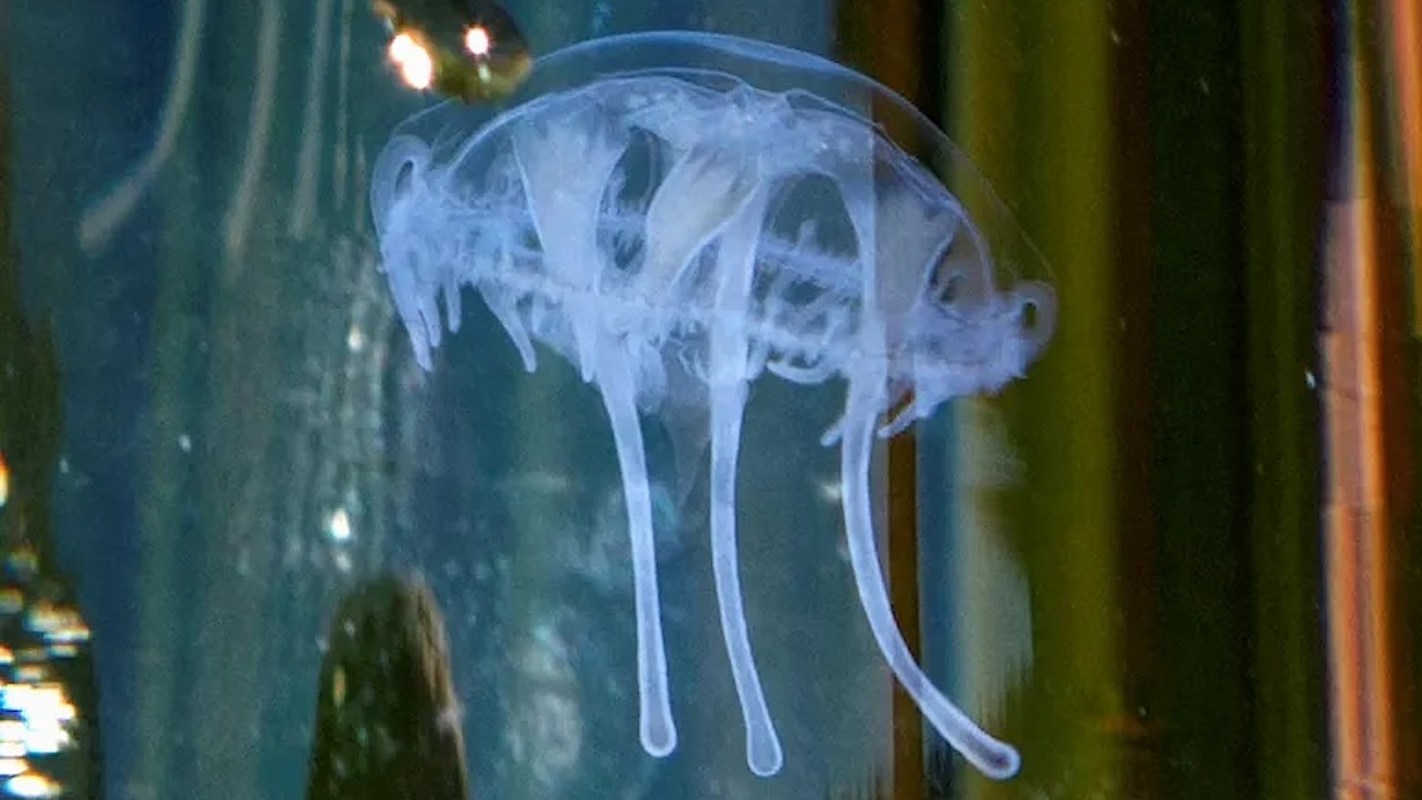
One of the world's most widespread invasive species may be going largely unnoticed for a simple reason: Most people have no idea it exists.
According to a report from the HUN-REN Centre for Ecological Research, a new study found that the freshwater jellyfish Craspedacusta sowerbii — an "alien species" now found on six continents — remains unfamiliar to the public, even in places where scientists have documented it for years. Researchers say that a lack of awareness could make it harder for communities to spot ecological changes early and support policies that protect local waterways.
"This unnoticed invader remains largely unknown to the public, a factor that researchers say may be hindering the development of early warning systems and effective environmental policy," the report explained.
What's happening?
The research published in People and Nature looked at how people across Europe perceive Craspedacusta sowerbii, a freshwater jellyfish thought to be native to China's Yangtze River basin.
Phys.org noted it was first reported beyond its native range in 1880, in an ornamental pond in London. Since then, it has spread widely across Europe, showing up in countries ranging from Spain and Italy to Finland and Russia.
To understand how well the public recognizes it, researchers carried out a 22-month multilingual survey across 17 European countries, gathering 1,388 responses.
TCD Picks » Quince Spotlight
💡These best-sellers from Quince deliver affordable, sustainable luxury for all




The findings revealed a major awareness gap — over 80% of respondents could not name the species scientifically, and just 10% identified it as C. sowerbii.
Nearly half of the respondents also claimed they had seen the species in the ocean waters, despite the fact that Craspedacusta sowerbii lives only in freshwater. Researchers said that misunderstanding likely reflects the outsized attention marine jellyfish receive.
Even so, people who had encountered it often described it in positive terms, using words such as "beautiful," "sublime," and "delicate." But when large blooms appeared at once — something that can happen suddenly during warm summer months — many respondents said they felt uneasy or cautious.
The study also found that the jellyfish is not generally viewed as a major physical threat. While 8% of respondents reported stings, most of those people felt no pain, and severe pain was extremely rare.
Why is Craspedacusta sowerbii important?
The main concern is not that this jellyfish poses a serious danger to people. It's that an invasive species can spread quietly through lakes without attracting much public attention.
Researchers said the jellyfish may compete with fish larvae for food, meaning it could alter freshwater food webs in ways scientists are still working to understand.
That matters because early detection is one of the most effective ways to limit ecological disruption. If residents, anglers, swimmers, and local officials do not recognize what they are seeing, it becomes much harder to build dependable monitoring systems or develop effective environmental policy.
Rising global temperatures could also help it spread further by making it easier for the animal to grow quickly past its microscopic phase of life.
For communities, that creates a significant blind spot. Freshwater ecosystems support recreation, local economies, biodiversity, and, in some cases, drinking water supplies. When low-visibility invaders go unnoticed, ecological changes can build gradually until they become far more difficult to manage.
What's being done about Craspedacusta sowerbii?
Researchers are calling on authorities and NGOs to treat low-visibility invasive species as a higher priority.
Rather than relying mostly on technical information, they say public outreach should focus more on visual education, field experiences, and citizen science efforts that help people recognize unusual species in local waters.
That could make a meaningful difference. If more residents know what freshwater jellyfish look like and where they belong, sightings can be reported sooner and tracked more accurately. Those reports could help fill important data gaps and give scientists and water managers a clearer understanding of how ecosystems are changing.
Not every harmful invader is large, obvious, or already well known. Paying closer attention to the species most people overlook could help communities respond sooner and protect freshwater ecosystems before quiet changes turn into bigger problems.

Get TCD's free newsletters for easy tips, smart advice, and a chance to earn $5,000 toward home upgrades. To see more stories like this one, change your Google preferences here.







