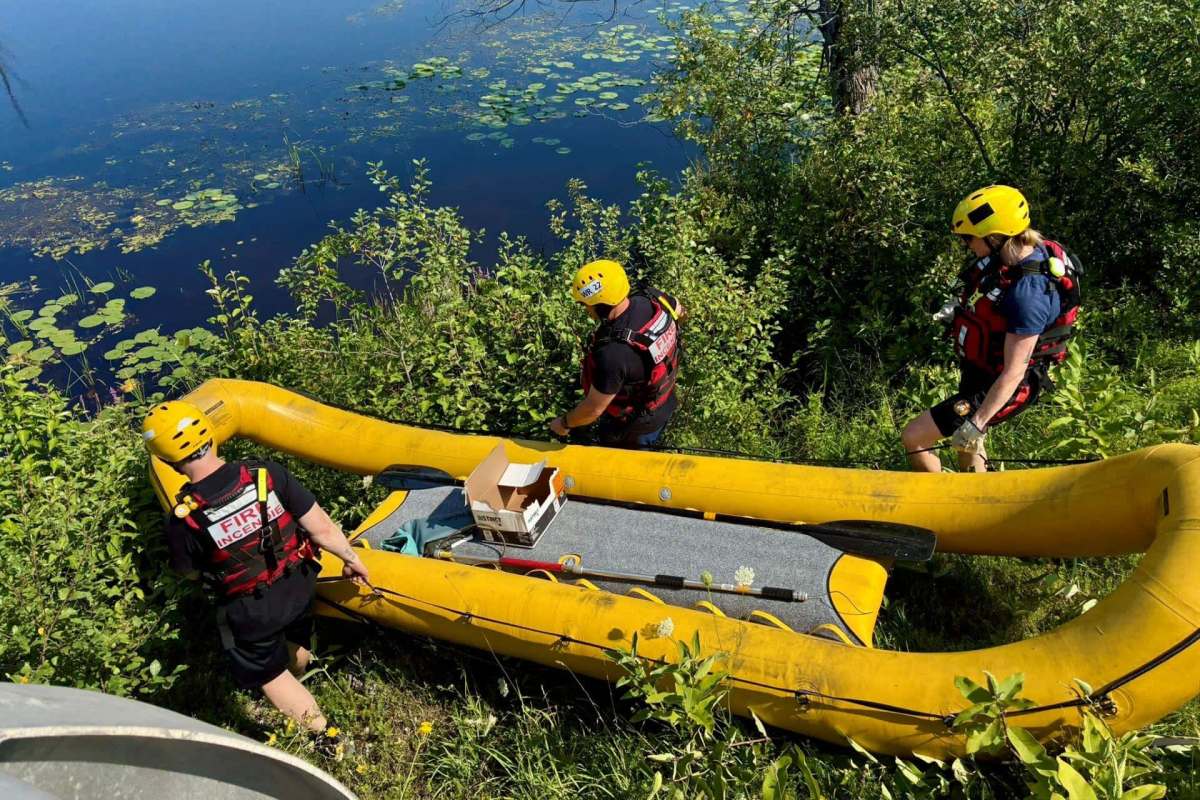
Firefighters in Ottawa, Canada, used a rescue boat for an unexpected mission: reaching a trapped bird.
The bird, a belted kingfisher, was suspended above the water after becoming caught in fishing line.
What happened?
CityNews reported that the rescue began after a resident spotted a belted kingfisher stuck in a tree over the water, and police then contacted firefighters.
Responders from Ottawa Fire Service's Station 22 headed to the scene in an inflatable boat. Working from the water, they used a tool to bring the part of the tree where the bird was within reach and cut away the fishing line.
After the bird was freed, firefighters wrapped it in a blanket and placed it in a box. The outlet also reported that the resident who had alerted authorities had already arranged to take the kingfisher to a wild bird center for assessment.
Ottawa firefighters called the incident "unique" in a post on social platform X detailing the rescue, though bird rescues are not new for the service. CityNews previously reported that crews in Orleans helped return a baby bird to its nest in July 2025, and that firefighters also assisted a woman in 2025 when an owl became stuck in her truck grille.
TCD Picks » Quince Spotlight
💡These best-sellers from Quince deliver affordable, sustainable luxury for all




A unique rescue yesterday for one of our Water Rescue Teams.
— Ottawa Fire Services (@OttFire) August 5, 2026
At approximately 14:09 yesterday afternoon, our partners from @OttawaPolice were contacted by a concerned citizen who came across a bird trapped in fishing line in a tree in the 900 block of Vances Side Road in… pic.twitter.com/SjlF2YWFxV
Why does it matter?
Discarded fishing line can be especially dangerous because it is strong, thin, and often hard for animals — and people — to see. Near rivers, lakes, and shorelines, birds can become trapped in trees, branches, or debris while hunting, landing, or gathering nesting material.
For a bird hanging above the water, the danger can escalate quickly. Entanglement can lead to exhaustion, cuts, feather damage, broken limbs, or drowning if the animal cannot free itself.
What's being done?
Ottawa's response brought together several parts of a wildlife rescue chain: a resident who reported the problem, police who relayed the call, firefighters with water-rescue equipment, and a bird rehabilitation center prepared to assess the animal afterward.
Freeing an animal is often only the first step. Even when a bird appears stable, it may still be suffering from stress, dehydration, or injuries that are not immediately visible in the field.
People can help reduce these risks by collecting all fishing line, hooks, and tackle before leaving shorelines or docks. In areas where recycling bins for fishing line are available, using them can help keep harmful waste out of waterways.
If someone spots trapped or injured wildlife, experts generally advise keeping a safe distance and contacting local animal rescue groups, wildlife rehabilitators, or emergency services when water, traffic, or other immediate dangers are involved.
"Thank you so much for all the wonderful rescues and for all you do in the community," one commenter wrote on the department's post.

Get TCD's free newsletters for easy tips, smart advice, and a chance to earn $5,000 toward home upgrades. To see more stories like this one, change your Google preferences here.