


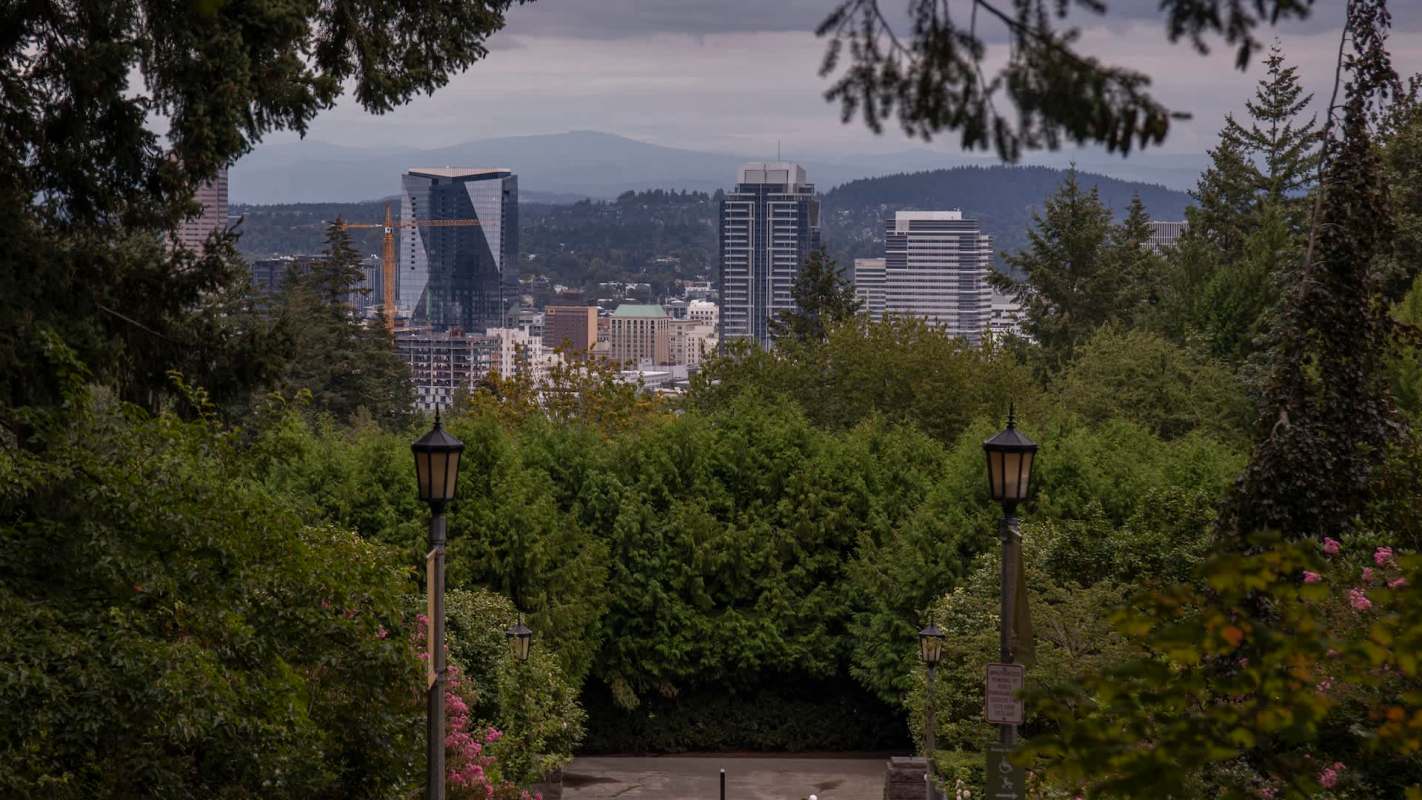
A warm winter so far in the western U.S. is raising concerns about this year's fire season. Portland just had its warmest December on record, and January is also starting off well above normal.
According to OregonLive, warm weather this week should push snow levels to around 8,000 feet in the Cascades of Oregon. The mild pattern is taking its toll on the region's snowpack, which is already running below normal.
If things don't change, there could be significant impacts on the water supply and wildfire risk across several western states. There were signs of trouble already at the onset of winter when snowfall across the western U.S. was at its lowest level in decades.
"We won't know how bad those conditions are until we're there, unfortunately," Portland National Weather Service Office meteorologist Adam Batz told OregonLive. "But generally, a better snowpack means that our odds would be better to not have as bad of a fire season."
Portland has had an unusually warm winter so far.
OregonLive reported that Portland's average temperature of 47.4 F in December was almost 6 degrees above average. That temperature is closer to what the city normally sees in March than to what it sees typically in December. Through this past Monday, 11 of the first 12 days of January have been above average.
Portland isn't alone. Climate Central posted on X that Fort Collins, Colorado, also had its warmest December on record. The high hit 70 degrees on three days during the month to set a new record. The city saw above-normal temperatures on 26 of 31 days in December.
"The West is on pace to experience one of the warmest winters on record," according to Climate Central researchers.
The contiguous U.S. had its fourth-warmest year in 2025 out of the 131 years records have been kept, according to the latest national climate report released by the National Center for Environmental Information.
"Temperatures were above average nationwide, with the most pronounced warmth across the western third of the country," noted the authors of the report. "Averaged across the entire region from the West Coast through the Rocky Mountains, this area recorded its warmest annual temperature on record."
TCD Picks » Quince Spotlight
💡These best-sellers from Quince deliver affordable, sustainable luxury for all




|
How often do you worry about air pollution where you live? Click your choice to see results and speak your mind. |
 Always 😷
 Relatively warm weather is expected to continue in the western U.S. this week. Much of the region expected to see afternoon temperatures around five to 15 degrees or more above average through the weekend.
The warm forecast for the West will mean a shrinking snowpack that is already running well below average. As of this past Sunday, the total snow cover in the western U.S. was less than half the median observed for the date based on 2001 to 2025 climate data, according to the National Snow and Ice Data Center.
Rising temperatures are raising the risk of wildfires in the western U.S.
"Wildfire seasons are lengthening and intensifying, particularly in the western U.S.," said researchers with Climate Central. "Parts of the eastern U.S. have seen smaller but impactful increases in fire weather days."
If snowfall doesn't pick up before spring, the upcoming fire season could be even more challenging than normal. Batz has hope things could change late this winter.
"It's not impossible that we go into an active pattern towards the end of this month into February," Batz added. "There's plenty of time for some winter stuff."

Get TCD's free newsletters for easy tips to save more, waste less, and make smarter choices — and earn up to $5,000 toward clean upgrades in TCD's exclusive Rewards Club.
Cool Picks






