


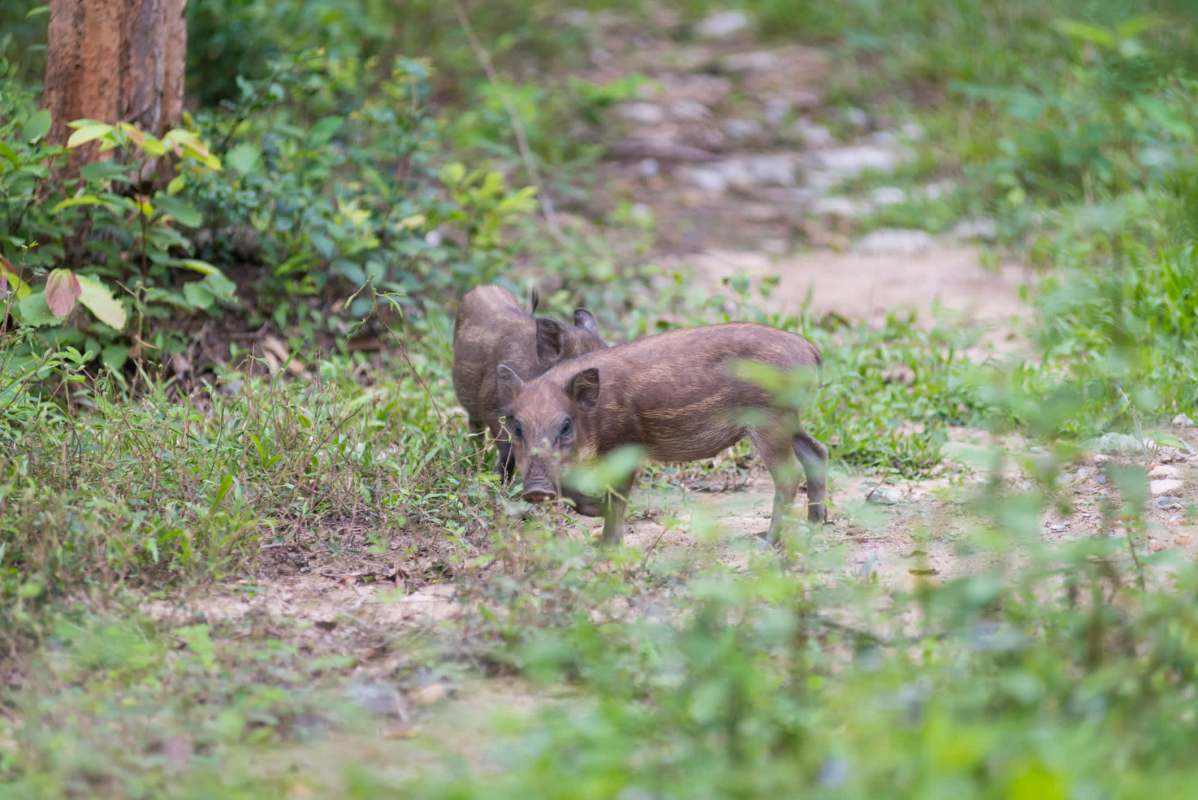
Two state parks in Missouri were temporarily closed this month, according to KSDK.
In that time, conservationists worked hard not to save wildlife, but to eliminate as many of one unbelievably destructive species as they could manage.
What's happening?
Social media users might recall a brief but omnipresent meme from 2019: "30-50 feral hogs."
The phrase was popularized after singer Jason Isbell questioned the necessity of assault weapons, and a Twitter user asserted that feral hogs were a reason, saying, "Legit question for rural Americans – How do I kill the 30-50 feral hogs that run into my yard within 3-5 mins while my small kids play?"
Although the meme entertained users who found the claim outlandish, recent efforts to eliminate feral hogs in Missouri evidenced just how serious a threat they pose.
The United States Department of Agriculture's Animal and Plant Health Inspection Service (APHIS) joined forces with the Missouri Feral Hog Elimination Partnership for a sweeping aerial mission to target and destroy feral hogs at Johnson Shut-Ins and Taum Sauk Mountain state parks, according to KSDK.
"Historically, aerial wildlife management activities occur less frequently in the Eastern Region, but are expected to become more frequent due to increased damage being caused by feral swine," APHIS disclosed in a bulletin updated on Nov. 17.
Why are feral hogs so concerning?
As explained by the USDA's "Feral Swine Bomb" page, pigs are not native to North America, nor are feral swine.
In the late 1800s, demand for sport hunting drove the import of wild boar from Russia and Eurasia, and while the animals were initially kept in fenced areas, many escaped and "interbred with existing feral swine."
Although the USDA noted that feral hogs are technically the same species as domesticated pigs, there's no question that the feral variety is an invasive species.
TCD Picks » Quince Spotlight
💡These best-sellers from Quince deliver affordable, sustainable luxury for all




Non-native species are not inherently invasive; tomatoes, bell peppers, and cows were all introduced to North America without incident, according to the National Park Service.
Invasive species are markedly different than plants or wildlife that harmlessly integrate into new habitats.
Whether plant or animal, they share several distinct characteristics: they reproduce quickly, lack natural predators to keep their populations in check, and outcompete their native counterparts for vital resources like food, water, sunlight, and habitat.
Invasive species are also costly and destructive, and feral hogs are arguably the worst offenders in that regard. They've been repeatedly characterized as the "most destructive and dangerous invasive species in the United States."
According to the USDA, feral hogs cause $2.5 billion in agricultural damages alone each year, primarily through aggressive rooting, killing "desirable pasture species," leveling crops, and contaminating waterways.
In addition to the havoc they wreak on land, feral hogs degrade water quality, leading to devastating outcomes such as harmful algal blooms.
APHIS warned that feral hogs are prolific vectors of disease for pets, livestock, and humans, and they're prone to attacking people.
What's being done about it?
As KSDK noted, ongoing elimination efforts appear to have gradually reduced the population.
Eating invasive species is an increasingly popular approach, but APHIS cautioned hunters to cook feral hog meat to a safe temperature of 160 degrees Fahrenheit.

Get TCD's free newsletters for easy tips to save more, waste less, and make smarter choices — and earn up to $5,000 toward clean upgrades in TCD's exclusive Rewards Club.
Cool Picks






