


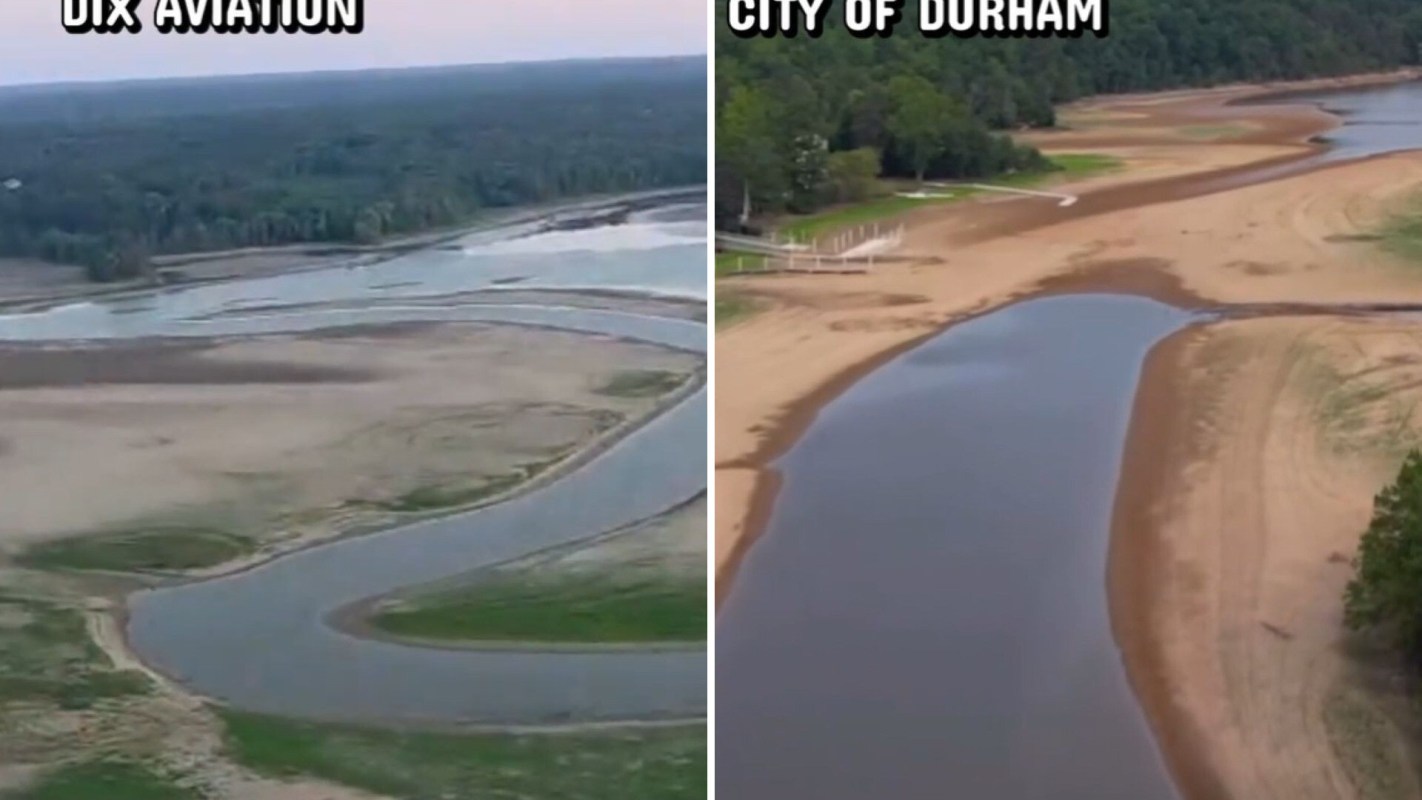
A video making the rounds on social media is offering a vivid view of how intense dry conditions have become in parts of North Carolina, using aerial footage that reveals two major lakes pulled far back from their usual shorelines.
What's happening?
The post from content creator and meteorologist Matthew Huddleston (@meteorologistmatthew) centers on Falls Lake and Lake Michie.
"Worsening drought has resulted in very low water levels for several central North Carolina Lakes," Huddleston explains in the caption.
@meteorologistmatthew Worsening drought has resulted in very low water levels for several central North Carolina Lakes. Here's an aerial view of Falls Lake, courtesy of Dix Aviation, and Lake Michie, courtesy the City of Durham. #drought #rain #dry #lake #nc ♬ original sound - Matthew Huddleston WX
From above, the water loss is clear, with the shoreline pushed outward and parts of the reservoirs looking almost unrecognizable due to the lack of water.
Credit for the aerial views of Falls Lake and Lake Michie goes to Dix Aviation and the City of Durham, respectively.
Why does it matter?
Falls Lake and Lake Michie are more than scenic destinations. Reservoirs like these help meet drinking water needs, support recreation and local businesses, and sustain surrounding ecosystems.
TCD Picks » Quince Spotlight
💡These best-sellers from Quince deliver affordable, sustainable luxury for all




Some of North Carolina is currently experiencing "exceptional drought" conditions, with over a third in the next, slightly less severe category of "extreme drought."
When water levels drop too low, communities can feel the effects in several ways, from water-use concerns to reduced boating access to increased stress on fish and wildlife.
Worsening extreme weather disasters threaten lives and livelihoods by disrupting the basic systems people rely on each day. Drought can strain water supplies, hurt farms and outdoor industries, raise household costs, and increase wildfire risk.
Scientists have long warned that a warming climate can intensify weather extremes, including longer dry spells and more erratic rainfall. Meanwhile, experts across sectors have shown that drying bodies of water can point to broader risks to public safety and economic stability.
What are people saying?
The comments reflected surprise at what viewers were seeing and offered theories for what might be behind the drain and drought.
"I've lived in NC for 20 years, and Falls Lake never looked like this," one commenter wrote.
Several commenters pointed to data centers as a potential driver, with one saying the facilities were "draining [lakes] dry" and others saying this was evidence of the facilities "at work."
Other commenters pushed back, noting that the drought has been going on for almost a year.
"Are data centers bad for the environment?" one posed. "Absolutely! But we have been in a drought since at least August of 2025 based on rainfall."

Get TCD's free newsletters for easy tips, smart advice, and a chance to earn $5,000 toward home upgrades. To see more stories like this one, change your Google preferences here.







