


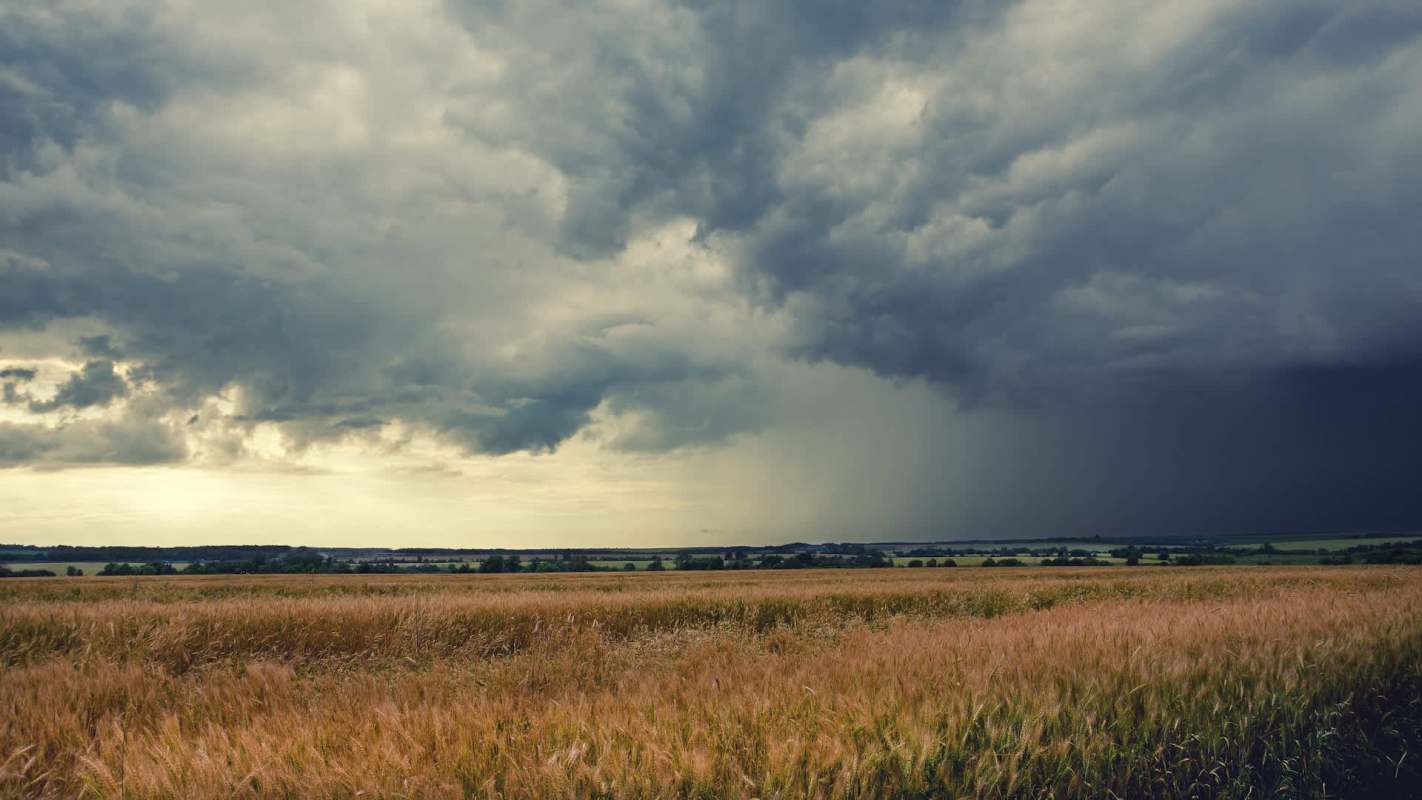
The supply of water has a big impact on farmers' ability to grow crops and how much they are able to produce. Scientists have taken a closer look at the source of rainfall to determine which regions can become more susceptible to extended droughts.
What's happening?
As reported by UC San Diego Today, researchers from Stanford University and the University of California, San Diego used satellite data and climate models to figure out how much of our rainfall comes from moisture recycled from land versus how much comes from the oceans. They detailed their findings in a study first published in the journal Nature Sustainability.
They found that regions that receive substantial rainfall from the recycled moisture from land were more susceptible to drought. This includes locations such as the American Midwest and East Africa. These regions can be more susceptible due to their high reliance on land-sourced moisture, which can create a negative feedback loop.
In simple terms, this means that drier soil leads to less evaporation, which in turn leads to less rainfall.
"Our work reframes drought risk. It's not just about how much it rains, but where that rain comes from," said Yan Jiang, co-author of the study and postdoctoral scholar at UC San Diego. "Understanding the origin of rainfall and whether it comes from oceanic or land sources, gives policymakers and farmers a new tool to predict and mitigate drought stress before it happens."
Why is the source of rainfall important for crops?
The researchers discovered that areas where more than 36% of rainfall comes from land tend to have more problems with dry spells during the main growing season. Crops in these areas can be more sensitive to changes in weather, meaning they produce less food in drier years and face a higher risk of drought.
"For farmers in areas that rely heavily on land-originating moisture, like parts of the Midwest or eastern Africa, local water availability becomes the deciding factor for crop success," added Jiang. "Changes in soil moisture or deforestation can have immediate, cascading impacts on yields."
Rising global temperatures are making droughts worse by increasing evaporation, which can dry out soils and vegetation. Warmer temperatures can also disrupt weather patterns, increasing severe weather in some locations while prolonging droughts in others. In regions like the Midwest, the increased evaporation and reduced rainfall can greatly impact the water supply available to the agriculture industry.
What's being done about land-based rainfall droughts?
In an effort to decrease global temperatures, many organizations are making concerted efforts to decrease carbon pollution by reducing their reliance on planet-heating dirty energy sources. They have also enacted measures to promote the widespread transition to renewable energy sources such as wind and solar power.
According to Jiang, land management can also go a long way in cutting down the risks of prolonged droughts.
TCD Picks » Quince Spotlight
💡These best-sellers from Quince deliver affordable, sustainable luxury for all




|
Should the government provide incentives to buy EVs?
Click your choice to see results and speak your mind. |
 Absolutely 💯
 "Farmers are clearing forests to grow more crops, but those forests help generate the rainfall that the crops depend on. If that moisture source disappears, local food security will be at greater risk," said Jiang.
"Eastern Africa is on the front line of change, but there is still time to act. Smarter land management, like conserving forests and restoring vegetation, can protect rainfall and sustain agricultural growth."

💰Get TCD's free newsletters for easy tips to save more, waste less, and make smarter choices — and earn up to $5,000 toward clean upgrades in TCD's exclusive Rewards Club.
Cool Picks






