


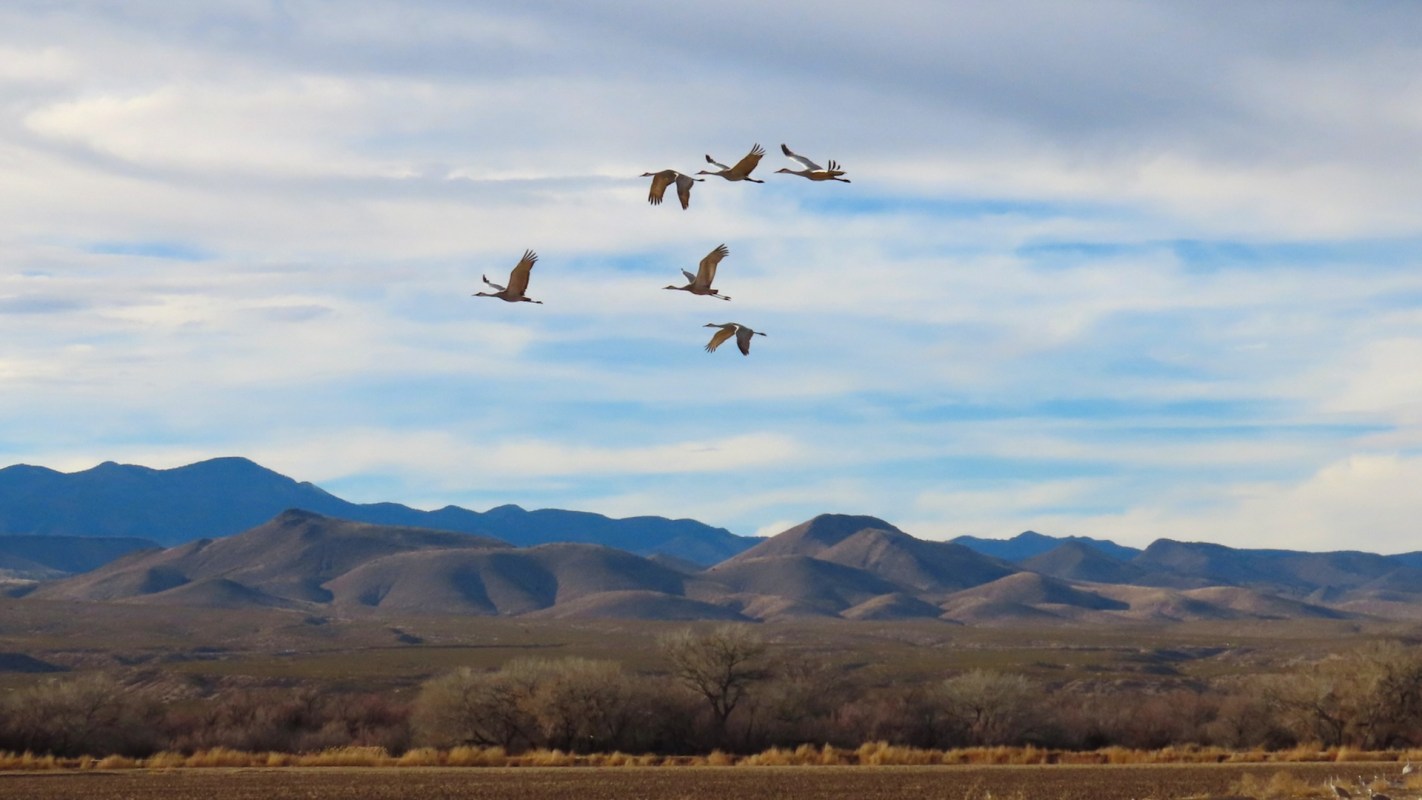
Massive flocks of geese and cranes that travel south each winter to escape freezing northern temperatures may soon avoid the Southwest entirely as water scarcity worsens, reported KUNM.
What's happening?
The American Southwest lies along a major migration route that brings waterfowl from Alaska and Canada through the region each fall and winter. These birds need wet habitats and water-covered farm fields to rest and find food during their journey.
The problem is that the Southwest is going through its driest stretch in over a millennium. Water levels in waterways continue dropping as snowpack in the mountains shrinks. Scientists predict snowpack could decline by more than two-thirds in the coming decades, and river flows may drop by a quarter within 50 years.
"Attracting the cranes and geese really is a manufactured thing at this point," Tucker Davidson of Audubon Southwest told KUNM.
"We have to flood up fields, and if we don't provide corn or supplemental food, then they would probably start to find other places to overwinter."
Why are drought impacts on wildlife concerning?
When migratory birds can't find water and food along their traditional routes, they face dehydration and starvation. But the effects stretch beyond bird populations.
These birds control insect populations across thousands of miles. If they abandon their current migration paths, communities could see changes in local ecosystems that affect agriculture and food security.
The water shortage also points to bigger challenges ahead. Agriculture already consumes roughly four-fifths of the Southwest's fresh water, and competing demands for limited water supplies will only intensify as temperatures climb and precipitation patterns shift.
What's being done about drought impacts on wildlife?
Water experts are pushing for more efficient irrigation methods, such as drip systems, instead of field saturation techniques. This approach addresses both farming requirements and wildlife protection while conserving precious water resources.
If you want to support migratory birds in your area, you can create bird-friendly spaces in your yard by adding native plants that provide natural food sources and installing a simple birdbath for fresh water. Contact your local representatives to voice support for policies that protect wetland habitats and promote water conservation in your region.
TCD Picks » Quince Spotlight
💡These best-sellers from Quince deliver affordable, sustainable luxury for all




These actions help guarantee that future generations can still witness the seasonal arrival of thousands of birds traveling ancient pathways across the continent.
|
Do you think humans are doing enough to protect endangered animals? Click your choice to see results and speak your mind. |
 Definitely 👍
Get TCD's free newsletters for easy tips to save more, waste less, and make smarter choices — and earn up to $5,000 toward clean upgrades in TCD's exclusive Rewards Club.
Cool Picks






