


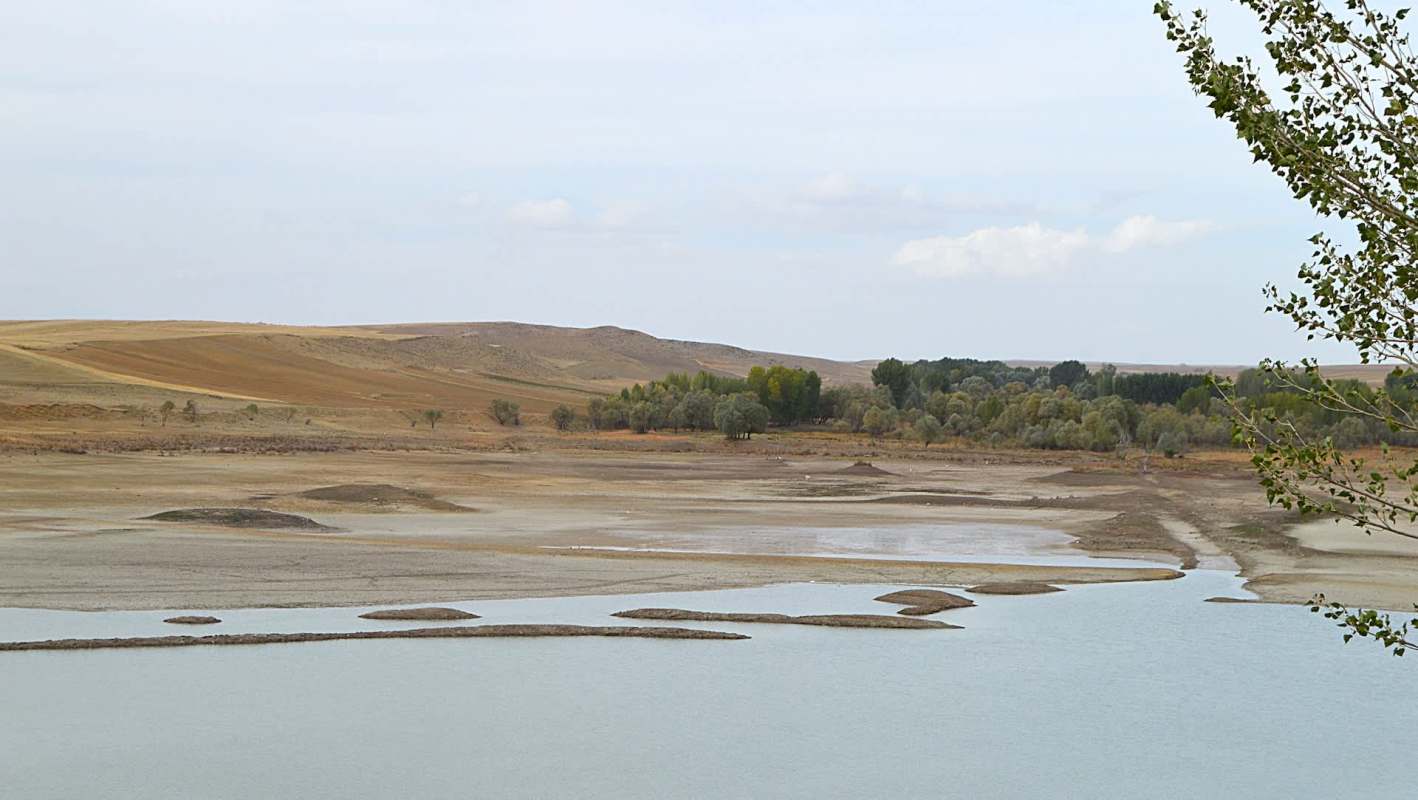
Turkish scientists are sending a warning as drought in the country's central region has reached historic levels due to a continued lack of rainfall.
What's happening?
According to Daily Sabah, Kırşehir, a city in Central Türkiye, received less rainfall than it had in 65 years, worsening a drought that was already threatening the region with strict water regulations.
The drop in rainfall, coupled with increased temperatures, has put immense strain on groundwater and surface sources, leading to agricultural impacts as well.
Kırşehir and the surrounding region have been in the midst of a years-long period of decreased rainfall, with 2025's totals marking the worst point thus far.
"This combination of low precipitation and higher temperatures has directly affected water reserves," Professor Sultan Kıymaz from the Department of Biosystems Engineering at KAEÜ's Faculty of Agriculture said, per Daily Sabah. "Ponds, reservoirs, and other surface water sources have declined significantly, and some have dried up completely. Groundwater levels have also dropped to critical levels."
Why is this important?
Central Türkiye's ongoing drought is emblematic of a problem occurring worldwide as global temperatures rise due to the human-induced climate crisis. As it gets hotter, there is less precipitation for longer periods of time, leading to drought conditions. When precipitation does come, it often takes the form of massive storms that the parched earth cannot handle, leading to flooding, landslides, and other disasters.
Where heavy rains bring flooding, droughts lead to crop and livestock losses, and residents in those communities face strict restrictions on water use. For example, in Iran, officials warned in November that the historic drought they are facing could lead to a full evacuation of the capital city of Tehran. Extended droughts can also increase wildfire risk.
We're seeing this cycle play out in the American West, where a severe lack of snow has hit the Rocky Mountains, and in Spain, where historically strong atmospheric rivers are dumping massive amounts of rain on the region in a short period, leading to widespread flooding and destruction.
What's being done about the Turkish drought?
Turkish officials are implementing water usage plans in the area and encouraging residents to be more conscious of their daily water use.
"Our ministry has launched a nationwide water efficiency mobilization, which is an important step. However, individuals also have a role to play. Water must be used consciously," Professor Kıymaz said, per Daily Sabah. "In Türkiye, around 77% of water consumption is in agriculture, but domestic and industrial use also place demands on limited resources. Efficient use and proper management are critical."
TCD Picks » Quince Spotlight
💡These best-sellers from Quince deliver affordable, sustainable luxury for all




|
What's the most you'd pay per month to put solar panels on your roof if there was no down payment?
Click your choice to see results and speak your mind. |
 $200 or more 💰
 Associate professor Ramazan Ayrancı of KAEÜ's Department of Field Crops also noted that crop rotation, leaving fields fallow during dry seasons, and better planning are essential to help reduce water use.
"In this region, priority should be given to crops that consume less water. For cereals, drought-resistant varieties that maintain productivity under dry conditions must be preferred," he said, according to Daily Sabah.

Get TCD's free newsletters for easy tips to save more, waste less, and make smarter choices — and earn up to $5,000 toward clean upgrades in TCD's exclusive Rewards Club.
Cool Picks




