


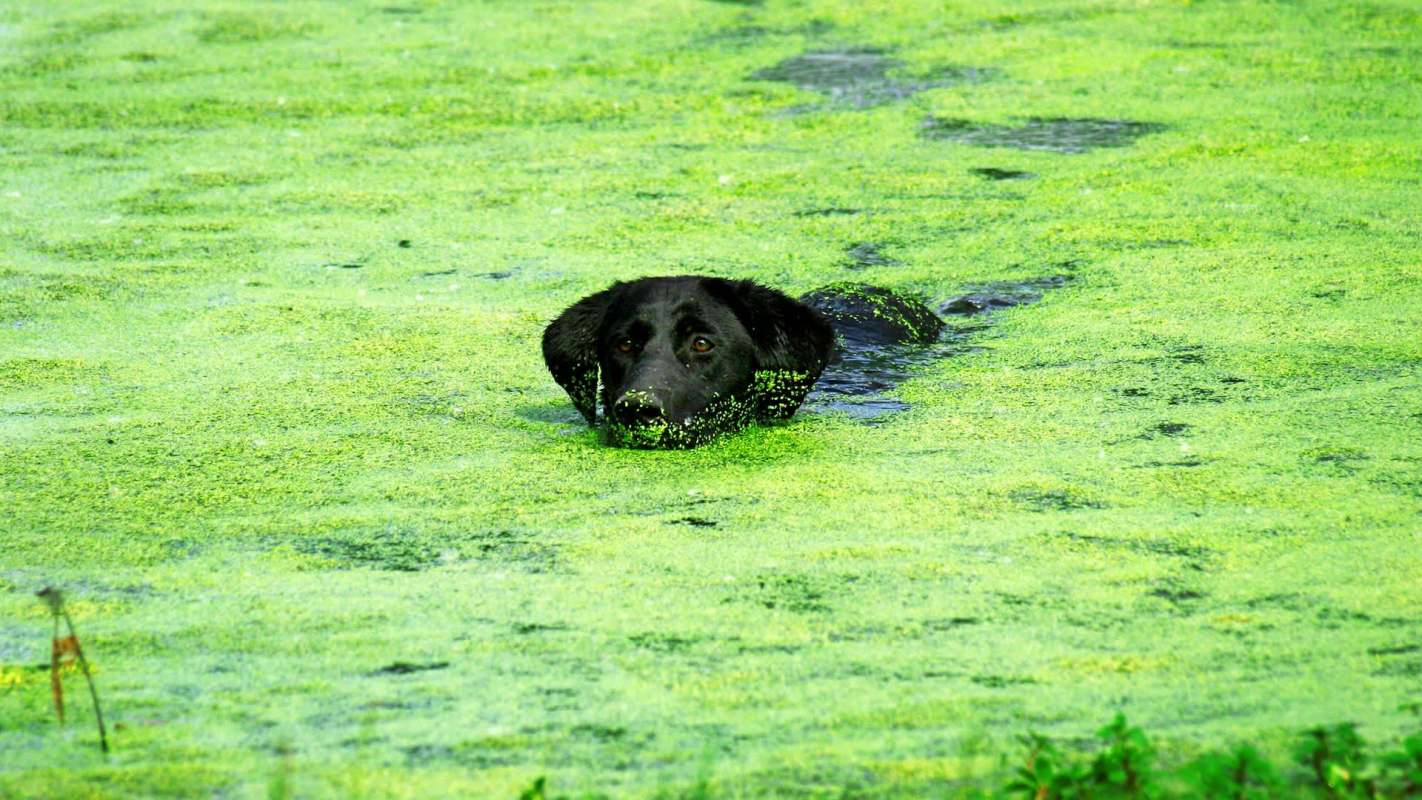
Veterinarians are urging dog owners to be extra cautious around ponds, lakes, streams, and rivers as warmer weather returns and harmful algal blooms become more frequent.
What's happening?
According to WXXI News, a veterinarian with Cornell's Riney Canine Health Center warned pet owners to assume suspicious water is unsafe, especially during the warmer months when harmful algal blooms are more likely to appear.
HABs can be dangerous for both people and animals, but experts have said dogs face a particular risk because they will mouth almost anything and are often drawn to unusual smells.
"When in doubt, stay out" is the rule of thumb, Dr. Aly Cohen said, according to WXXI, adding that you usually can't tell from appearance alone whether a body of water contains a harmful algal bloom.
HABs can show up as paint-like streaks, surface scum, or water that resembles pea soup, but they are not always easy to spot. They can also develop in stagnant water, such as bird baths and empty containers, WXXI noted.
The warning comes after a harmful algal bloom was confirmed in Cayuga Lake in April, the earliest on record.
TCD Picks » Quince Spotlight
💡These best-sellers from Quince deliver affordable, sustainable luxury for all




Why is this concerning?
The issue is becoming more pressing as harmful algal blooms pose a growing risk in the same places where people and pets go to cool off.
For dogs, exposure can become serious quickly. Symptoms may include vomiting, diarrhea, drooling, weakness, and convulsions. Dr. Cohen said that toxins affecting the neurologic system can disrupt breathing. There is no antidote for the toxin, and exposure may be deadly, according to WXXI.
How can I protect my pet?
The most important step is prevention.
Avoid letting dogs swim in or drink from water with a paint-like film, a scummy surface, or a pea-soup appearance. Because blooms are not always obvious, experts also recommend rinsing dogs off with clean water after they have spent time in or around natural or stagnant water, according to WXXI.
If your dog develops symptoms such as vomiting, drooling, weakness, or seizures after exposure to water, seek veterinary care immediately.
At home, regularly empty and clean bird baths and other outdoor containers that collect standing water.
People can also help reduce the conditions that allow blooms to thrive by using fewer chemical fertilizers and preventing runoff.

Get TCD's free newsletters for easy tips, smart advice, and a chance to earn $5,000 toward home upgrades. To see more stories like this one, change your Google preferences here.







