


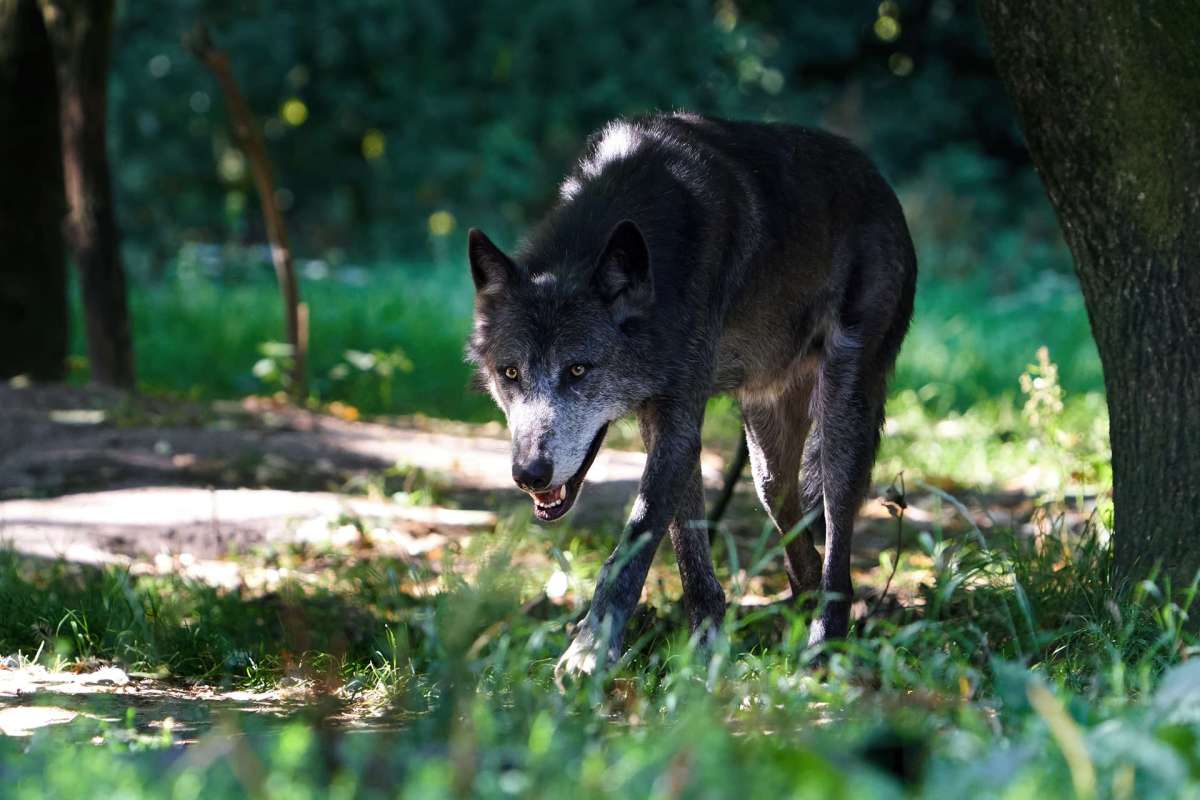
A dramatic clip showing a wolf running toward walkers in Denmark is spreading quickly online, but one wildlife creator is warning viewers not to treat the footage as proof that wolves are naturally aggressive toward humans.
That distinction matters as wolves remain at the center of heated debates over coexistence across Europe, especially since just a few seconds of video can rapidly shape public opinion.
Here's what to know
An Instagram creator, Anneka Svenska (@AnnekaSvenskaOfficial), shared an explainer addressing the widely circulated clip. In Svenska's Instagram post, she said, "Walkers have supposedly been 'mock charged' by a European wolf in the Oslo area of western Jutland, Denmark, and the footage is now spreading everywhere online."
Svenska was not arguing that the situation should be brushed aside. Instead, she said that a video of a wolf moving toward people does not, by itself, show that the animal was acting in an openly confrontational way.
Why does this matter?
Short wildlife clips often strip away crucial context. An encounter that appears tense may reflect curiosity, territorial behavior, stress, habituation to people, or other factors that are difficult to judge from a single angle and a few seconds of video.
In this case, the footage of the wolf charging walkers may not have told the whole story of what was happening. It could have been curious rather than aggressive.
TCD Picks » Quince Spotlight
💡These best-sellers from Quince deliver affordable, sustainable luxury for all




The BBC noted that animal behavior can be shaped by habitat disruption, food conditioning, repeated exposure to people, and other forms of human activity.
Misreading behavior can also have consequences for the animals themselves. Fear-driven narratives can make it harder to support practical coexistence measures and more likely that isolated encounters are treated as proof of a broader pattern.
What can be done?
For individuals, basic precautions still matter. Give wild animals space, avoid approaching for a better video, keep dogs under control, and never leave food or waste that could encourage animals to associate people with easy meals.
Reducing conflict means addressing the human conditions that can shape wildlife behavior in the first place — including habitat pressure, development patterns, and repeated close contact between people and predators.
As the footage continues to spread, the creator's warning is centered on the interpretation people may attach to it.
Svenska said, "The danger is that people see this and assume wolves are naturally confrontational towards humans..."
Instagram users took to the comments to share their thoughts on the video.
One Instagram user said, "A lot of people here in Denmark (including my husband and I) love the wolves. They are beautiful, and have not attacked anyone here."
Another person commented, "I am Danish, and I am deeply embarrassed by the hysteria going on by the anti-wolf movement."
A third Instagram user observed, "Looks to me like the wolf is protecting its baby. Why can't people leave them and nature alone?"

Get TCD's free newsletters for easy tips, smart advice, and a chance to earn $5,000 toward home upgrades. To see more stories like this one, change your Google preferences here.







