


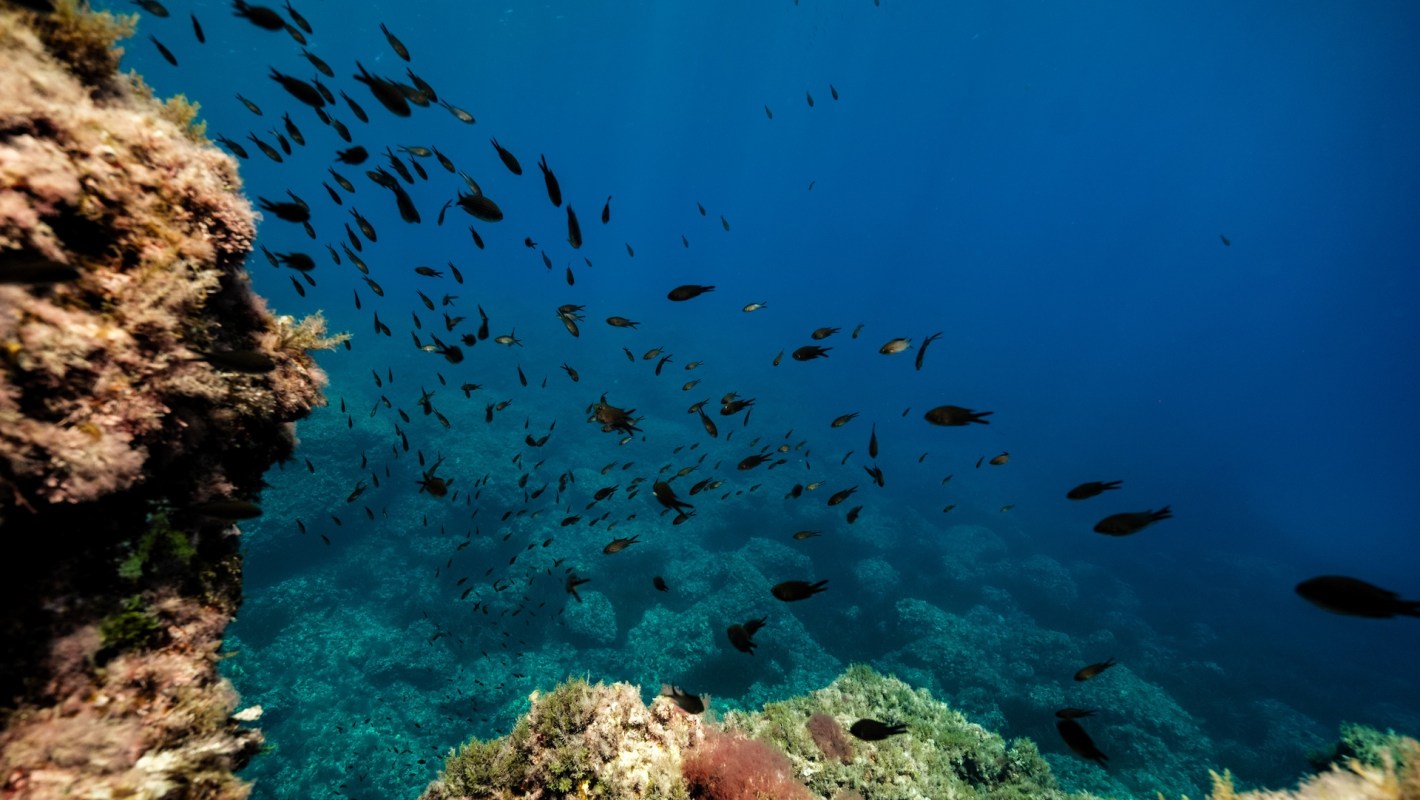
A new study in Nature Communications found that deep-sea mining waste may turn into "basically junk food" for plankton — the tiny organisms that form the base of the ocean's food chain.
What's happening?
As companies explore deep-sea mining as a way to collect valuable metals for electronics and battery materials, scientists warn that the environmental trade-offs could be greater than expected.
Researchers from the University of Hawaiʻi at Manoa analyzed sediment and plankton samples from the Clarion-Clipperton Zone (CCZ), a mineral-rich region of the Pacific Ocean targeted for harvesting polymetallic nodules. During expeditions in 2021 and 2022, the team collected samples from 800 to 1,500 meters deep, where plankton typically feed on nutrient-rich organic particles about six micrometers wide.
When researchers later sampled a sediment plume created during a pilot mining test, they found that the particles drifting through the water were nearly the same size as natural food sources — but with very low protein and amino acid content.
"[The plume particles] were basically junk food," study co-author Brian Popp told ScienceNews.
Why is deep-sea mining waste important?
Plankton and other midwater organisms make up the first link in the marine food chain, supporting everything from small fish to large open-ocean predators. If plankton begin consuming nutrient-poor sediment instead of real food, the researchers warned that the effects could cascade upward, weakening entire ecosystems.
These changes could also affect people. Coastal communities typically rely on steady, healthy fisheries for food and livelihoods, and disruptions in the twilight-zone food web may make seafood supplies less predictable. This instability would affect both the health of the ocean and the communities that depend on it.
Midwater species also play a key role in the biological carbon pump, which moves carbon from the surface to the deep sea. Disrupting this process could reduce the ocean's ability to help regulate the climate.
What's being done about deep-sea mining?
The researchers recommended stronger oversight of mining waste discharge and additional studies of their effects. Dozens of countries have also urged the International Seabed Authority to adopt a moratorium, or precautionary pause, on deep-sea mining until robust environmental protections are in place.
In the meantime, everyday people can also help to reduce pressure to mine the seafloor by recycling old electronics, choosing refurbished devices when possible, and supporting companies that prioritize responsible sourcing.
TCD Picks » Quince Spotlight
💡These best-sellers from Quince deliver affordable, sustainable luxury for all




|
Do you worry about companies drilling too deep into the ground? Click your choice to see results and speak your mind. |
 Definitely 💯
Get TCD's free newsletters for easy tips to save more, waste less, and make smarter choices — and earn up to $5,000 toward clean upgrades in TCD's exclusive Rewards Club.
Cool Picks






