


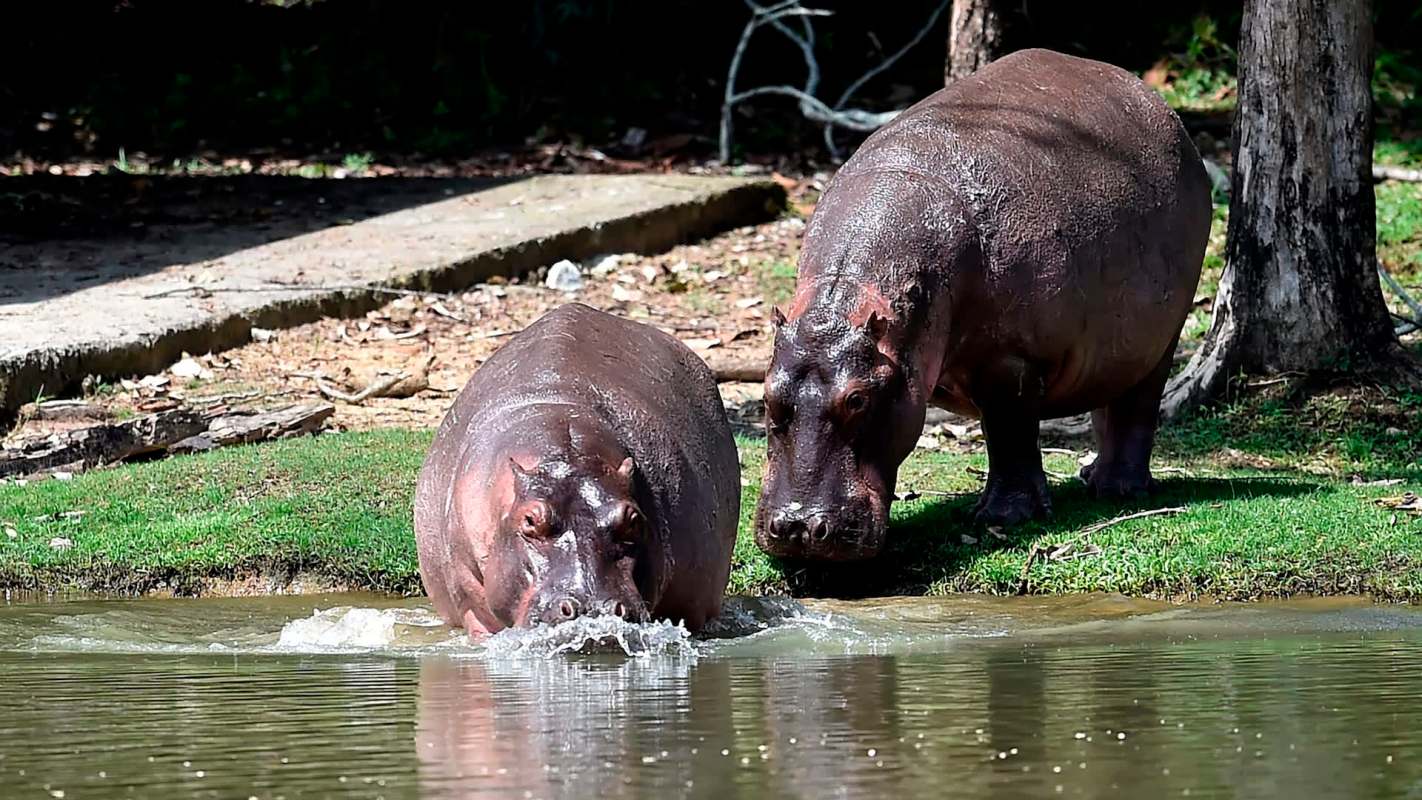
Colombia's government has made the difficult and divisive decision to euthanize some of Pablo Escobar's infamous "cocaine hippos" after years of failed attempts to relocate and sterilize them.
After drug lord Pablo Escobar's death in 1993, four hippos that he had illegally introduced to his estate in the Antioquia region of Colombia escaped into the wild, according to Scientific American.
Unchecked by natural predators, those four quickly reproduced, and the population has since expanded to nearly 200. The hippos, native to Africa, have been wreaking havoc on local communities, ecosystems, and native species.
The Colombian government has decided it will euthanize 80 of the remaining hippos and will monitor the population to identify which animals to cull based on their size and proximity to humans.
"Without this action, it is impossible to control them," Colombia's environment minister, Irene Vélez, said at a press conference, per Scientific American.
Vélez cited estimates that the population could reach as many as 500 individuals by 2030 and that it's the government's responsibility to take action.
TCD Picks » Quince Spotlight
💡These best-sellers from Quince deliver affordable, sustainable luxury for all




These hippos, being both aquatic predators and disruptive to land ecosystems, pose significant threats to local wildlife and communities. They have contributed to an increase in traffic incidents involving the animals and have also attacked boats and people.
The hippos' movements have altered the river ecosystems in the area, and their waste has degraded water quality, endangering fish populations vital to community sustenance.
Before making this decision, the government reached out to zoos and aquariums, hoping to relocate the animals, but none agreed to take even a single hippo. Widespread sterilization is too costly and also dangerous for the animals and those performing them.
It's always disheartening when an animal has to be euthanized, but in instances involving a displaced species, it's important to recognize that these animals are not to blame for their inappropriate environment.
"The ideal scenario would be that no animals die," said environmental law professor Luis Domingo Gómez Maldonado of the Cooperative University of Colombia, according to Scientific American. "But the reality is that, at this point, there is no other option."
|
Which of these savings plans for rooftop solar panels would be most appealing for you?
Click your choice to see results and earn rewards to spend on home upgrades. |
 Save $1,000 this year 💸
Get TCD's free newsletters for easy tips, smart advice, and a chance to earn $5,000 toward home upgrades. To see more stories like this one, change your Google preferences here.







