


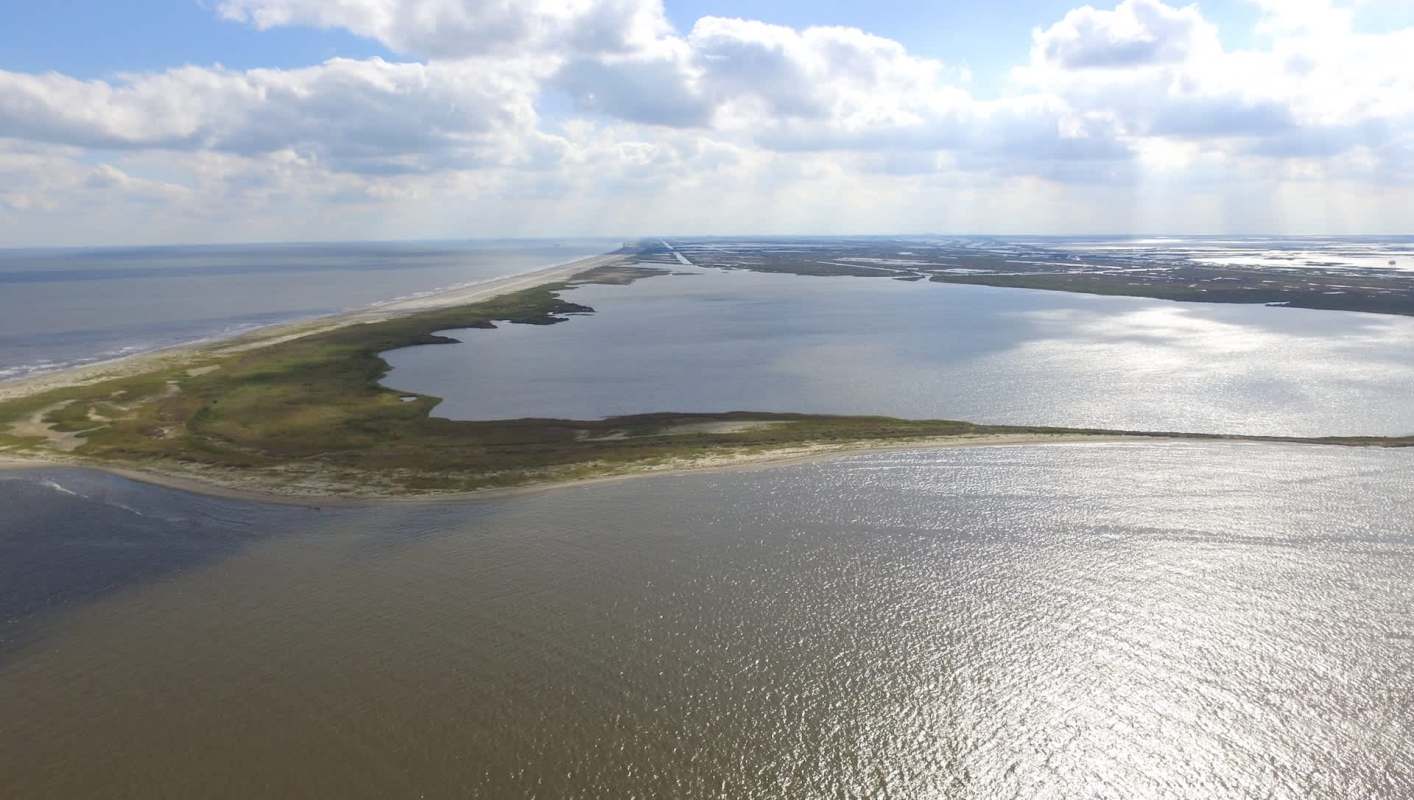
Across Louisiana's shrinking coastline, scientists are warning that entire communities could be forced to relocate as land loss accelerates.
Floodlight highlighted the stories of individuals living in the area as well as the growing urgency of this crisis that threatens to displace families, erase local cultures, and reshape the Gulf Coast.
What's happening?
In 2016, Louisiana was given a $48.3 million grant to help relocate 37 families living on the Isle de Jean Charles.
Hurricanes and rising sea levels made it difficult to safely reside in the community, which resulted in the United States' first federally funded relocation program.
However, residents who have been left behind are still waiting for support. In coastal Louisiana, the combined effects of subsidence, wetland erosion, and industrial canal building are making the area even more uninhabitable.
U.S. Sen. Sheldon Whitehouse said, per Floodlight: "The fact that it's going to continue to happen and continue to get worse and worse and worse, this isn't like a one-off thing where you come in and rebuild the house and everything's back to normal. This is a continually degrading situation."
TCD Picks » Quince Spotlight
💡These best-sellers from Quince deliver affordable, sustainable luxury for all




Why is coastal erosion concerning?
The situation unfolding in coastal Louisiana mirrors the growing global trend of ecological displacement.
Around the world, communities are contending with saltwater intrusion that poisons farmland, flooding that undermines housing foundations, and ecosystems that can no longer support traditional fishing and agriculture.
Scientists emphasize that while extreme weather events have always existed, human-driven pollution is supercharging them and driving sea-level rise, making floods and hurricanes more destructive.
Rising global temperatures are also making once-safe places increasingly vulnerable.
|
How often do you experience power outages? Click your choice to see results and speak your mind. |
 Pretty regularly 😠
 What can be done about coastal erosion?
Louisiana officials worked with federal partners on relocation efforts, but many residents say support has been slow and insufficient.
Meanwhile, the state's Coastal Protection and Restoration Authority has led initiatives to reduce land loss. Researchers and experts are promoting community-driven relocation frameworks and running workshops to guide residents and local officials.
Understanding the bigger picture behind coastal land loss and displacement — such as the impacts of rising global temperatures that are exacerbated by human-caused pollution — is also crucial to fighting critical environmental issues.

Join our free newsletter for good news and useful tips, and don't miss this cool list of easy ways to help yourself while helping the planet.







