


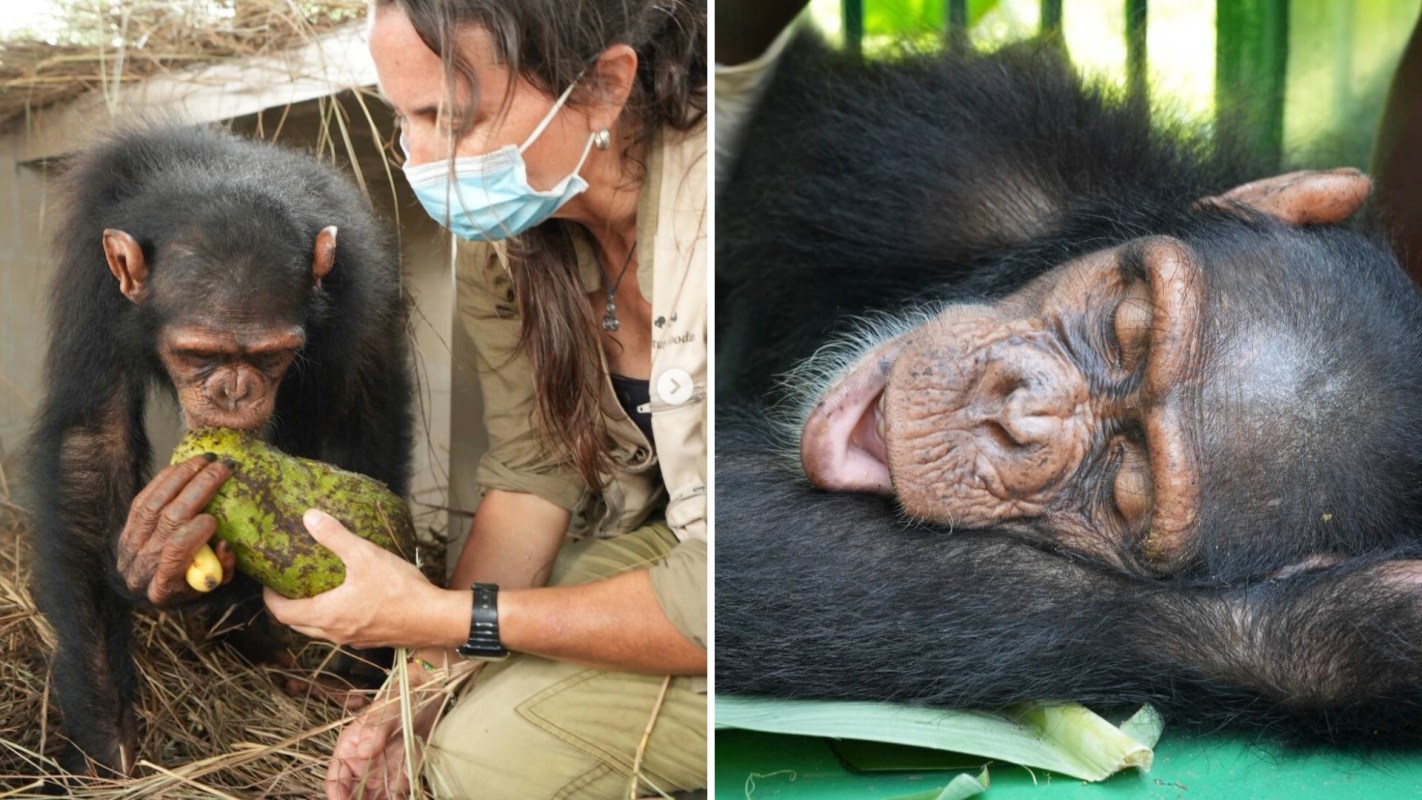
A pet chimpanzee's illness turned an already complicated wildlife rescue into a race against time in Central Africa.
But conservation teams say careful coordination helped get Lola, the chimpanzee, and Nico, the mandrill, out of private captivity and on their way to safety.
What happened?
Lola and Nico had been in private captivity in Equatorial Guinea before the Jane Goodall Institute said its Republic of the Congo team rescued them earlier this year, according to a post on Instagram.
Before the animals could be brought to Tchimpounga sanctuary, the institute said it spent months coordinating with government officials and partner groups — the Pan African Sanctuary Alliance, Lekedi Reserve, and The Drill Project.
The mission became more urgent when Lola's health worsened. As the institute explained, "After Lola became ill, JGI deployed veterinary nurse Dunez Mouaya to diagnose and treat her parasites."
That emergency intervention helped keep the rescue on course as teams navigated the many logistical hurdles that can arise when transporting distressed wild animals across borders.
TCD Picks » Quince Spotlight
💡These best-sellers from Quince deliver affordable, sustainable luxury for all




Why does it matter?
Lola's story is a reminder that wild animals kept as pets can face serious health and welfare risks. Primates and other wildlife are not domesticated, and captivity outside proper sanctuaries can leave them vulnerable to illness, stress, poor nutrition, and isolation.
The illegal or irresponsible wildlife trade can damage ecosystems, weaken already threatened populations, and create safety and health concerns for nearby people. When animals are taken from the wild and placed in unsuitable settings, the consequences can ripple through communities and habitats.
Rescues like this require veterinary response, regional cooperation, and the protection of biodiversity on which communities depend for stability, livelihoods, and healthy ecosystems.
What's being done?
JGI's account suggests that rescue work begins long before the day an animal is transported. That kind of behind-the-scenes coordination can be crucial, especially when animals need urgent care.
Sanctuaries are another key part of the response. Once rescued, animals such as Lola and Nico need expert veterinary attention, safe housing, and ongoing rehabilitation — services that pet owners generally cannot provide for wild primates.

Get TCD's free newsletters for easy tips, smart advice, and a chance to earn $5,000 toward home upgrades. To see more stories like this one, change your Google preferences here.







