


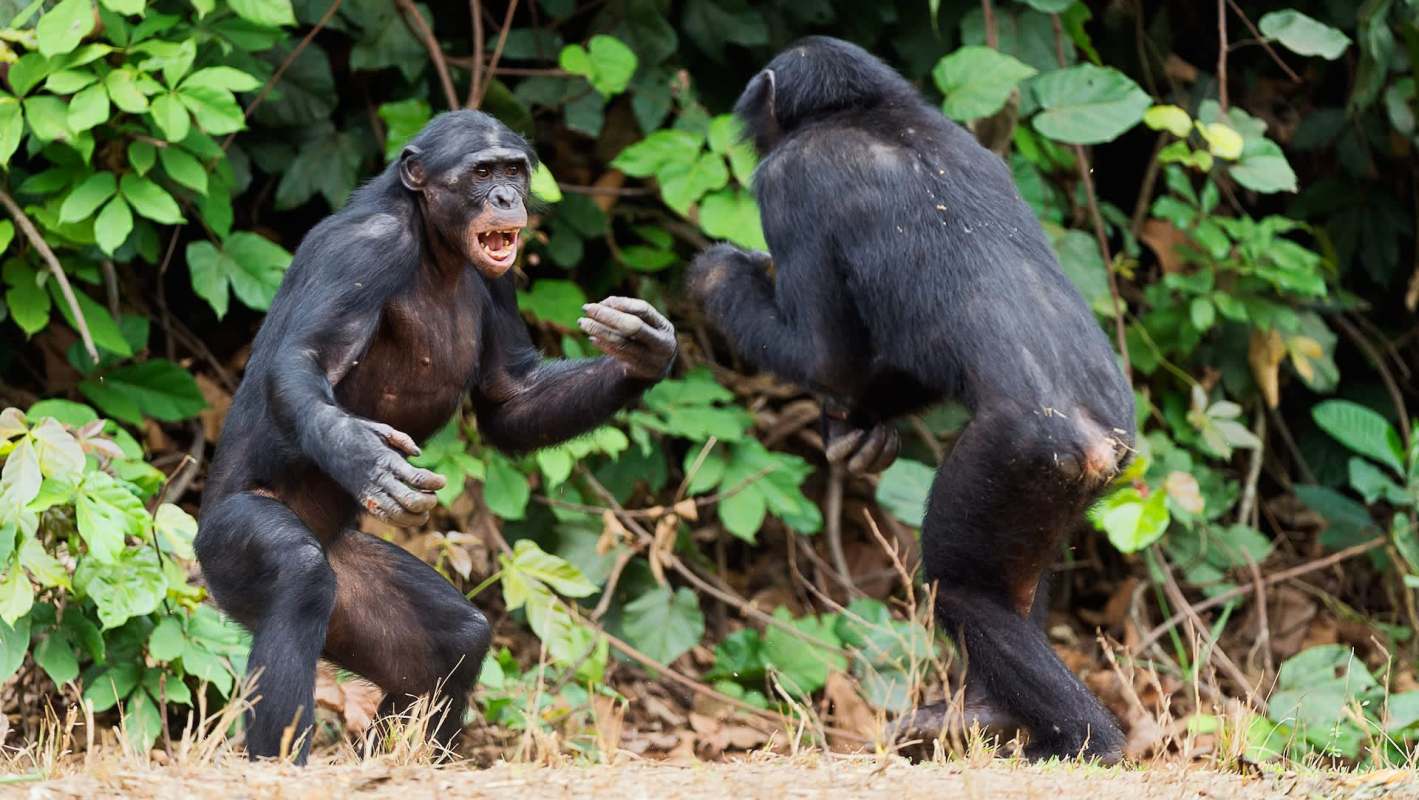
In a shocking twist of nature, scientists have documented a rare phenomenon in the wild: a violent split within a single group of chimpanzees.
The conflict is unfolding in Uganda's Kibale National Park, where a once-unified group has broken into rival factions that have turned on each other.
According to a new study, the Ngogo chimpanzee community, one of the largest ever observed with around 200 individuals, began to divide around 2015.
Initially, the changes were subtle. Small cliques started to form, including a tight-knit trio of adult males who appeared to strengthen their alliances.
Over time, those divisions deepened, and the animals solidified into two distinct groups. By 2018, any remaining social bonds between them had broken down.
Since then, researchers have documented coordinated raids, lethal attacks on adult males, and even infanticide.
"After they split into two groups, chimps from one group began attacking and killing those from the other group, and that turned into an escalated period of lethal violence," anthropologist Aaron Sandel told Live Science.
What makes the situation especially striking is that these are not strangers — they are former groupmates who once bonded and shared territory.
"I'm sort of nervous about calling it civil war," Sandel added. "Civil war means something very specific when we talk about humans, and chimps don't have nations and things like that, but there's an important conceptual point when thinking about war against strangers versus civil war. These are chimps that know each other."
Scientists are still unsure what triggered the breakdown. Possible factors include the group's unusually large size, competition for food and mates, leadership changes, and even a respiratory disease outbreak that killed dozens of individuals.
TCD Picks » Quince Spotlight
💡These best-sellers from Quince deliver affordable, sustainable luxury for all




|
Which of these savings plans for rooftop solar panels would be most appealing for you?
Click your choice to see results and earn rewards to spend on home upgrades. |
 Save $1,000 this year 💸
 Chimpanzee behavior offers insight into how fragile social systems can break under pressure. When resources are strained, cooperation can unravel, sometimes with devastating consequences.
That lesson may be increasingly relevant today, as ecosystems face mounting stress from rising temperatures and habitat loss. As environments shift, both animals and humans may experience growing competition for limited resources.
"Our evolutionary past does not determine our future," evolutionary anthropologist James Brooks told Live Science.

Get TCD's free newsletters for easy tips, smart advice, and a chance to earn $5,000 toward home upgrades. To see more stories like this one, change your Google preferences here.
Cool Picks






