


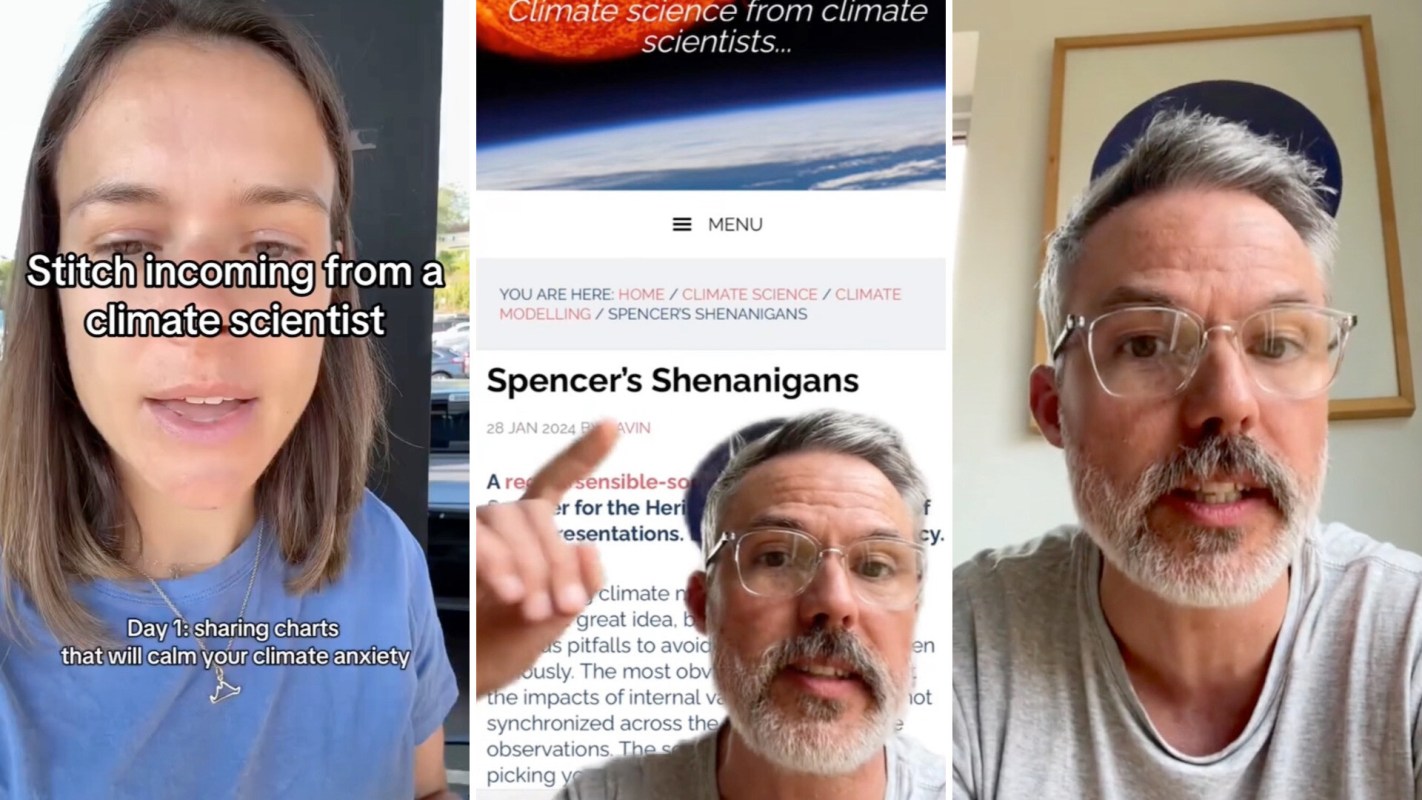
A scientist has taken to social media to provide important context surrounding the claims of an online influencer who sought to downplay the significance of rising global temperatures.
"On a personal note, I think that climate anxiety is really genuinely a problem, and we shouldn't give up hope," Doug McNeall, a climate scientist, says in his TikTok video. "But we should also be really clear-eyed about the challenges that are facing us due to the real and present threat of climate change, both now and in the future."
@dougmcneall #stitch with @Lucy it's important not to try to calm climate anxiety by ignoring the problem. #learnontiktok #climatescience ♬ original sound - Dr. Doug McNeall
As McNeall explains, rising global temperatures have not impacted every region of the world identically. While the temperatures in some areas have risen dramatically in recent decades, others have seen more incremental changes. Given the variability of climate around the globe, this sort of variation is what climate scientists would expect.
However, some online influencers have used these regional differences to cherry-pick data, misleadingly suggesting that temperatures have been rising less than climate scientists and their models have said.
In the case of the influencer that McNeall critiques, she used a chart showing only temperature data from the Midwest region of the United States from 1973 through 2022. However, as McNeall points out, using a map showing temperature changes around the globe, the influencer chose one of the areas that has experienced the lowest increase in temperatures.
"The first question you have to ask is, 'Why those dates, and why that region?'" McNeall says.
"Here comes the cherry-pick," McNeall continues later in the video. "That is the lowest warming trend of just about anywhere in the Northern Hemisphere during that period."
McNeall continues to explain that the graph the influencer used actually came from a source known for providing climate misinformation. He further highlights why relying on cherry-picked data can not only be misleading but also potentially harmful.
"It would be dangerous to generalize from, 'This part of the U.S. isn't warming' to 'Warming isn't dangerous,'" the climate scientist says. "There's lots of parts of the world that actually warmed much more."
The map McNeall shows, which depicts warming trends around the globe, makes this very clear. Even within the U.S., western states were covered in dark red, indicating dramatic warming, despite the Midwest being colored a light yellow, indicating less warming.
TCD Picks » Quince Spotlight
💡These best-sellers from Quince deliver affordable, sustainable luxury for all




|
Do you feel like the air quality is safe where you live? Click your choice to see results and speak your mind. |
 Always 💯
 Scientists have demonstrated repeatedly that different areas of the globe have been heating at different rates. For example, a 2022 study found that temperatures in the Arctic region have been increasing four times as fast as the rest of the globe.
Similarly, temperatures in Europe have been rising twice as fast as the global average, according to the Copernicus Climate Change Service.
Therefore, while McNeall, the climate scientist, agrees that climate anxiety can be a bad thing, he warns against addressing it by using cherry-picked and misleading data that does not tell the whole story.
"I don't like the promotion of climate anxiety either," McNeall says. "But I don't think this graph [used by the influencer] is useful evidence to calm your climate anxiety."
One way to address climate anxiety is to take active steps to reduce planet-overheating pollution. For example, by driving an EV or putting solar panels on your home, you can reduce heat-trapping pollution while also saving money on gas and electricity.

Join our free newsletter for good news and useful tips, and don't miss this cool list of easy ways to help yourself while helping the planet.
Cool Picks






