


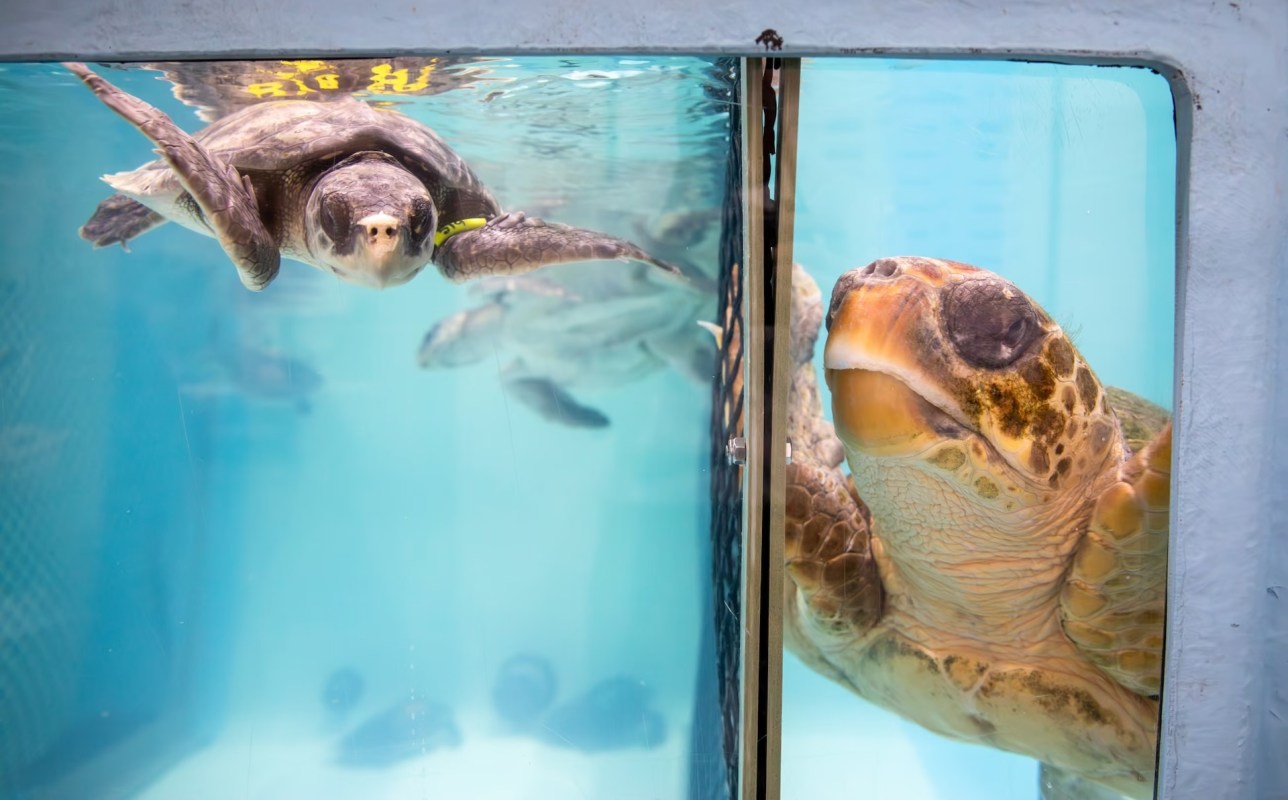
In Cape Cod, a sea turtle named Lucky has become the latest face of an ongoing effort by a network of conservationists, interns, and volunteers all working to save endangered sea turtles from getting caught in the frigid beaches of Massachusetts.
Here's what to know
According to The Guardian, known to rescuers as sea turtle #471, Lucky was one of 473 turtles discovered on Cape Cod beaches in winter after becoming "cold-stunned."
The outlet reported that young sea turtles can become cold-stunned after being drawn to Cape Cod beaches by warm waters, only to encounter frigid temperatures when the winter season rolls in.
The Guardian reported that Lucky, a Kemp's ridley sea turtle, was rescued and arrived at the New England Aquarium's Sea Turtle Hospital in early December suffering from severe hypothermia. In the months that followed, Lucky underwent treatment for pneumonia and surgery to address an infected joint, beginning a long and difficult recovery.
Now, after months of recovery and care, Lucky will be returned to the wild in mid-August.
Researchers say strandings on the Cape have climbed from about 50 a year in the early 2000s to nearly 500 now.
TCD Picks » Quince Spotlight
💡These best-sellers from Quince deliver affordable, sustainable luxury for all




According to aquarium research scientist Kara Dodge, as reported by The Guardian, warmer water in the Gulf of Maine is likely drawing more turtles farther north and keeping them there later in the year.
Once temperatures start falling, the animals are in serious danger.
"If you look at it on a map, it's a natural, geographic trap," Dodge said to the outlet. "And, for a sea turtle, their instinct is to swim south."
More background
Dodge said turtles treat the area as a seasonal destination and compared them to local "snowbirds" that spend warmer months farther north.
When cold weather arrives, though, Cape Cod's hooked shape can interfere with their path south, making the region what Dodge called "a hotspot for mass stranding of sea turtles."
That means volunteers spend winter nights searching remote beaches.
At the Massachusetts Audubon Wellfleet Bay Wildlife Sanctuary, science coordinator Mark Faherty told The Guardian some volunteers head out "at one in the morning into a freezing, cold wind" to search for turtles before exposure kills them.
What's being done?
The rescue response in Massachusetts has developed into a coordinated system that includes beach patrol volunteers, transport drivers, veterinarians, wildlife workers, and partner rehabilitation centers across the East Coast and Gulf region.
When turtles are found, trained responders load them into banana boxes and bring them in cars to the aquarium for triage.
Sea Turtle Hospital director Adam Kennedy told The Guardian that treatment involves slowly warming the animals and easing them back into the seawater while teams address dehydration, infection, pneumonia, and other complications.
Because the aquarium has room for only about 65 turtles, it works with the National Oceanic and Atmospheric Administration to move recovering animals to other rehab centers.
Some of those trips happen by van, and others by private planes flown by volunteer pilots.
For turtles that arrive alive, survival is about 85%, The Guardian reported.
Some turtles are also fitted with satellite tags so researchers and the public can track migration patterns and better understand how these endangered animals move through warming waters.
As of early August, Lucky had been cleared for a return to the wild and was expected to leave with a tracker so that researchers could monitor the young turtle's journey.

Get TCD's free newsletters for easy tips, smart advice, and a chance to earn $5,000 toward home upgrades. To see more stories like this one, change your Google preferences here.







