


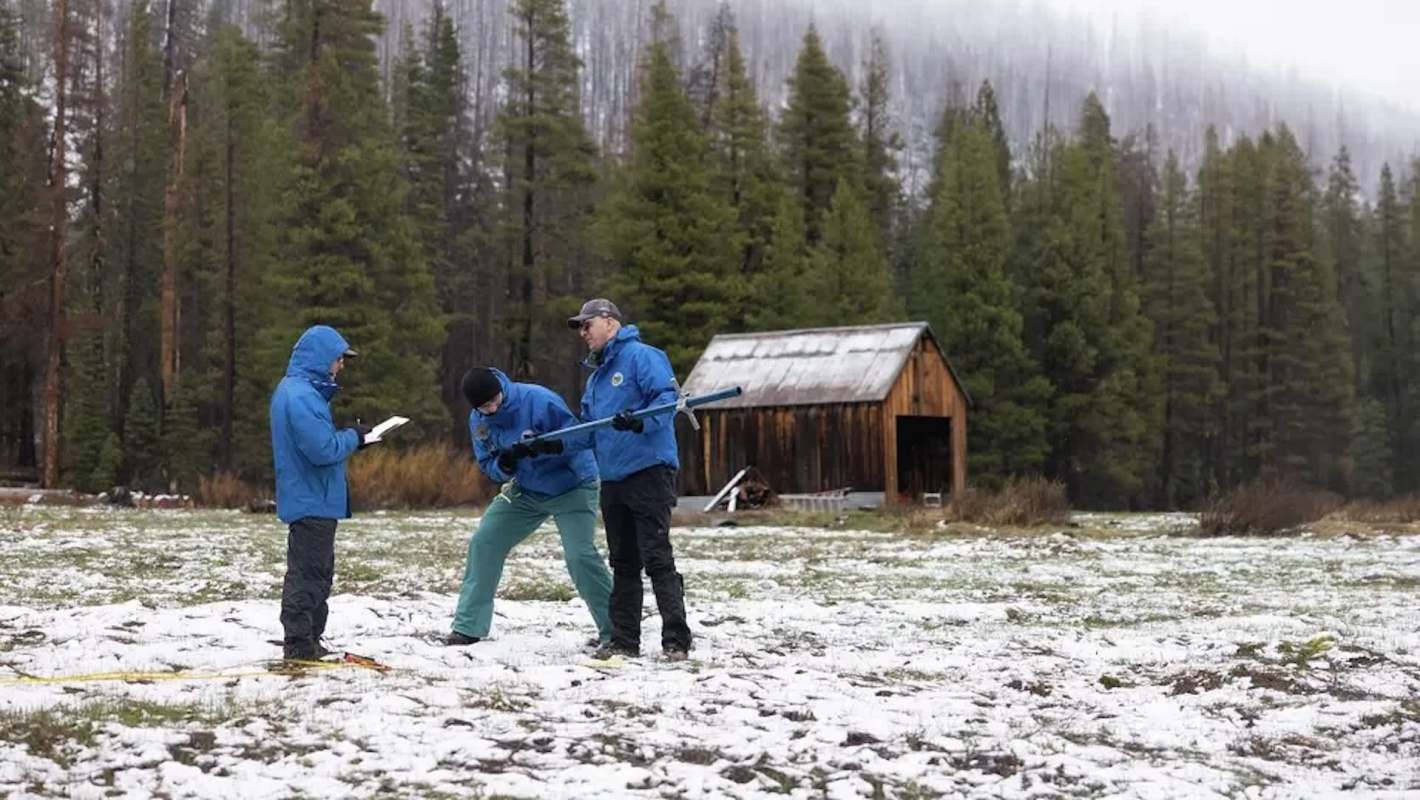
California officials are figuring out how to proceed after finding no snow to measure in a recent survey.
What's happening?
As SFGate reported, the California Department of Water Resources' April survey of the Sierra Nevada snowpack came up empty.
This year represents the second-lowest snow level on record, but it's not due to a drought like in the all-time low 2015 season.
"We've been having a warm snow drought this winter," Andrew Schwartz, the director of the UC Berkeley Central Sierra Snow Lab, told SFGate. "... What we're seeing this year is plenty of precipitation but warm temperatures, meaning rain instead of snow."
Water resource managers observed minimal snowpack levels across the state, with figures at just 32% of the average in the Southern Sierra, 23% in the Central Sierra, and an alarming 8% in the Northern Sierra.
Exacerbating matters was record heat in March, which meant snow disappeared weeks early.
TCD Picks » Quince Spotlight
💡These best-sellers from Quince deliver affordable, sustainable luxury for all




"The melt rates … are really not seen in March," said David Rizzardo, an engineer for the DWR. "They're usually seen in April or May."
Why is California's early snow melt concerning?
There are positive stories coming out of the Golden State when it comes to water levels. For the first time in over two decades, no areas are in drought. Reservoirs are near capacity.
However, this early snow melt and the associated low snow totals could lead to droughts in the near future. Sierra Nevada snowpack typically contributes 30% of the state's water needs, which is why it's referred to as California's "frozen reservoir," per SFGate.
The lack of snowpack will put an early strain on water management. It may also shorten the transition between California's wet and dry seasons, allowing for heightened wildfire risks with more fuel.
|
Which of these savings plans for rooftop solar panels would be most appealing for you?
Click your choice to see results and earn rewards to spend on home upgrades. |
 Save $1,000 this year 💸
 That can result in costly and destructive wildfires that endanger residents and spread pollutants in the air. It could also bring about a return of the drought that it finally looked like California was emerging out of.
What's being done about California's shrinking snowpack?
It's a critical time for the state's reservoir managers, who will have to adjust on the fly to ensure that they maintain healthy water levels into fall. The concerns extend to those in forest management.
This might just be the new world for California, Schwartz said, noting the state faces an "inflection point" with the changing climate.
"We're going to see these warm periods of rain, punctuated by the occasional big snowstorm, and then the snowpack warming up and becoming wet again," he predicted. "After roughly 2055 or so, we're going to start to see mostly rain and very little snow."

Get TCD's free newsletters for easy tips, smart advice, and a chance to earn $5,000 toward home upgrades. To see more stories like this one, change your Google preferences here.







