


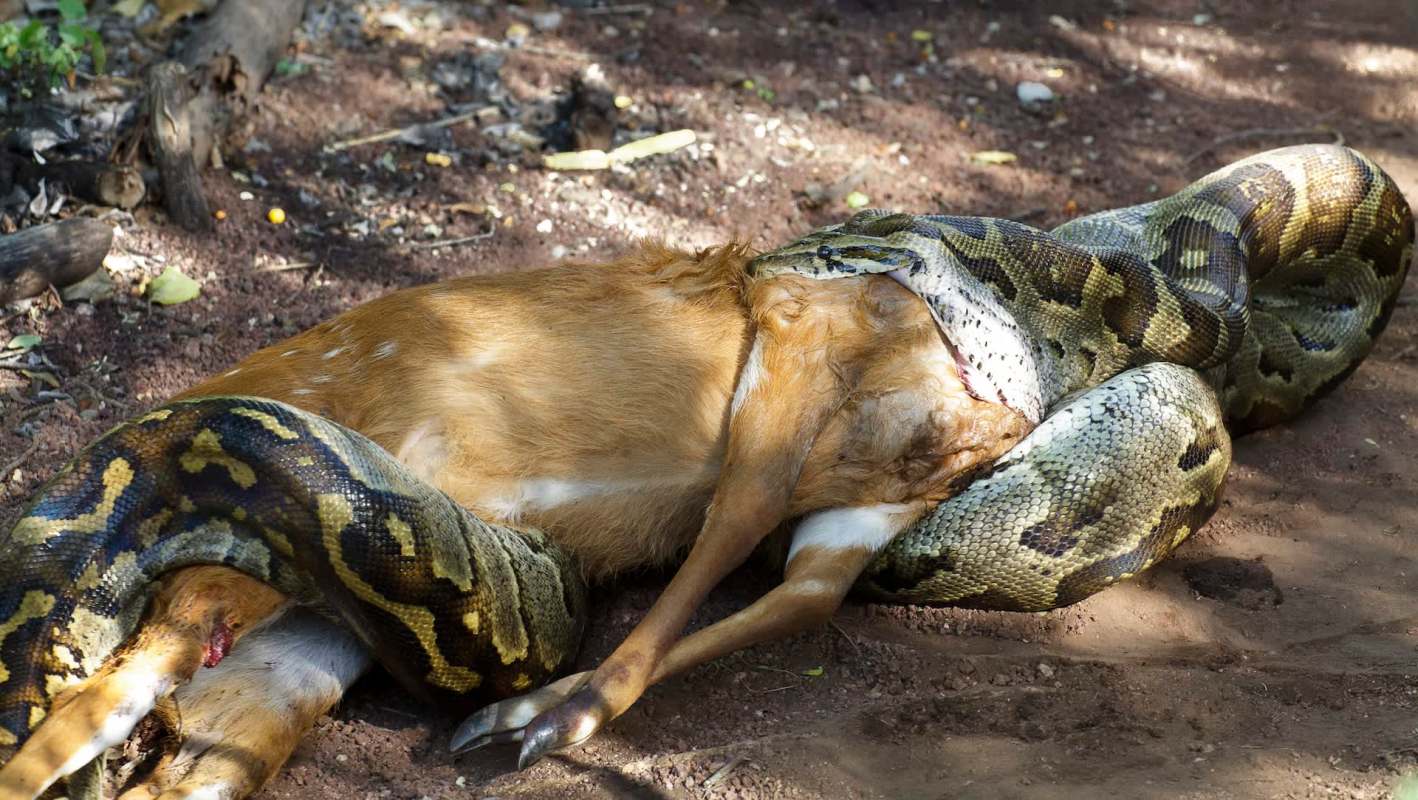
Scientists have identified a strange new intestinal cell in Burmese pythons that helps the snakes dissolve and process the bones of their prey — another reminder of the damage the destructive displaced species has done in Florida and elsewhere.
What's happening?
In a study published in 2025 in the Journal of Experimental Biology, researchers described a previously unknown cell type in the intestines of Burmese pythons that appears to help them break down entire skeletons after swallowing prey whole, The Palm Beach Post reported last year.
Jehan-Hervé Lignot of France's University of Montpellier and his team studied captive juvenile pythons fed three different diets: whole rodents, boneless rodents, and boneless rodents with calcium supplements. By comparing how the snakes processed each meal, the researchers found that specialized cells in the intestinal wall help handle the large amounts of calcium and phosphorus from digesting bones.
That is especially notable because Burmese pythons can eat meals that weigh more than their own bodies. In Florida, non-native snakes have been documented feeding on over 85 species — including deer, bobcats, foxes, rabbits, birds, and reptiles — according to The Post.
"We wanted to identify how they were able to process and limit this huge absorption of calcium through the intestinal wall," Lignot said in a news release.
The newly identified cells appear to help the snakes avoid dangerous calcium overload while extracting nutrients from an entire skeleton — one more reason Burmese pythons are such efficient predators.
TCD Picks » Quince Spotlight
💡These best-sellers from Quince deliver affordable, sustainable luxury for all




Why is this important?
Native to Southeast Asia, Burmese pythons are widely believed to have established themselves in southern Florida through the exotic pet trade, after captive animals escaped or were intentionally released.
It is a human-caused problem with major consequences for local ecosystems. Today, the snakes are found mainly in and around the Everglades, where they threaten native wildlife already facing pressure from habitat loss and other environmental changes.
Their ability to consume nearly every part of an animal, bones included, makes them especially damaging. A predator that can swallow prey whole and pull even more nutrition from each kill has a major survival advantage, making invasive populations even harder to control.
Burmese pythons are not generally considered a routine threat to people, but large individuals can inflict painful bites and severe lacerations with their sharp teeth. They can also create major challenges for wildlife managers and communities trying to protect fragile, biodiverse habitats.
What's being done about Burmese pythons?
Florida wildlife officials and conservation groups have spent years working to bring down python numbers.
According to The Palm Beach Post, the Conservancy of Southwest Florida says its team has taken out more than 20 tons — or 40,000 pounds — of Burmese pythons from Southwest Florida since 2013. During breeding season, the group uses about 40 "scout snakes" to find reproductive pythons across roughly 200 square miles.
The focus is often on adult females, since stopping reproduction can have the biggest impact on invasive species. The conservancy says those efforts have prevented an additional 20,000 python eggs from hatching since 2013.
And while this latest discovery shows just how extraordinary Burmese pythons are, it also reinforces a more urgent lesson: Human actions helped create this problem, and sustained human effort will be needed to address it.

Get TCD's free newsletters for easy tips, smart advice, and a chance to earn $5,000 toward home upgrades. To see more stories like this one, change your Google preferences here.







