


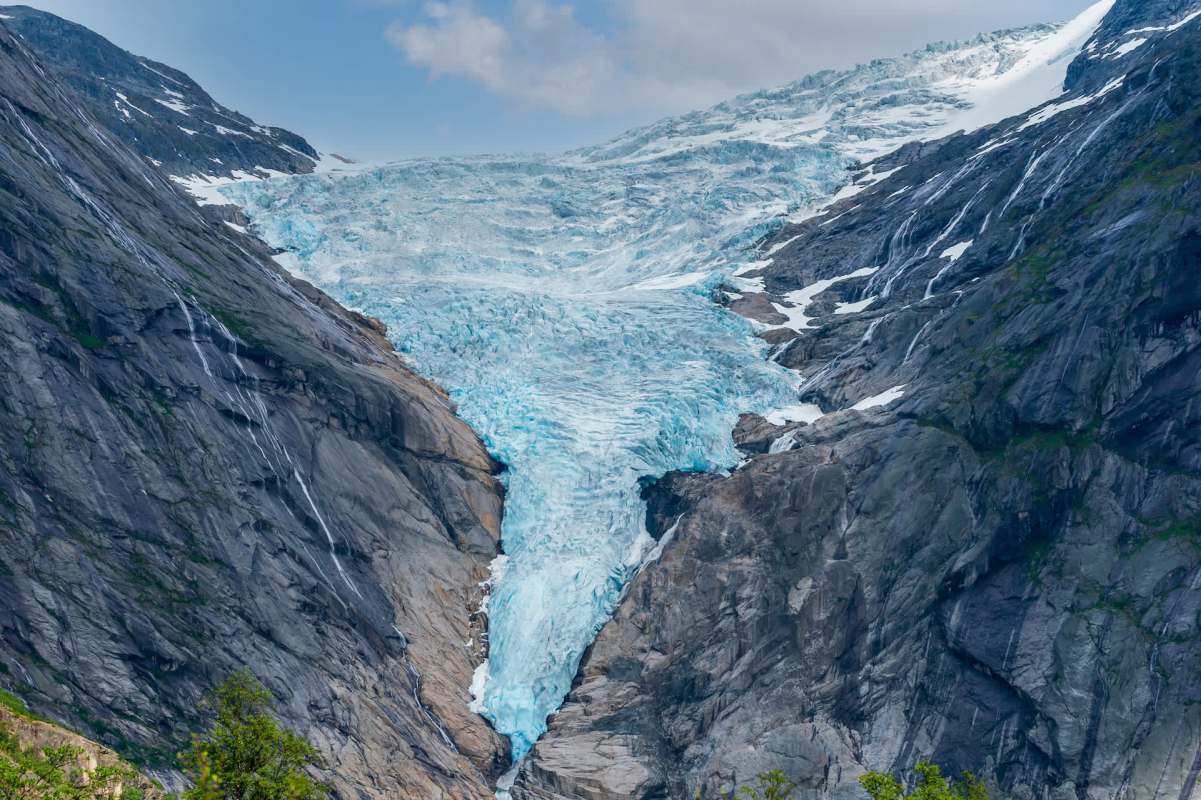
A Swiss mountain village vanished in an instant after a glacier collapsed. Hundreds of residents evacuated just days earlier.
What's happening?
According to NPR, scientists monitoring the Birch Glacier above the town of Blatten, Switzerland, noticed it sliding faster than usual and urged the government to clear out all 300 people. Days later, the glacier gave way, sending ice, rock, and sand roaring down the mountainside.
"It's beyond imagination," said hotel manager Barbara Achrainer, who watched the destruction unfold, to NPR. "You know the village is there, but there is no village. It's just basically a pile of mud and sand and rocks."
The landslide buried homes, the church, and the town hall, erasing a community that had stood for centuries. Experts called it an event without precedent in modern Switzerland.
Why is this concerning?
Europe is warming at twice the global average. Glaciers in the Alps have already lost nearly two-thirds of their ice over the past century. These "water towers" normally feed the continent's biggest rivers, helping to stabilize flows during hot, dry summers.
As glaciers vanish, those rivers are running lower for longer. In Germany, barges on the Rhine, a key trade route, have been forced to reduce loads or halt operations altogether when water levels dip. That means higher shipping costs, strained supply chains, and added pressure on economies.
Disappearing ice makes mountain communities more vulnerable to sudden disasters from landslides like Blatten's to flash floods. Similar ripple effects are showing up worldwide from stronger hurricanes to small organisms like snow algae darkening Antarctic ice and accelerating melt.
Events like these have existed throughout history. But scientists agree that the frequency and intensity of these events have been supercharged by human intervention.
What's being done about it?
Scientists are racing to monitor glacial movement with sensors, drones, and satellite data to provide earlier warnings. Local governments are also reevaluating evacuation plans for villages located beneath unstable ice.
Globally, the faster we shift to less-polluting energy, the more we can slow the pace of ice loss. Policies supporting clean power, like the EU's goal to reduce its planet-heating pollution by 55% by 2030, are crucial.
TCD Picks » Upway Spotlight
💡Upway makes it easy to find discounts of up to 60% on premium e-bike brands





For individuals, meaningful steps could include supporting community resilience projects and local disaster-preparedness programs. Staying educated on the critical climate issues that are impacting our world is also essential.
|
Do you worry about the quality of the air inside your home?
Click your choice to see results and speak your mind. |
 Yes — often 😬
Join our free newsletter for good news and useful tips, and don't miss this cool list of easy ways to help yourself while helping the planet.
Cool Picks






