


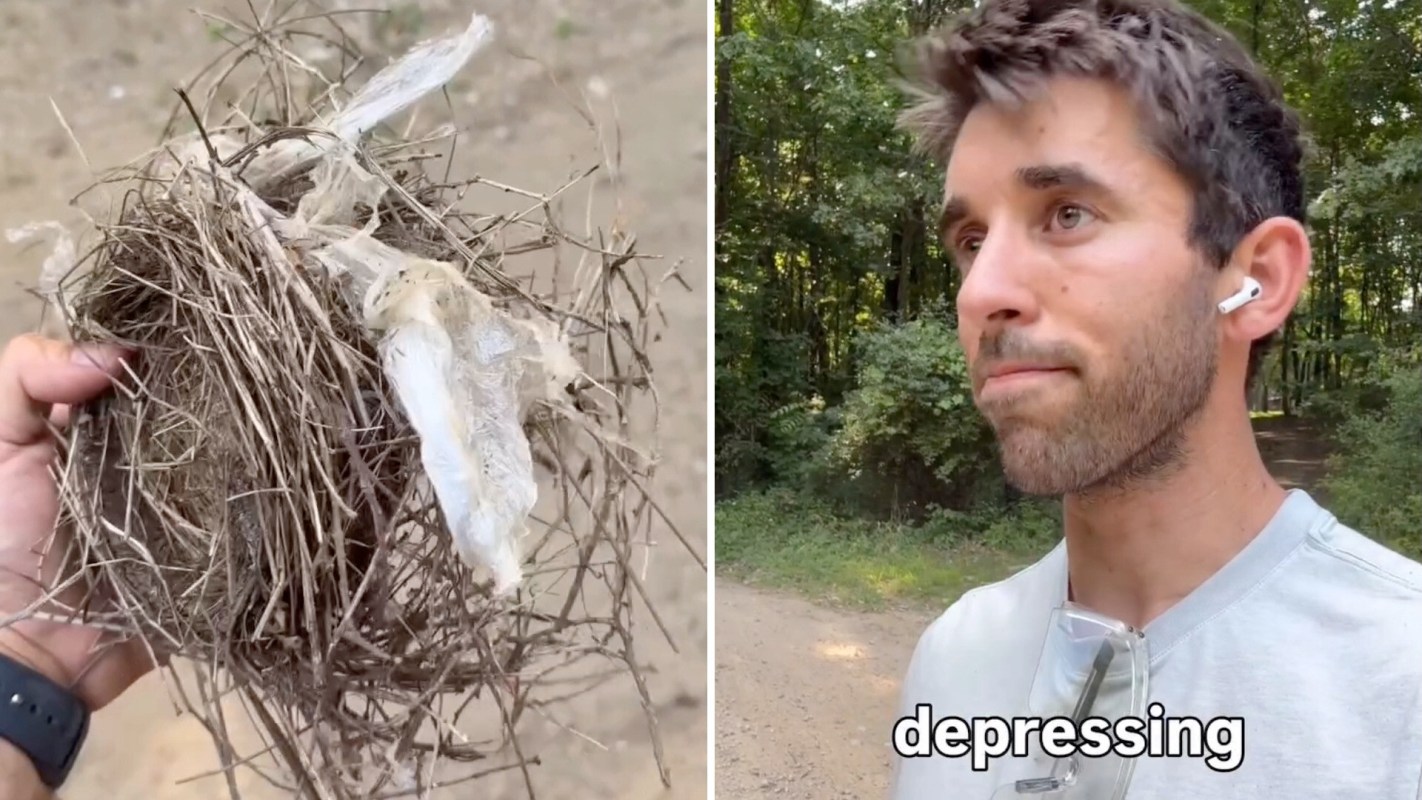
A bird's nest is typically a symbol of new life — but one nest spotted by Nick Cutsumpas (@farmernick) came with a disturbing twist: pieces of plastic waste woven into its structure.
The sight struck a nerve and offered a stark snapshot of how throwaway pollution is reshaping the natural world.
What happened?
The gardener, landscaper, and environmentalist — who has 236,000 Instagram followers — shared video of a bird's nest made partly from plastic.
He described how unsettling it was to see human waste so literally become part of an animal's home.
"Idk why this made me so emotional and angry, but seeing this bird's nest partially made from plastic was so infuriating," Cutsumpas wrote.
Commenters strongly agreed, sharing their own stories of plastic pollution in the wild.
TCD Picks » Quince Spotlight
💡These best-sellers from Quince deliver affordable, sustainable luxury for all




"I cry every time I see a nest with plastic in it. The amount of cellophane cigarette pack liners I have found alone is astronomical," one replied.
"This is already sad as f*** but I broke at the one nest I saw made of many fibre optic cables from drones," another wrote.
"I lose sleep knowing that 98% of seabirds have tummies full of plastic," a third said.
To Cutsumpas, the nest was not simply a strange one-off.
He framed it as a sign of a wider crisis, with plastic now so common in the environment that wildlife is living with it and, at times, inside it.
Why does it matter?
Cutsumpas linked plastic to Big Oil, arguing that ongoing reliance on single-use plastic will exacerbate the situation.
"Plastic is directly tied to the fossil fuel industry, and as long as it still thrives, single-use plastic will continue to endure," he lamented.
The imagery put plastic pollution front and center.
It was not a bottle floating far offshore or trash piled at a landfill. It was a bird's nest — a basic part of life in many backyards, parks, and neighborhoods — visibly altered by human waste.
Wildlife can mistake plastic for natural materials or food.
The same habits that produce litter in nature are often tied to disposable packaging, petrochemical production, and dirtier air in the communities where those materials are made and processed.
What can I do?
No single household can solve the plastic crisis, especially when so much waste is created upstream by large industries and excessive packaging.
Still, there are practical ways people can reduce the amount of plastic that ends up in local ecosystems.
Swapping in reusable water bottles, shopping bags, food containers, and coffee cups can reduce the steady stream of single-use items that often become litter.
Choosing products with less packaging, buying in bulk, and supporting refill systems can also shrink waste at home.
People can keep existing plastic out of habitats by securing trash and recycling, joining neighborhood cleanups, and speaking up for local policies that reduce unnecessary disposable packaging.
Cutsumpas put it plainly: "We can't keep living like this."
He called the nest "a sad reminder that plastic pollution has become a part of nature and our environment, and unfortunately it will only get worse before it gets better."

Get TCD's free newsletters for easy tips, smart advice, and a chance to earn $5,000 toward home upgrades. To see more stories like this one, change your Google preferences here.







