


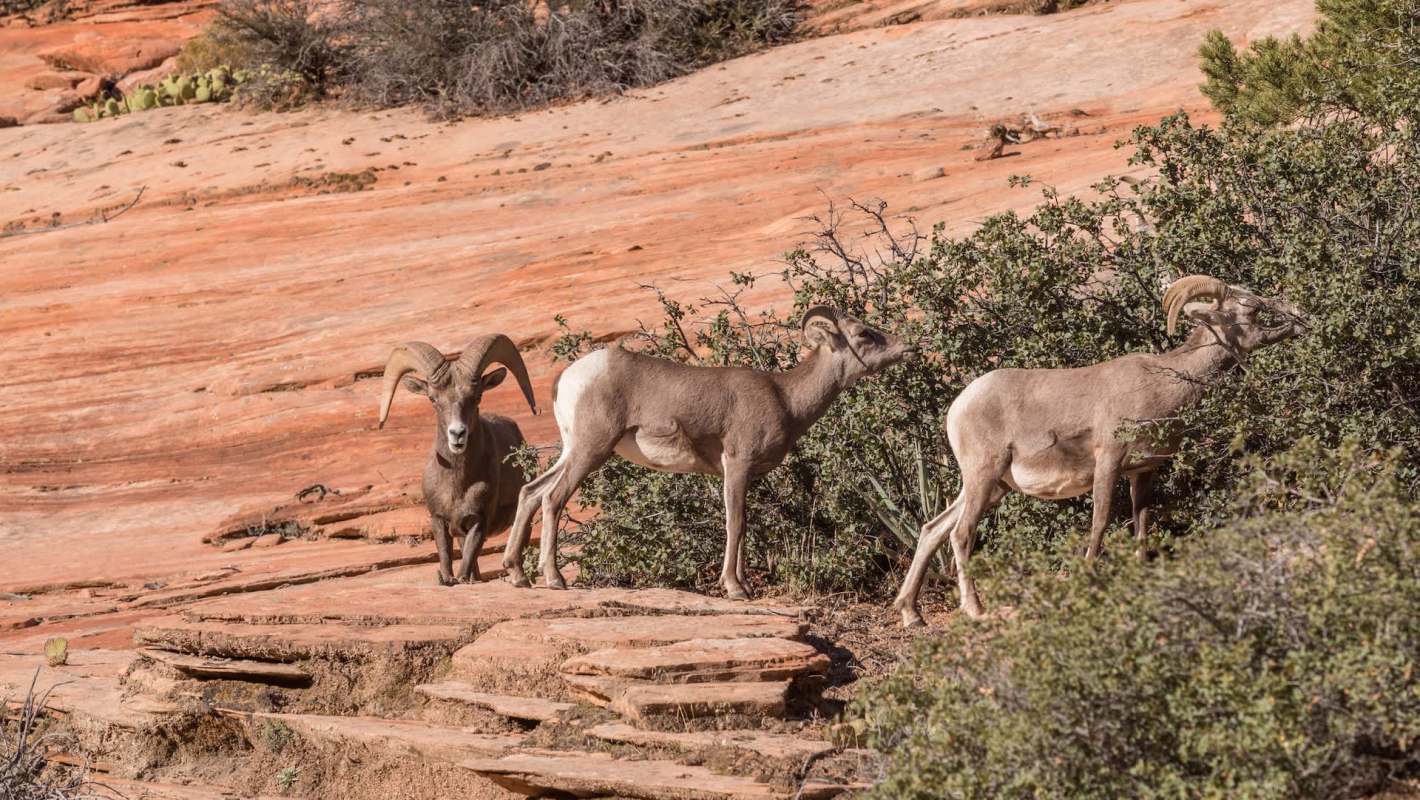
Desert bighorn sheep — iconic animals of Zion National Park — are a fascination among tourists as they skillfully climb the steep, rocky terrain. However, park officials warn visitors to keep their distance, according to National Parks Traveler.
What's happening?
Watching bighorn sheep traverse tiny outcrops of rock and scramble up cliffs without missing a step is mesmerizing. That's precisely why many tourists try to sneak closer — hoping for the perfect photo or video.
But these encounters are more damaging than they look. Research suggests that human crowds can disrupt feeding and resting patterns, especially for lambs. If startled, sheep may abandon safe areas altogether.
"If they're stressed because humans are close or approaching, they may abandon that preferred habitat for both lambing and feeding," said Janice Stroud-Settles, a wildlife biologist at the park. "We want to ensure we aren't pushing them too hard and causing them stress or pushing them into areas they shouldn't be."
Why is this important?
When bighorn sheep are repeatedly disturbed, it can disrupt their daily routines and behaviors. Lambs may miss feeding times, and adults may leave the safest areas. Over time, their numbers could shrink. That doesn't just affect the animals — it means fewer people will get the chance to see these iconic creatures up close in the wild.
These sheep also play an important role in the ecosystem. When they leave their usual areas, it can change how plants grow — some spots may get overgrown, while others may lose vegetation. Those shifts ripple through the landscape, affecting streams, soil, and even other animals that people depend on.
What's being done about it?
Park officials are doubling down on visitor education, asking people to admire wildlife from a distance, use binoculars, and resist the urge to approach. Signs, ranger talks, and social media campaigns all carry the same message: Give animals space.
Visitors can help too. The most impactful step is simple: Keep at least 25 yards away from bighorns and other wildlife. Supporting conservation groups, sharing awareness about responsible tourism, and modeling good behavior for other hikers all make a difference.
There's plenty of reason for hope. Across the country, people are stepping in to help wildlife in simple but meaningful ways. In Canada, the Banff Wildlife Crossings Project allows animals to cross the Trans-Canada Highway safely. In Central America and beyond, volunteers head to beaches to check on sea turtle nests, making sure hatchlings can reach the ocean safely.
Together, these everyday efforts show that small actions can make a big difference for animals and the people who want to see them thrive.
TCD Picks » Quince Spotlight
💡These best-sellers from Quince deliver affordable, sustainable luxury for all




|
Do you think your city has good air quality? Click your choice to see results and speak your mind. |
 Definitely 🥰
Join our free newsletter for good news and useful tips, and don't miss this cool list of easy ways to help yourself while helping the planet.
Cool Picks






