


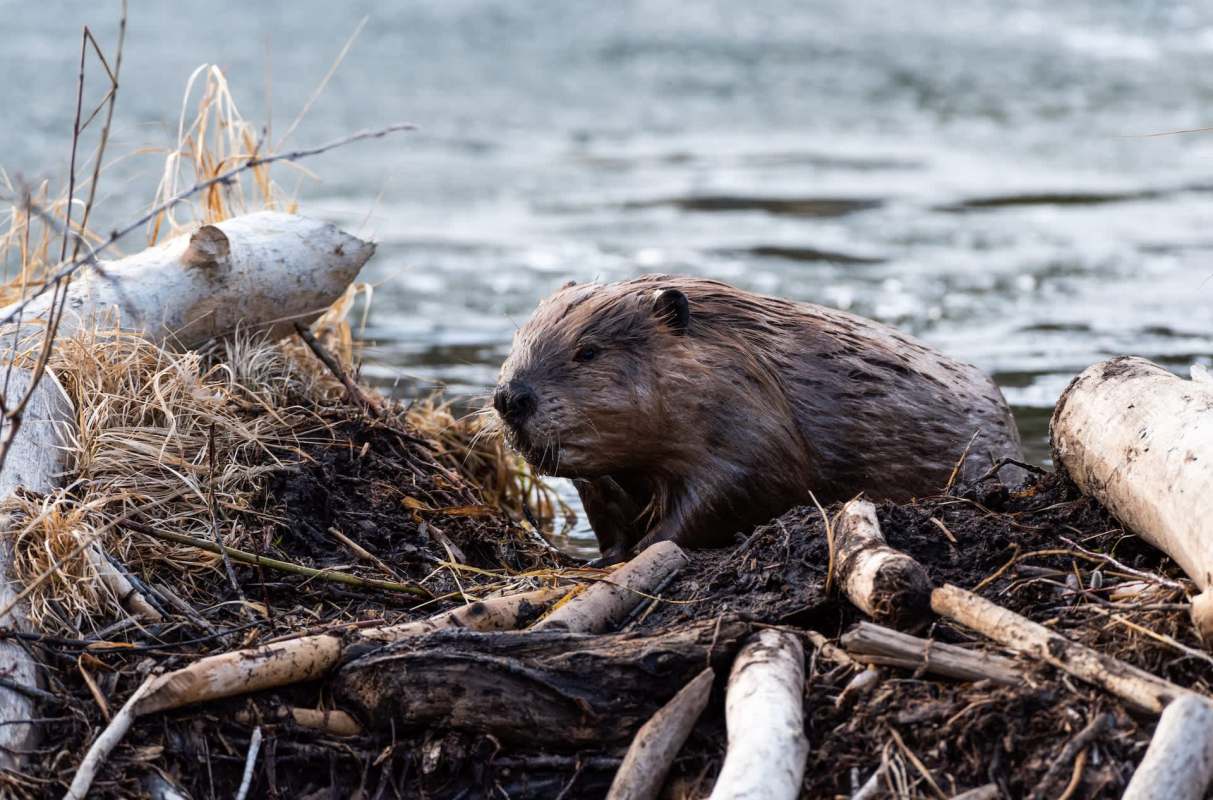
Near a McDonald's in West London, a beaver family has reshaped a long-overlooked site into a flourishing wetland.
It may sound unusual to rely on wildlife for urban water management, but the project's leader says the animals are already helping shield the surrounding area from intense rainfall.
What happened?
Rather than move ahead with a conventional flood-control plan, conservationists in Ealing, a borough in West London, chose a nature-based approach and introduced five wild beavers to the 24-acre Paradise Fields site in 2023.
As CNN reported, Paradise Fields had repeatedly flooded during major storms, with water spilling into nearby streets and affecting Greenford tube station.
Sean McCormack, a veterinarian, wildlife conservationist, and project leader at the Ealing Beaver Project, said the team began by asking, "Why don't we try a nature-based solution?" and then, "Why don't we bring back beavers?"
By the beavers' second winter at the site, the target area had its first flood-free stretch in a decade, McCormack said.
TCD Picks » Quince Spotlight
💡These best-sellers from Quince deliver affordable, sustainable luxury for all




CNN reported that Paradise Fields now has eight beavers, including a litter of kits born this spring.
McCormack said the impact has extended beyond flood prevention. What he described as "a forgotten and neglected space" now supports birds, butterflies, bats, fish, and freshwater shrimp.
Why does it matter?
As planetary warming drives stronger storms, communities are increasingly looking for ways to limit flood damage without relying entirely on concrete-heavy infrastructure.
Beavers are particularly useful in that role because their dams hold back flowing water and form ponds that act as natural storage areas.
Emily Fairfax, an assistant professor of geography at the University of Minnesota, explained that beaver canals are "like little micro-streams that radiate outward from their ponds across valley bottoms like a spiderweb of water." In practice, that helps spread water across the landscape instead of sending it rushing downstream all at once.
Those wetlands can also provide benefits during dry periods and may even help reduce wildfire risk because the ground stays wetter for longer.
Fairfax summed up the animal's versatility by saying "that if you've got a problem, there's a beaver for that."
Still, beavers are not a simple solution everywhere. Farmers and landowners can worry about burrowing, bank damage, and unwanted flooding, which means rewilding projects require careful planning and public support.
What's being done?
CNN reported that successful beaver releases depend on adequate food, water, and space, along with a contingency plan if the animals build near human infrastructure.
George Holmes, a conservation professor at the University of Leeds, warned that some advocates may be promising too much.
"There are a lot of people out there promising that beavers will do all these marvelous things, but I think they are making promises they can't keep," Holmes said.
Even so, the Ealing community appears to be embracing its new residents, with children walking past beaver dams after school and locals gathering for "beaver safari" sightings.
"We're demonstrating here that actually it's not that wild an idea to live alongside beavers," McCormack said.
And in the right places, Fairfax added, "we should trust them to build wetlands — that's their specialty."

Get TCD's free newsletters for easy tips, smart advice, and a chance to earn $5,000 toward home upgrades. To see more stories like this one, change your Google preferences here.







