


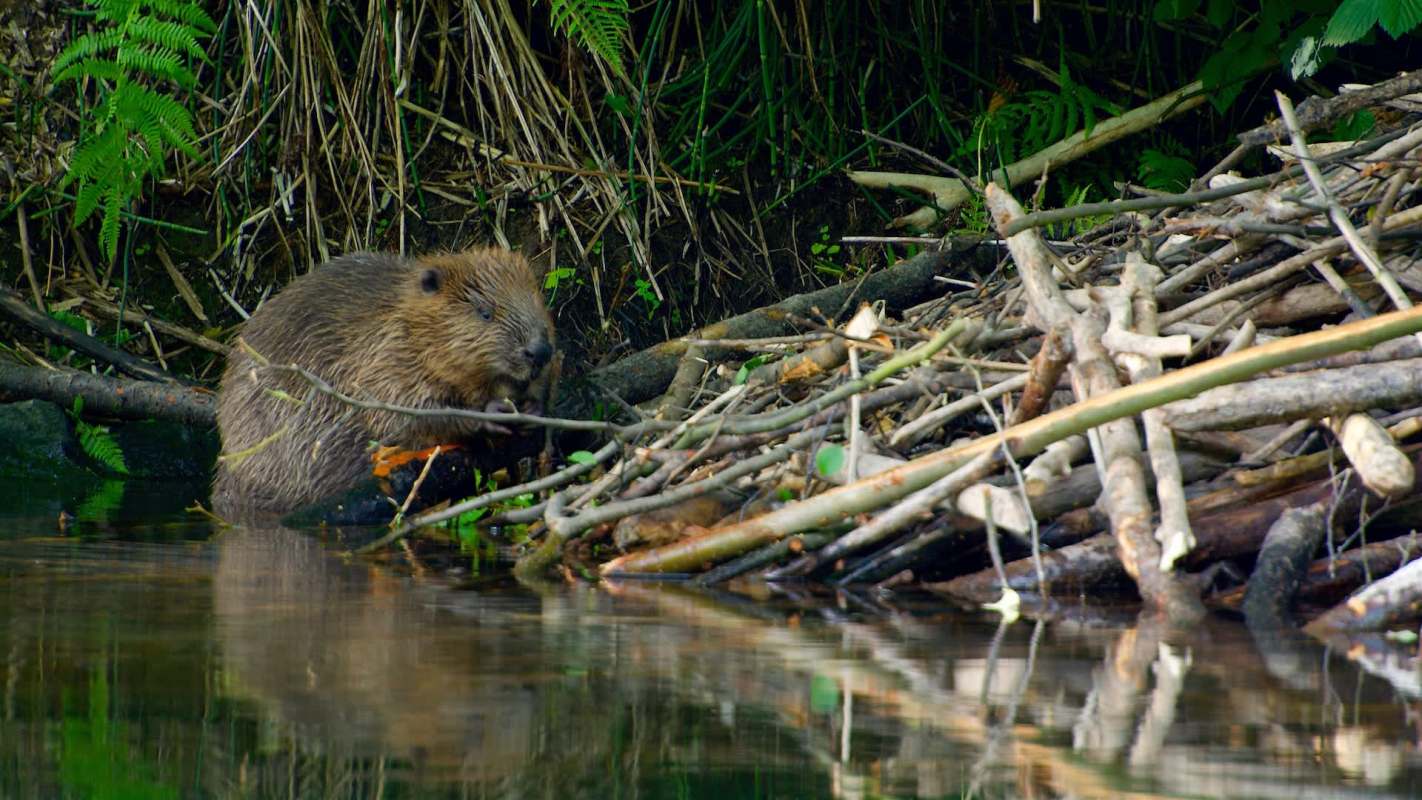
The legend of beavers continues to grow. New research showcases the remarkable role they play in managing carbon pollution through their prolific dam-building.
USA Today reported on a study published in the journal Communications Earth & Environment that revealed just how much carbon beavers' dams can sequester.
In this pioneering research, scientists examined beaver influence on carbon processing in northern Switzerland over a 13-year period.
Beavers recently returned to the area as part of a larger continental effort to reintroduce the keystone species. The effort is bearing fruit, with the dams trapping all sorts of organic and inorganic materials, including carbon.
"Our research shows that beavers are powerful agents of carbon capture and adsorption," study co-author Annegret Larsen said in a news release. "By reshaping waterways and creating rich wetland habitats, beavers physically change how carbon is stored across landscapes."
In the decade-plus span, the beavers trapped an estimated nearly 1,200 tons of carbon. Their dams were much more effective than nearby forest soils, too. Researchers said the sediment from the wetlands holds up to 14 times more inorganic carbon and eight times more organic carbon.
TCD Picks » Quince Spotlight
💡These best-sellers from Quince deliver affordable, sustainable luxury for all




Any instances wherein hot weather led to the dams becoming a carbon source were more than offset by the times when they were a powerful carbon sink.
Thus, if you let beavers run rampant in suitable wetland areas in Switzerland, the scientists believe it could offset 1.2-1.8% of the country's carbon pollution.
That is all without the need for spending money or human interference. This research drives home again the wonderful abilities of beavers to aid ecosystems.
In trapping carbon, they can help slow pollution that is warming the planet with troubling results. It adds to the benefits they provide, such as helping other members of wetland ecosystems, providing flooding and wildfire resilience, and reducing water pollution.
They're good for thrifty governments too, as they'll do expensive work for free like in the Czech Republic.
As impressive as beavers are, the scientists were still taken aback by just how big their impacts were on creating carbon sinks with their dams.
Study co-author Lukas Hallberg said the results on display were "far exceeding what we would expect from an unmanaged stream corridor."
"This highlights the enormous potential of beaver-led restorations and offers valuable insights into potential land‑use planning, rewilding strategies, and climate policy," Hallber concluded.

Get TCD's free newsletters for easy tips, smart advice, and a chance to earn $5,000 toward home upgrades. To see more stories like this one, change your Google preferences here.







