


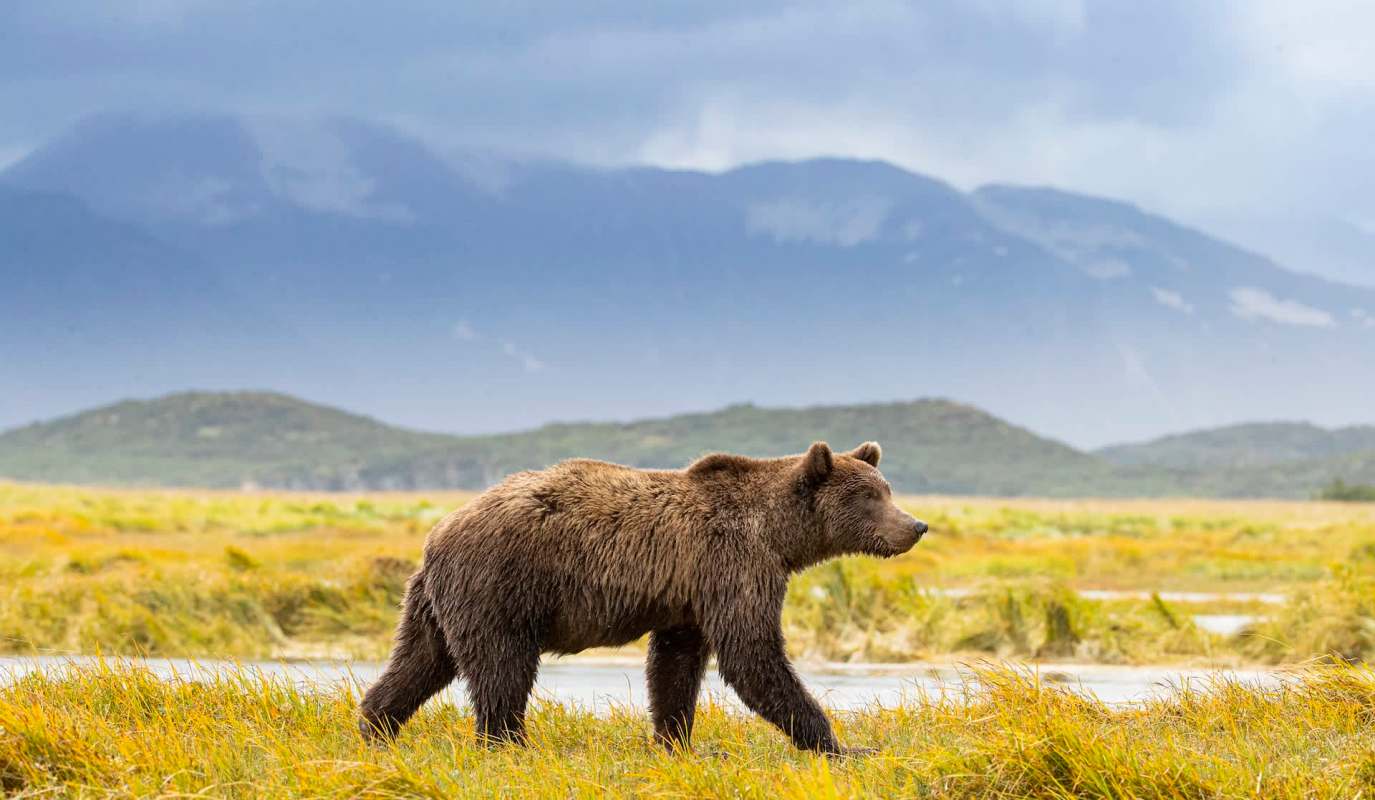
Will your dog protect you from a bear attack in the wild, or should you leave your dog at home? The answer might surprise you.
One trail runner's black Lab did exactly what many people hope a dog will do in bear country. The dog stopped, barked, and revealed a nearby bear before the situation escalated.
However, one instance doesn't equal a conclusion. The larger record points in a different direction. A new review of 326 encounters involving bears and dogs found that bringing a dog can raise the chances of conflict, despite what many hikers assume.
Here's what to know
Nick Mott wrote that the findings made him reconsider how much protection trail dogs really offer. A study, published in the Journal of Wildlife Management, looked at more than a century of encounters involving black, brown, and polar bears from Alaska to Florida.
According to the Juneau Independent, lead author Tom Smith, a research wildlife biologist at Brigham Young University in Utah, found that dogs gave owners advanced warning in only about 1 out of 11 encounters. Conversely, in more than half the cases, the dog was the factor that set off the bear.
Leash use also stood out in the data. Off-leash dogs were involved in about six times as many incidents as leashed dogs, and in 27 of those cases, dogs ran back to their owners with a bear behind them. Owners were injured 70% of the time in those situations.
TCD Picks » Quince Spotlight
💡These best-sellers from Quince deliver affordable, sustainable luxury for all




Among the cases Smith examined, bear spray appeared in only about a tenth, while firearms were involved in roughly a third.
More background
The findings push back on a common assumption that dogs can both detect bears early and help fend them off. Smith put it bluntly: "If you think a house pet is likely going to be your bear, not only detector but deterrent, you might want to think twice about that."
The study also highlights how much human behavior can shape these encounters. Bears may react to surprise, perceived danger, or a fast-moving dog entering their space, and people can increase the risk when they travel with dogs off leash, stay quiet, or go without spray. That aligns with reporting on why wild animals attack humans, which often points back to human behavior and proximity.
Smith's review included five human deaths and 56 dog deaths. It also found that owners were often injured while trying to protect pets that had rushed into confrontations with bears.
The research does not say every meeting between dogs and bears turns dangerous. As Smith noted in the paper, "For the most part, people and their dogs pass through bear country without incident."
What can be done?
The takeaway is not that dogs should never go into bear habitat; it's that they should not be relied on or a replacement for dependable safety gear.
Smith said the best-known precautions are still the most important: travel in groups, reduce food odors while camping, make noise, and carry an effective deterrent. "You have no business being in bear country without a deterrent," he said.
That means keeping bear spray where it can be reached fast and knowing how to use it right away. Encounters can unfold in seconds, so spray that is buried in a backpack may not help much, and although experienced firearm users may opt for that tool, Smith stressed that preparation matters as much as the choice of deterrent.
If a dog does come along, using a leash can lower the risk. It can stop a pet from racing ahead, charging through brush, or chasing wildlife, the kinds of behavior that can turn an avoidable situation into a dangerous one for people and animals alike.
Summing up the point to Mott, Smith said, "The takeaway isn't to keep dogs out of bear country. The takeaway is there are things you can do that greatly improve your odds."

Get TCD's free newsletters for easy tips, smart advice, and a chance to earn $5,000 toward home upgrades. To see more stories like this one, change your Google preferences here.







