


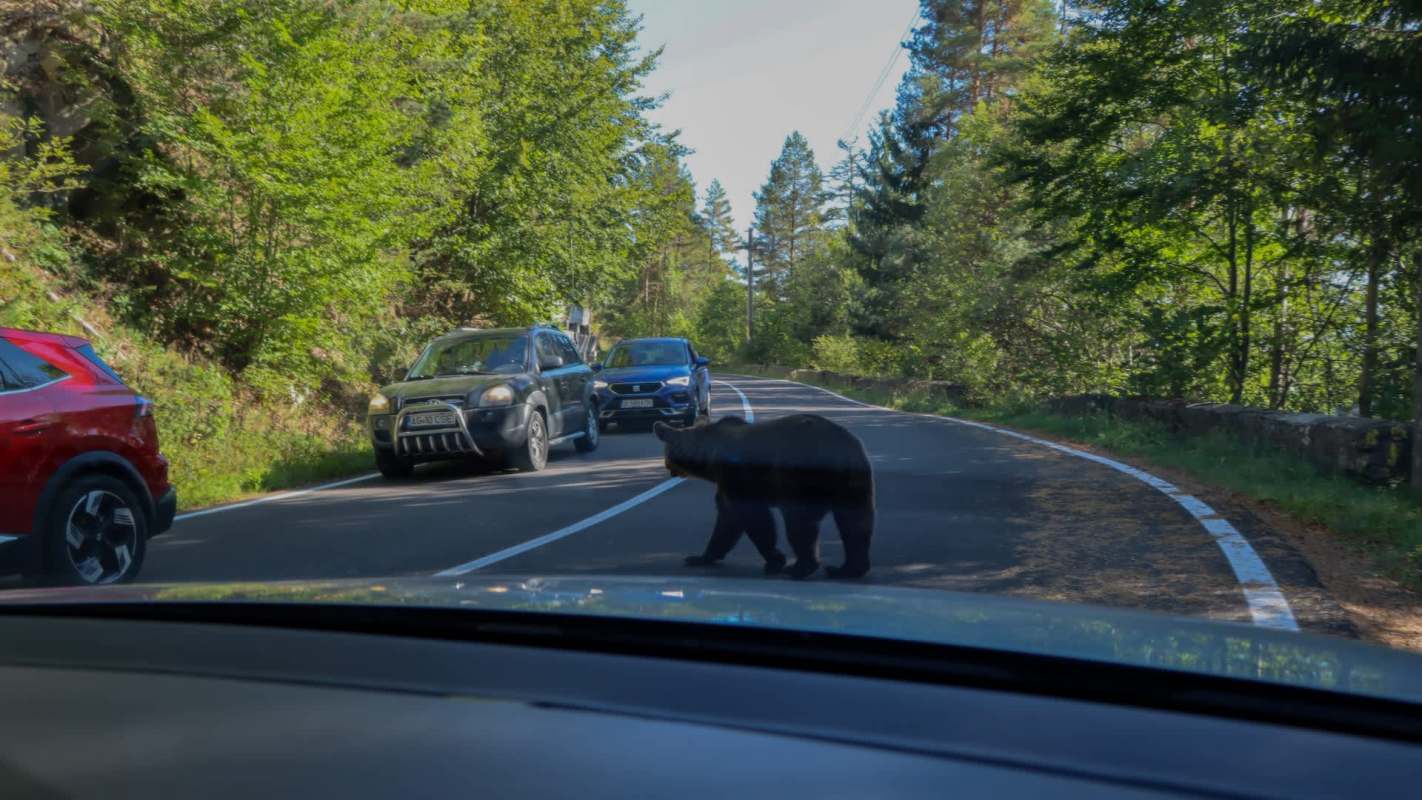
A Bulgarian tourist is speaking out after a bear attack on Romania's famous Transfagarasan mountain road, saying the animal smashed through his car window and tried to pull him out.
The incident is drawing renewed attention to how tourist behavior — especially feeding wild animals — can turn already risky wildlife encounters into something far more dangerous.
Novinite reported that Georgi Bizhev, a tourist from Gorna Oryahovitsa in Bulgaria, told Bulgarian National Television he was injured when a bear attacked his vehicle near the Vidraru Dam on Romania's Transfagarasan road, a route known for frequent bear sightings.
Bizhev said the area is so closely associated with roadside bear sightings that many visitors expect them and pull over to watch the animals. He acknowledged that feeding bears is wrong but said many tourists still do it while traveling through the so-called "bear pass."
Bizhev said the bear used startling force once it reached the car.
"The window of our car turned out to be like a newspaper for it," Bizhev said, according to Novinite. "It tried to grab me and pull me out of the car."
TCD Picks » Quince Spotlight
💡These best-sellers from Quince deliver affordable, sustainable luxury for all




During the attack, he said, the animal smashed the window and got into the car. Bizhev said his seatbelt may have kept the injuries from being more severe as the bear tried to yank him from the vehicle.
He also said he raised his arm when the bear went for his neck and was bitten on the hand instead.
The attack appears to be tied, at least in part, to human behavior. When wild animals become accustomed to receiving food from people, they may approach cars and crowds more boldly. Repeated feeding can condition bears to associate vehicles with food, increasing the likelihood of aggressive encounters and official intervention.
Feeding or approaching wild animals can not only have serious consequences for ecosystems and public safety. It is also dangerous for the animal, as wildlife that attacks is often euthanized.
Incidents like this can affect tourism, strain emergency response systems, and deepen conflict between humans and wildlife in already sensitive areas.
Romanian officials have reminded the public that feeding bears is banned, and violators can face fines of 10,000 to 30,000 lei ($2,210 to $6,630).
The safest choice for travelers is simple: stay in the car, keep windows up when wildlife is nearby, never offer food, and do not stop for close-up photos if animals are approaching traffic.
Tourist hotspots known for animal sightings may also need stronger signage, more visible patrols, and public awareness campaigns to discourage behavior that normalizes feeding. Habituated wildlife is not tame wildlife.
Despite the trauma, Bizhev accepted responsibility for the encounter, saying the incident occurred within the animal's natural habitat, Novinite reported. "I entered its environment," he said. "It was a mistake for which I paid."

Get TCD's free newsletters for easy tips, smart advice, and a chance to earn $5,000 toward home upgrades. To see more stories like this one, change your Google preferences here.







