


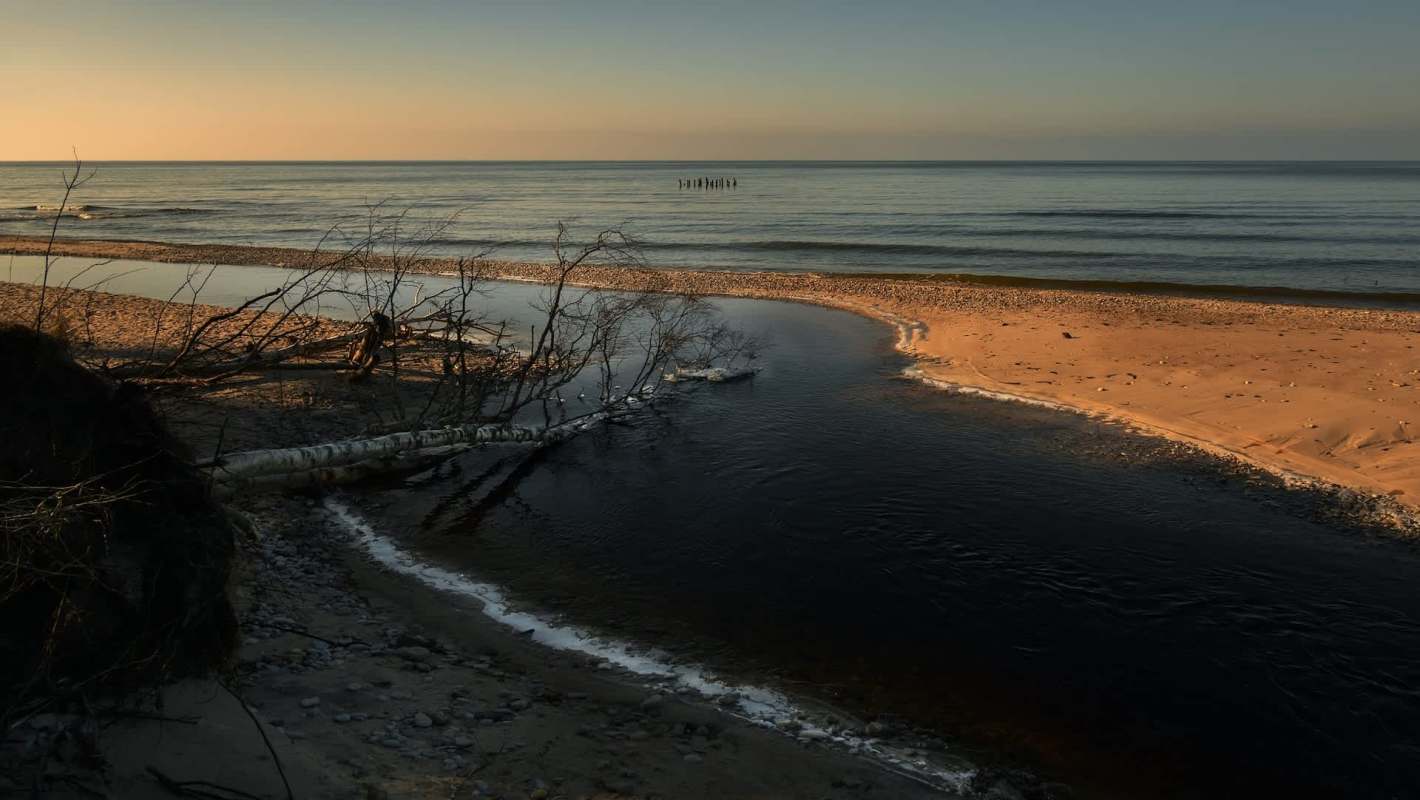
The Baltic Sea saw 275 billion tons of water drain away in early February, dropping to a level not recorded in 140 years, Euronews reported.
What's happening?
Winds from the east, blowing steadily since January, have been pushing water out of the Baltic basin and past the Danish Straits into the North Sea.
The sea now sits 67 centimeters lower than its 1886 baseline.
Dr. Tomasz Kijewski, of the Institute of Oceanology at the Polish Academy of Sciences, told Euronews that this steep drop is connected to the breakdown of the polar vortex, a high-altitude air current that normally keeps cold air trapped over the Arctic.
As that system weakens, frigid air spills southward, disrupting weather patterns across the continent.
"We jokingly call it the open fridge effect," Kijewski said. "When we open the fridge, air escapes down the bottom and we get cold feet."
Why is the Baltic Sea's water loss concerning?
The polar vortex is weakening as the Arctic heats up at roughly quadruple the rate of the rest of the planet, says researcher Anna Sowa, who studies the Arctic from the Experyment Science Centre in Gdynia.
That warming is doing far more than draining one sea.
Across the world's oceans, rising temperatures are triggering coral bleaching, a process through which heat-stressed coral lose the algae they depend on for nutrition. Once that happens, entire reef systems can fall apart in weeks.
"A vibrant reef turns into an underwater wasteland," Kijewski told Euronews.
TCD Picks » Upway Spotlight
💡Upway makes it easy to find discounts of up to 60% on premium e-bike brands





|
Which of these savings plans for rooftop solar panels would be most appealing for you?
Click your choice to see results and speak your mind. |
 Save $1,000 this year 💸
 Coral reefs support a minimum of one quarter of the ocean's species, and a temperature bump of just 1.5°C could destroy up to 90% of them.
In the Baltic itself, warmer, less salty water promotes blooms of algae that deplete oxygen for other sea creatures.
Cod have been hit especially hard; the oxygen-poor zones near the seafloor keep spreading, leaving fewer places for them to reproduce.
What's being done about the Baltic Sea's water loss?
The Baltic nations have coordinated via the Baltic Marine Environment Protection Commission (HELCOM) and the EU to build water filtration and sewage treatment infrastructure.
The flow of new pollutants into the sea has largely stopped.
The Bay of Puck, once considered nearly lifeless, has seen seagrass meadows grow back on their own in the last 20 years.
If you want to help slow ocean warming driven by these disruptions, switching to clean energy options where you can and reducing your household energy use can make a difference.
Contact your elected officials and voice your support for policies that protect marine ecosystems and fund ocean conservation efforts.

Get TCD's free newsletters for easy tips to save more, waste less, and make smarter choices — and earn up to $5,000 toward clean upgrades in TCD's exclusive Rewards Club.
Cool Picks






