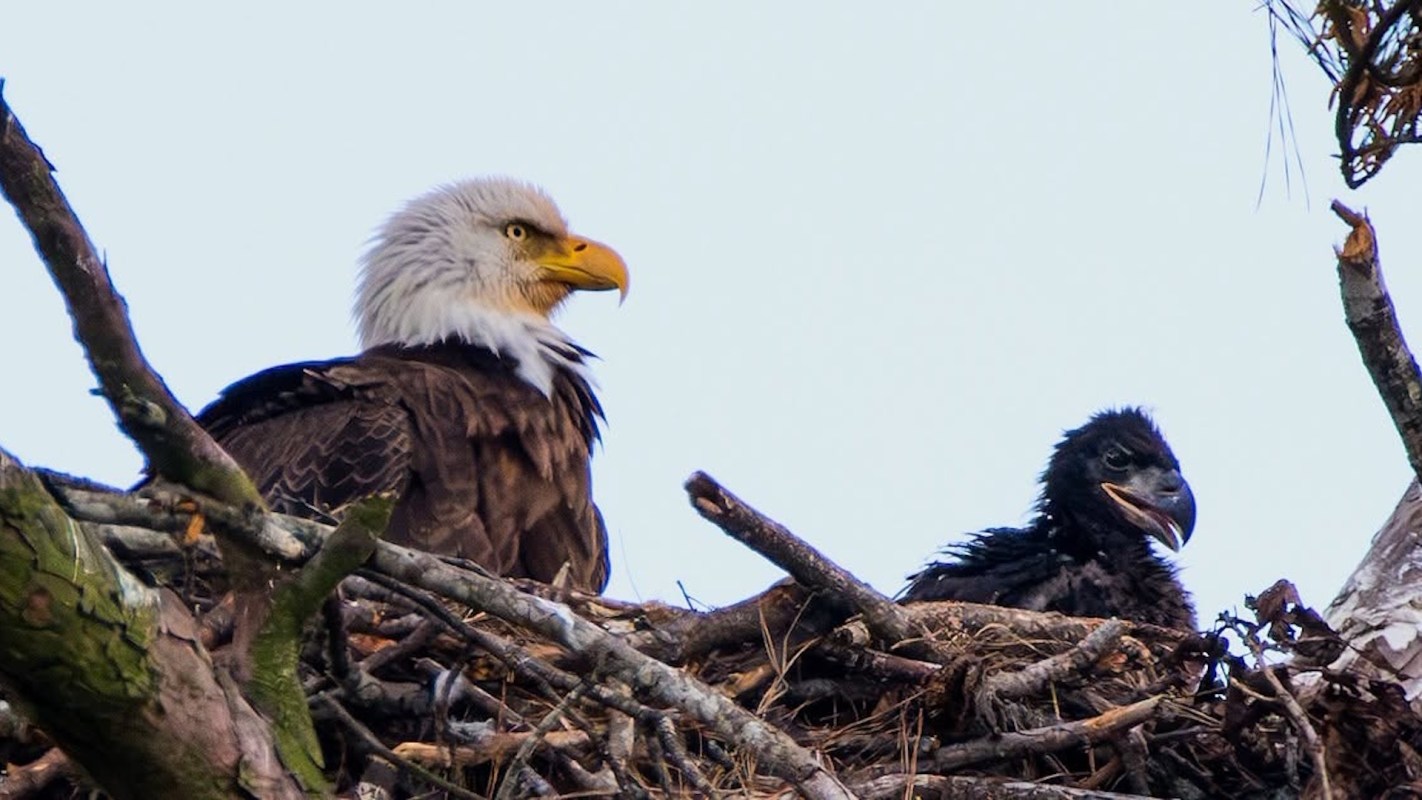
Georgia's latest bald eagle survey points to another strong nesting year in the state. Wildlife officials found nest success well above average, offering more evidence that the species' recovery is holding.
The new results stand out even more because Georgia had virtually no successful bald eagle nests in the 1970s, as the Georgia Department of Natural Resources, or DNR, noted.
What's happening?
Even with a reduced survey footprint, officials recorded 113 occupied bald eagle nest territories, including 101 successful nests that produced 170 fledglings, according to a write-up of the survey. That equals an 89% success rate, which the DNR noted is well above the long-term average.
Bob Sargent, former Georgia DNR program manager and leader of the survey, touted the findings.
"This year's results reflect a population that is having a strong year acquiring food resources and has clearly bounced back from the serious hit productivity took — especially on the coast — during the initial avian influenza outbreak in 2022," Sargent said in the release.
The survey did cover less territory than usual. Bad weather canceled some flights, and Sargent's retirement shifted the normal schedule. But the department said that checking nearly half of Georgia's known nests was still enough to provide a reliable picture of the statewide population.
TCD Picks » Quince Spotlight
💡These best-sellers from Quince deliver affordable, sustainable luxury for all




Based on the results, officials believe the state remains above 200 nests overall, a mark Georgia has held since 2015.
The 2026 survey covered coastal counties and barrier islands, parts of northeast Georgia, and several reservoirs between Atlanta and Macon. Volunteers also contributed ground observations for 16 nests, helping complete the count.
Why does this matter?
The species' rebound reflects years of habitat improvement, environmental protections, cleaner air and water, and public investment following a steep decline.
According to the DNR, the state now has more than 200 bald eagle nests, up from 55 around 2000 and just 1 in 1981.
Officials attribute the recovery to the Environmental Protection Agency's 1972 ban on dichlorodiphenyltrichloroethane (or DDT), habitat gains tied to the Clean Water Act and Clean Air Act, Endangered Species Act protections, restoration work, and forest regrowth.
Georgia also supports protective measures in part through selling specialty license plates, which fund conservation efforts for eagles and other species of concern.
What are people saying?
For Sargent, the latest numbers suggest the population is successfully managing threats like bird flu.
"Unfortunately, we have evidence that the disease persists in Georgia and elsewhere across the U.S.," Sargent said in the release. "But our survey shows that these magnificent birds are resilient."

Get TCD's free newsletters for easy tips, smart advice, and a chance to earn $5,000 toward home upgrades. To see more stories like this one, change your Google preferences here.