


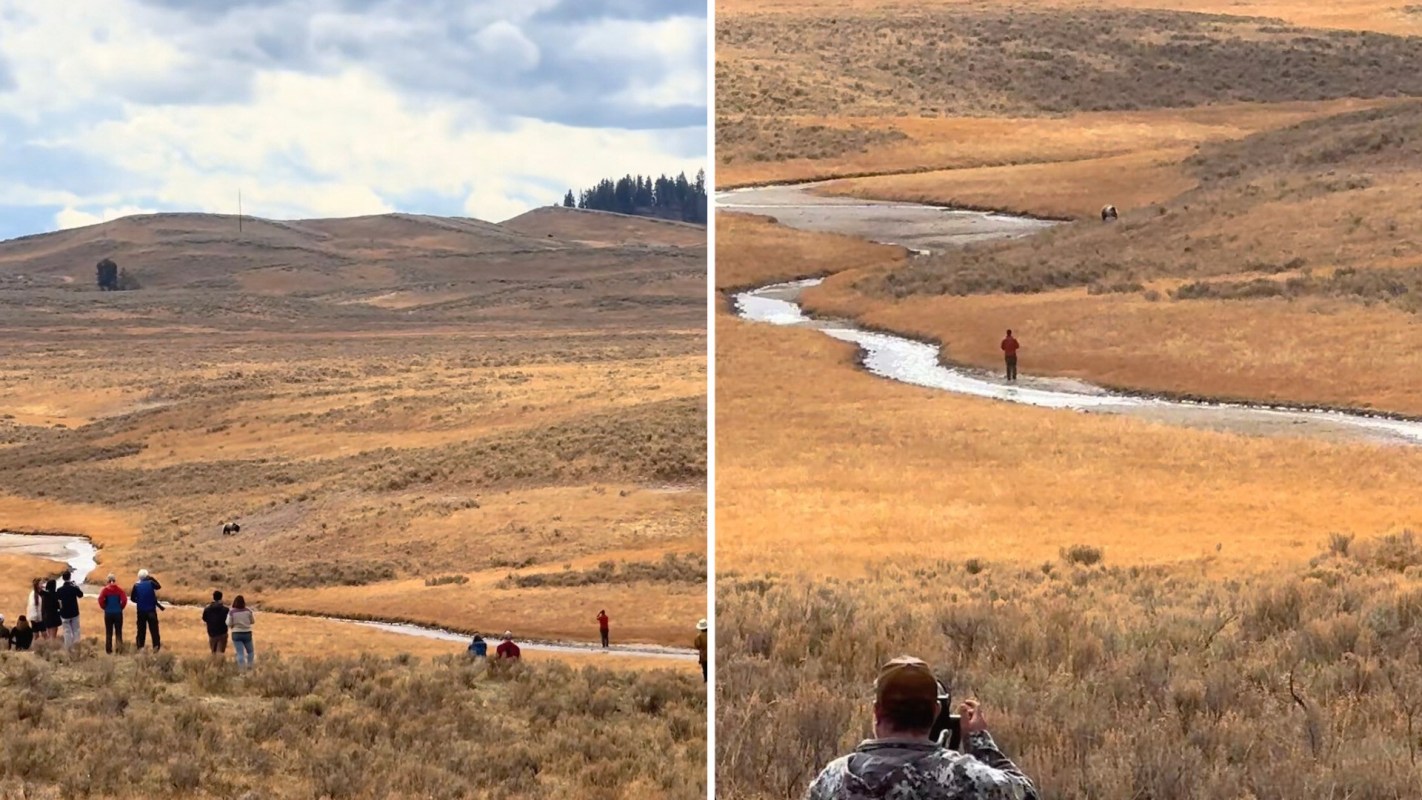
A close call between a National Park visitor and an apex predator has caused outrage.
TikToker Elizzabeth (@elizzabethelden) posted a video of what is an unfortunately common occurrence.
Someone in the background of the footage says, "Oh my God, bruh," in response to another man in the distance standing alarmingly close to a grizzly bear.
@elizzabethelden Friendly reminder to stay away AT LEAST 100yards away from bears!! Mr.Orange coat is really lucky this one is was feeling chill. Getting murked by a grizz is not worth the picture or the animals life!!👹 #tourons #yellowstonenationalpark #yellowstone #grizzlybear #wildlife ♬ oh my god bruh oh hell na man
The video is a "friendly reminder to stay at least 100 yards away from bears!" the TikToker noted.
The National Park Service website clearly states this warning and suggests staying the same distance away from wolves and cougars.
The NPS also advises against solo hiking, as only 9% of people injured by bears in parks were in groups of three or more people. One should also regularly scan the surroundings to spot nearby bears.
These animals are huge. A large adult can weigh up to 900 pounds, but they move incredibly fast — up to 35 miles per hour, according to Britannica.
With claws measuring two to four inches, these agile animals are formidable opponents for a human.
However, these bears mostly avoid people. Most attacks are defensive due to surprise, people getting too close, or protecting young or a nearby food source, like an animal carcass.
Potentially being harmed by a bear is "not worth the picture or the animal's life," as Elizzabeth wrote on her page.
TCD Picks » Upway Spotlight
💡Upway makes it easy to find discounts of up to 60% on premium e-bike brands





|
Do you think America does a good job of protecting its natural beauty? Click your choice to see results and speak your mind. |
 Definitely 👍
 Too much human contact can facilitate a change in a wild animal's behavior. For example, in Tennessee, one bear that no longer feared people created a stir at a concession stand before it was caught and euthanized, as WATE 6 on Your Side News reported in 2024.
The needless loss of bears also affects the ecosystem. They help recycle nutrients into the soil by moving carcasses into forests, digging activities, and dispersing seeds in their dung after eating fruit. Plus, they control and balance the animal populations they prey on.
As one commented, "People underestimate animals and overestimate their abilities."
Another concurred, "That bear could cover that distance in 4 to 5 seconds. Bears are faster than most think."
Sadly, these incidents are so common that one noted, "[I] knew this was Yellowstone before I even looked at the location," before observing that people are irresponsible around bison, too.
Taking local action by calling out and not participating in such behavior is one way to protect wildlife.

Join our free newsletter for good news and useful tips, and don't miss this cool list of easy ways to help yourself while helping the planet.
Cool Picks






