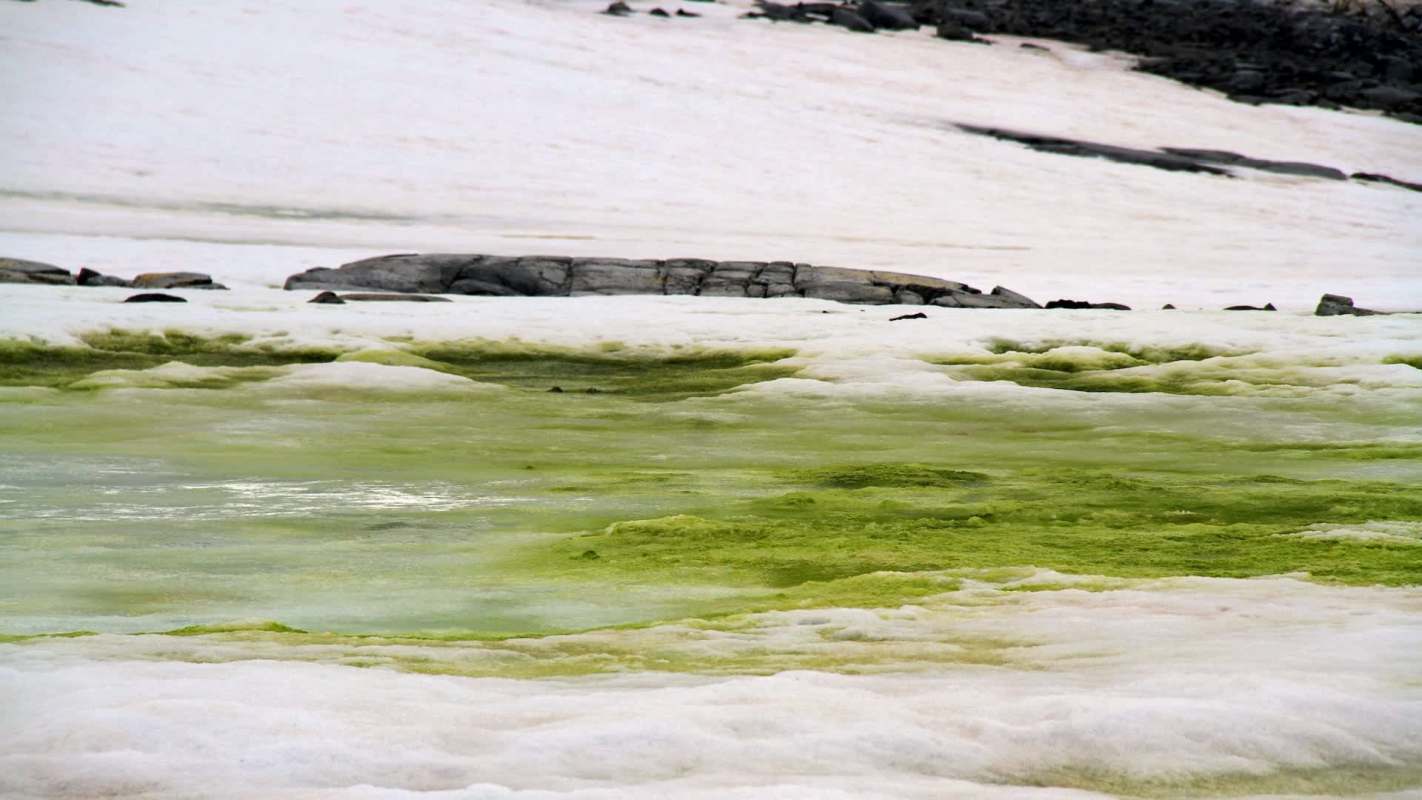
New research from the Korean Polar Institute has revealed a concerning trend linked to the decline of Arctic sea ice.
What's happening?
Chosun Biz reported that the research, published in Limnology and Oceanography, was the result of six years of data collection. Its researchers used an icebreaking vessel in the East Siberian and Chukchi regions of the Arctic to get the data.
The team tracked a process called the biological pump. This happens when the microalgae inhabiting the underside of the ice break off and sink to the ocean floor.
As sea ice recedes, the microalgae attached to the ice sink sooner and with less persistence. This has profound implications for the marine wildlife that are sustained by the collapse, as well as the amount of carbon sequestered by the algae.
The principal researcher at the Ocean and Atmospheric Research Division, Yang Eun-jin, explained, "The decline of Arctic Ocean sea ice due to climate change goes beyond the simple disappearance of ice and can trigger structural changes across the Arctic Ocean food web and carbon cycle."
Why is the biological pump important?
The biological pump is one of nature's largest carbon sinks. It transfers organic carbon matter, such as microalgae in sea ice, from the ocean's surface to its depths.
TCD Picks » Upway Spotlight
💡Upway makes it easy to find discounts of up to 60% on premium e-bike brands





According to the Woods Hole Oceanographic Institution, scientists consider carbon to be sequestered when it reaches a depth of 500 meters or more. Once it reaches that depth, it's unlikely to surface for centuries. Without carbon sequestration, twice as much CO2 would be released back into the atmosphere.
The study furthers our currently limited understanding of the process. It's not yet clear exactly how sea ice loss, ocean acidification, and warming seas will affect the biological pump in the long term, per Oceanography. But the implications are concerning.
What's being done about it?
The president of the Korean Polar Institute, Shin Hyeong-cheol, has called for further study: "Long-term, precise observation of changes in the Arctic ecosystem will be the starting point for responding to climate change and protecting our future."
Raising awareness and educating on these issues has never been more critical. A better understanding of the problem is the first step in developing effective measures to mitigate it. The ultimate answer is to dramatically reduce harmful emissions and pivot toward clean, renewable energy.
TCD Picks » Stasher Spotlight
💡Stasher's reusable food storage options make it easy and affordable to live life with less plastic


|
Do you worry about the quality of the air inside your home?
Click your choice to see results and speak your mind. |
 Yes — often 😬
Join our free newsletter for good news and useful tips, and don't miss this cool list of easy ways to help yourself while helping the planet.
Cool Picks