


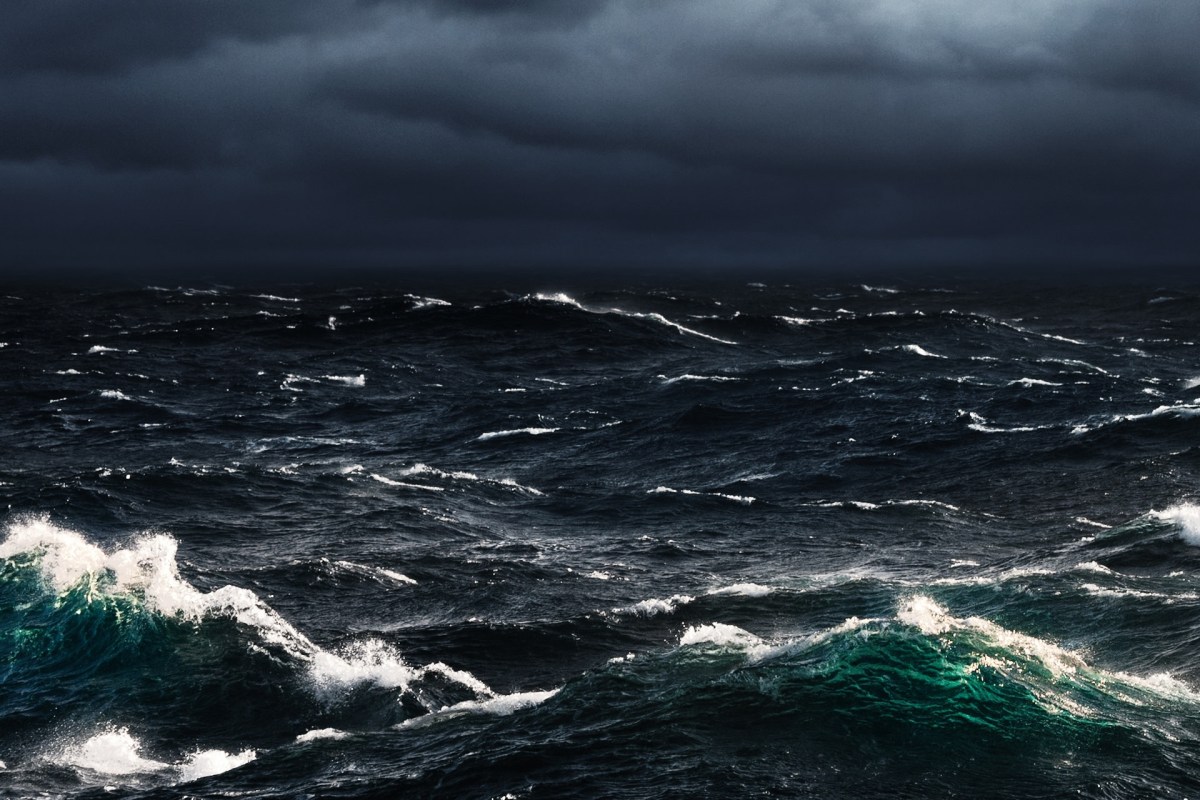
Over the summer, a team of research scientists braved the dangerous, Arctic waters of Iceland and Greenland, according to The New York Times, but what they sought during a two-week expedition was more alarming than icebergs and rough seas.
What's happening?
Anyone who watched the oft-maligned 2004 disaster film The Day After Tomorrow might find researchers' observations about a critical system of ocean currents uncomfortably familiar.
Although many scientists "hated" the movie for several Hollywood-style inaccuracies, they grudgingly acknowledged that it drew attention to the importance of the Atlantic Meridional Overturning Circulation (AMOC) and what would happen if it collapsed.
A little over 20 years on, researchers brought "a shipload of data gathering equipment" to notoriously impassable seas to observe these crucial currents directly. The team placed moorings along a 35-mile path to collect a year's worth of data on Atlantic currents.
The team won't be able to retrieve the moorings or obtain those readings until next July.
University of Georgia oceanographer Nick Foukal, who led the journey, likened the small data-gathering buoys and the information they'll ultimately reveal to his experiences lobster fishing in his youth.
"It's rolling the dice," Foukal said of their tense wait for critical data on the AMOC.
Why is this important?
In August 2023, the Woods Hole Oceanographic Institute's journal Oceanus examined a contemporaneous study in the journal Nature Communications that warned of the AMOC's "forthcoming collapse."
Worryingly, that paper pinpointed a timeline for that to occur, between 2025 and 2095.
According to the National Oceanic and Atmospheric Administration, the AMOC is like a conveyor belt that traverses the Earth and stabilizes the global climate.
TCD Picks » Quince Spotlight
💡These best-sellers from Quince deliver affordable, sustainable luxury for all




|
Should we be harnessing the ocean to power our homes? Click your choice to see results and speak your mind. |
 Absolutely 👍
 BBC Science Focus explained that as the planet overheats, the AMOC is gradually weakening. At the same time, Arctic ice melt is diluting the current's salinity, hastening its collapse. In late August, The Guardian reported that an AMOC collapse was no longer a "low-likelihood" event.
The increasing probability that the AMOC will collapse represents a critical tipping point with incredibly far-reaching effects, as the Times noted.
Temperatures in Northern Europe, including the U.K., would abruptly plummet, even stronger extreme weather would batter the Americas, and "perhaps most troublingly, [it would disrupt] the rain belts that feed people across Africa, South America and Asia," the outlet warned.
While the resulting chaos wouldn't unfold quite as quickly as it did in The Day After Tomorrow — a primary reason scientists disliked the film — it would wreak havoc on the planet's already volatile food supply, displace populations, and cause sudden, catastrophic sea level rise.
What's being done about it?
Experts have warned that an AMOC collapse is an "if, not when" scenario, and the government of Iceland classified it as a national security risk.
Scientists have long called on governments to take aggressive action to curtail the rate of warming and forestall the collapse of the AMOC.
Individuals can pitch in by staying aware of critical climate issues and joining scientists in pressuring lawmakers to act.

Get TCD's free newsletters for easy tips to save more, waste less, and make smarter choices — and earn up to $5,000 toward clean upgrades in TCD's exclusive Rewards Club.
Cool Picks






