


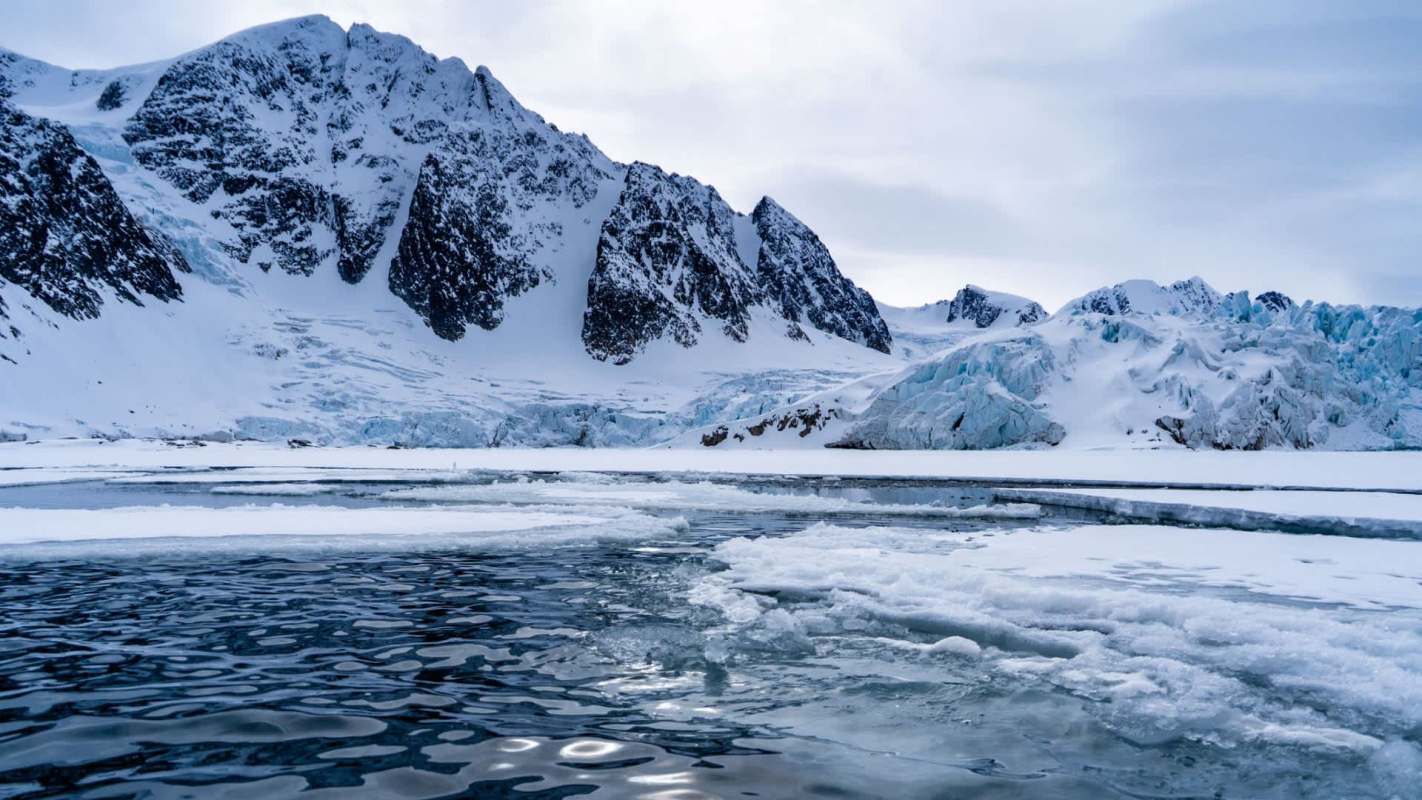
The Arctic is undergoing extreme melting as rising temperatures and climate patterns alter the natural cycles of its extreme landscapes.
What's happening?
Intensified extreme weather is causing rapid ice loss and higher melting rates throughout the Arctic, where melting that usually takes weeks or months happens in a few days, according to an NC State study.
Winter accumulation of snow and ice no longer compensates for summer losses.
The highest rates of extreme melting are recorded in northern Greenland, where the Iceland Hotspot sits underneath, and in the Canadian Arctic. However, the eastern Arctic, with Iceland and Russia, shows smaller increases in melting, according to an Environmental Research study.
Greenland holds the largest ice reserve in the Northern Hemisphere, potentially raising sea levels by more than 20 feet, and is responsible for 20% of sea-level rise. In the summers of 2012, 2019, and 2021, more than 90% of Greenland's surface was in a state of melting.
Why is this melting concerning?
These melting episodes are triggered by rising global temperatures and resulting extreme weather patterns, such as prolonged blocking anticyclones. Anticyclones occur when high-pressure areas remain stationary for days, allowing warm air from the south to raise surface temperatures.
These blocks have become more frequent and longer-lasting because of rising temperatures and the burning of coal, oil, and gas for energy, which releases heat-trapping air pollution into the atmosphere.
Each warm-weather event melts and exposes darker ice surfaces, reducing the reflectivity of ice and increasing surface temperatures. This creates a negative feedback loop that accelerates ice loss in the Arctic — and especially in Greenland.
Since the 1990s, summer melting has expanded into high-altitude areas that typically always remain below freezing, shrinking the zone of consistent freezing each year.
Beyond geological changes, the massive amounts of melted freshwater from the Arctic significantly impact the rest of the planet, leading to loss of ice and rising sea levels, altered rotation of the Earth, altered salinity levels, increased risk of disease, and extreme flooding events, putting coastal communities, ecosystems, and drinking water at risk.
TCD Picks » Quince Spotlight
💡These best-sellers from Quince deliver affordable, sustainable luxury for all




|
How worried are you about rising ocean levels? Click your choice to see results and speak your mind. |
 Very 😰
 What's being done about this extreme melting?
Extreme melting affects the planet's climate balance and may soon impact the Atlantic Meridional Overturning Circulation, a sea current that stabilizes climate in Europe, South America, and beyond.
Experts are improving Earth and ice modeling to support protective Arctic measures and enhance climate resilience through flood defenses, wetland restoration, and updated building standards.
Globally, reducing pollution from nonrenewable, planet-heating sources such as oil, coal, and gas will be critical to slowing ice melt. Expanding renewable energy, going electric on the road, and supporting science-based policies can help limit future warming (and melting) and the critical climate issues that follow.

Get TCD's free newsletters for easy tips to save more, waste less, and make smarter choices — and earn up to $5,000 toward clean upgrades in TCD's exclusive Rewards Club.
Cool Picks






