


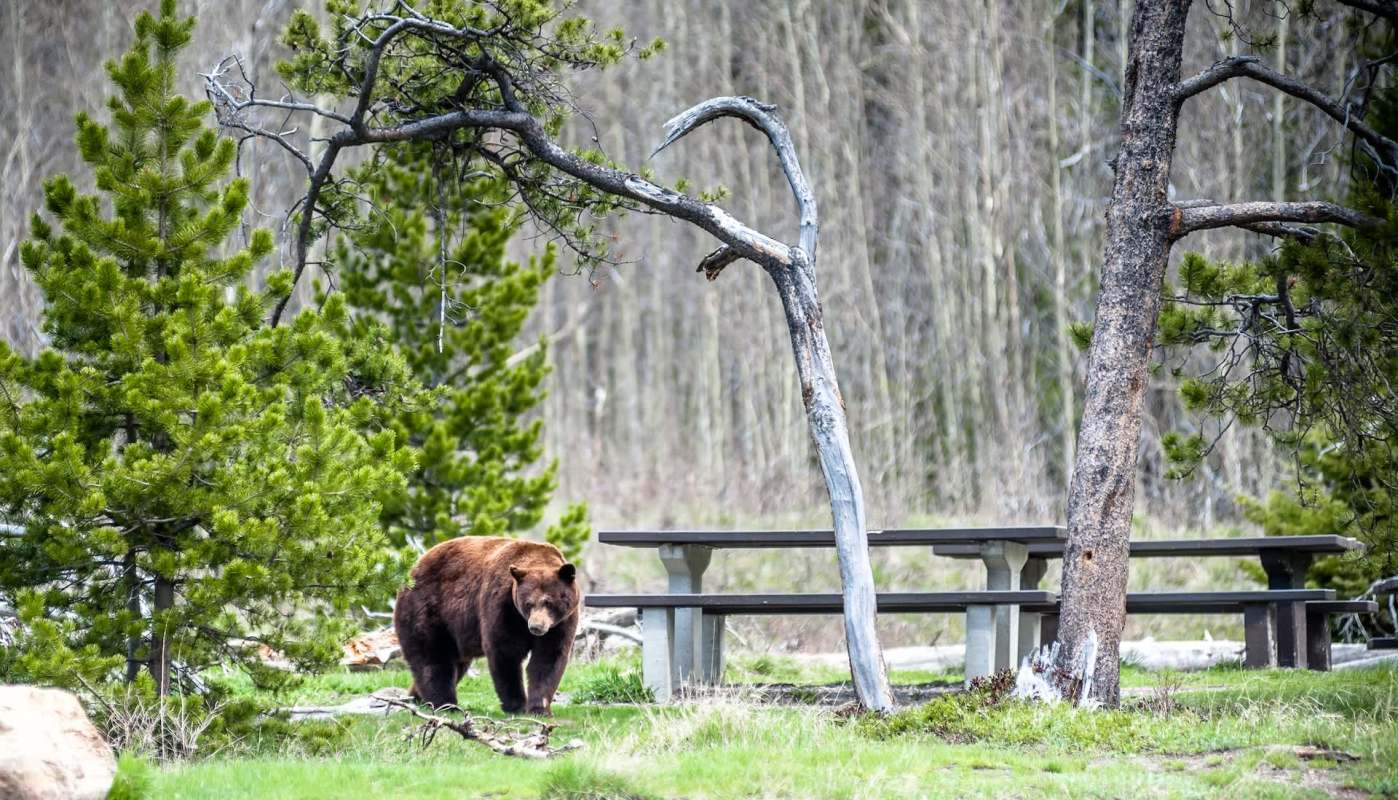
Campers were surprised when a bear was seen roaming a visitor area Angeles National Forest, California, but the animal's presence highlighted the challenges facing wildlife in a warming climate.
What's happening?
In an Instagram reel posted by Raphael Carreon (@xtrek18), a bear is filmed walking around the scenic campgrounds near Crystal Lake in the Angeles National Forest.
The footage shows the creature crossing the street and hovering near picnic tables where campers were eating their meals.
"Did you know there is a friendly bear at Crystal Lake campgrounds actively waiting for visitors for food?" Carreon wrote.
This wasn't the first occasion the bear was spotted near the campgrounds. Some commenters mentioned their own run-ins with the mammal.
"He walked up on us at night a few weeks ago while we were cooking," one commenter wrote.
In response to Instagram users concerned for the bear's safety, Carreon said park rangers plan on relocating the animal soon.
However, as global temperatures continue to rise, experts expect such encounters to become more common.
Why is human-wildlife conflict concerning?
Several factors are fueling the increase in human-wildlife conflict, including resource shortages caused by a shifting climate, per the BBC.
Between a lack of resources and widespread human populations, animals often become dependent on human food, which can create dangerous situations.
TCD Picks » Quince Spotlight
💡These best-sellers from Quince deliver affordable, sustainable luxury for all




|
Do you think humans are doing enough to protect endangered animals? Click your choice to see results and speak your mind. |
 Definitely 👍
 According to ABC News, prolonged drought conditions have led to increased human-wildlife conflicts in California. In fact, the California Department of Fish and Wildlife reported nearly 32,000 human-wildlife interactions between 2017 and 2023.
Human activities are driving the planet's warming and habitat loss, with the latter the primary threat to wildlife survival, according to the National Wildlife Federation.
From agriculture to commercial development, animals are being pushed out of their homes and into human-populated areas.
What's being done about human-wildlife conflict?
According to the International Union for Conservation of Nature, managing human-wildlife encounters appropriately can stop conflicts from escalating and prevent retaliation against animals.
Refraining from feeding wildlife and feeding your pets inside are two great ways to avoid wildlife conflicts, per the North Carolina Wildlife Resources Commission. It's also recommended to fence in areas around your home to create barriers.
Communities can also prevent wildlife encounters by living more sustainably. Reducing your carbon footprint can help mitigate the warming climate and protect the environment. Meanwhile, planting native plants can promote greater biodiversity and restore natural ecosystems.

Get TCD's free newsletters for easy tips to save more, waste less, and make smarter choices — and earn up to $5,000 toward clean upgrades in TCD's exclusive Rewards Club.
Cool Picks




