


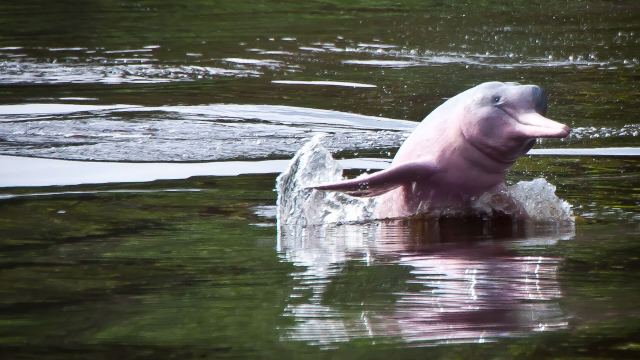
Pink river dolphins in the Amazon are suffering from massive mercury poisoning, according to the Associated Press.
What's happening?
The Colombian conservation group Omacha Foundation has been capturing and testing endangered pink river dolphins for years. It has previously found 16 to 18 milligrams of mercury per kilogram of body weight in the dolphins. Some record-breaking readings in the Orinoco River have been as high as 42 milligrams per kilogram.
"The maximum any living being should have is 1 milligram per kilogram," said Fernando Trujillo, scientific director of the Omacha Foundation, per the Associated Press. "Here, we're seeing 20 to 30 times that amount."
The organization has traced much of this mercury pollution to illegal gold mining operations.
Why is mercury important?
Ingesting mercury is the source of a wide range of health problems. Exposure can damage lungs, kidneys, skin, and eyes as well as nervous, digestive, and immune systems, according to the World Health Organization.
In the past few decades, there has been a 52% decline in Amazonian pink river dolphin populations and a 34% drop in gray river dolphin populations. Drawing a direct link to mercury exposure is still in progress.
Mercury is one of many toxins that bioaccumulate in wildlife and end up in human food streams. Persistent organic pollutants such as dioxins and DDT are also commonly found in large aquatic animals.
The health of pink river dolphins acts as a barometer for wider ecosystem health. That said, mercury poisoning is affecting marginalized groups that rely heavily on fish for their diet.
"Mercury is an invisible enemy until it builds up to a sufficient amount, then it starts to affect the central nervous system," said Trujillo, per the Associated Press. "We're already seeing evidence of it in Indigenous communities."
What's being done about mercury poisoning?
Colombia banned the use of mercury in mining operations in 2018. It submitted a national action plan in 2024 in alignment with the UN's Minamata Convention on Mercury. The same convention has worked to improve labor conditions at mine sites to reduce or eliminate mercury exposure.
TCD Picks » Quince Spotlight
💡These best-sellers from Quince deliver affordable, sustainable luxury for all




|
Do you worry about having toxic forever chemicals in your home?
Click your choice to see results and speak your mind. |
 Majorly 😥
 Like Colombia, neighbors in the region have been intercepting illegal mercury shipments intended for use in illegal gold mining operations.
While Trujillo's fight to save pink river dolphins in the Amazon continues, he sees it as a deeply personal one, too. At one point, his own blood mercury levels were at 36.4 milligrams per kilogram.
"We are one step away from being critically endangered and then extinct," Trujillo said.

Join our free newsletter for good news and useful tips, and don't miss this cool list of easy ways to help yourself while helping the planet.
Cool Picks






