


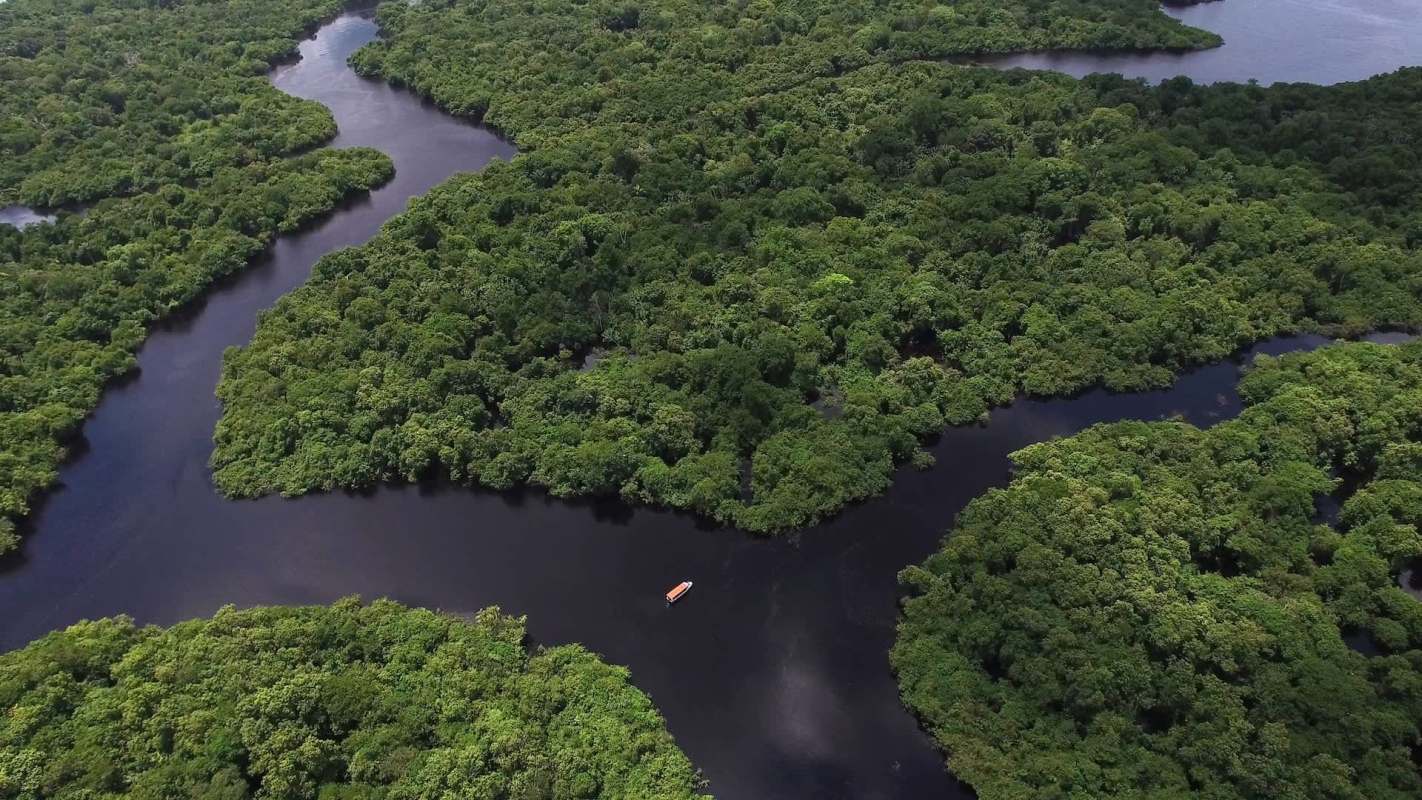
A study has revealed that humanity's footprint in the Amazon rainforest is reshaping the forest in ways scientists didn't expect — altering its deep evolutionary history and disrupting how the ecosystem functions today.
What's happening?
The study, published in the journal Global Change Biology, surveyed more than 55,000 trees across Eastern Amazonia.
Researchers compared undisturbed forests with "secondary" forests — areas that regrew after logging, fires, or clear felling — and found that the two are no longer anything alike.
Tree communities in regrown forests had fewer species, fewer evolutionary lineages, and fewer of the slow-growing giants that normally anchor the ecosystem.
Instead, fast-growing, disturbance-tolerant species dominated. In practical terms, the forest is coming back, but it's coming back as a different forest.
Brazilian-born Dr. Erika Berenguer, one of the study's leaders, put it bluntly, per a University of Oxford release: "Human influences are so profound that all measures are changing."
Perk up the winter blues with natural, hemp-derived gummies Camino's hemp-derived gummies naturally support balance and recovery without disrupting your routine, so you can enjoy reliable, consistent dosing without guesswork or habit-forming ingredients. Flavors like sparkling pear for social events and tropical-burst for recovery deliver a sophisticated, elevated taste experience — and orchard peach for balance offers everyday support for managing stress while staying clear-headed and elevated.
Learn more → |

Why is this important?
The Amazon isn't just biodiverse — it supports rainfall patterns, stabilizes regional weather, and helps keep South America's farms, cities, and drinking water supplies running smoothly.
When the forest shifts toward fewer species and shallower evolutionary roots, those services become less reliable.
Local communities feel it first. Reduced species diversity can alter rainfall timing, intensify dry seasons, and increase wildfire risk — all of which threaten crops, infrastructure, and livelihoods.
Because this shift happens silently, in places that look "green" from the outside, it's easy to miss the warning signs.
TCD Picks » Upway Spotlight
💡Upway makes it easy to find discounts of up to 60% on premium e-bike brands





|
Do you think America does a good job of protecting its natural beauty? Click your choice to see results and speak your mind. |
 Definitely 👍
 Researchers warn that these ecological shake-ups could delay progress toward a cleaner, safer future by making natural systems more fragile.
What's being done about it?
The good news is that people aren't sitting around waiting for things to fix themselves.
Governments across the Amazon basin are rolling out more protected zones and cracking down harder on illegal clearing.
Meanwhile, community groups are doing the day-to-day work — checking problem areas, restoring worn-out land, and using forest-friendly ways to keep income flowing.
You don't have to live anywhere near the Amazon to help. Supporting rainforest protection organizations, choosing products that avoid deforestation-linked ingredients, and backing policies that protect old-growth forests all push this trend in the right direction.
Similar wins have already happened elsewhere — from rewilding projects, wildlife corridors, and grassroots movements bringing damaged landscapes back to life — and they show what's possible when communities get involved.

Get TCD's free newsletters for easy tips to save more, waste less, and make smarter choices — and earn up to $5,000 toward clean upgrades in TCD's exclusive Rewards Club.
Cool Picks






