


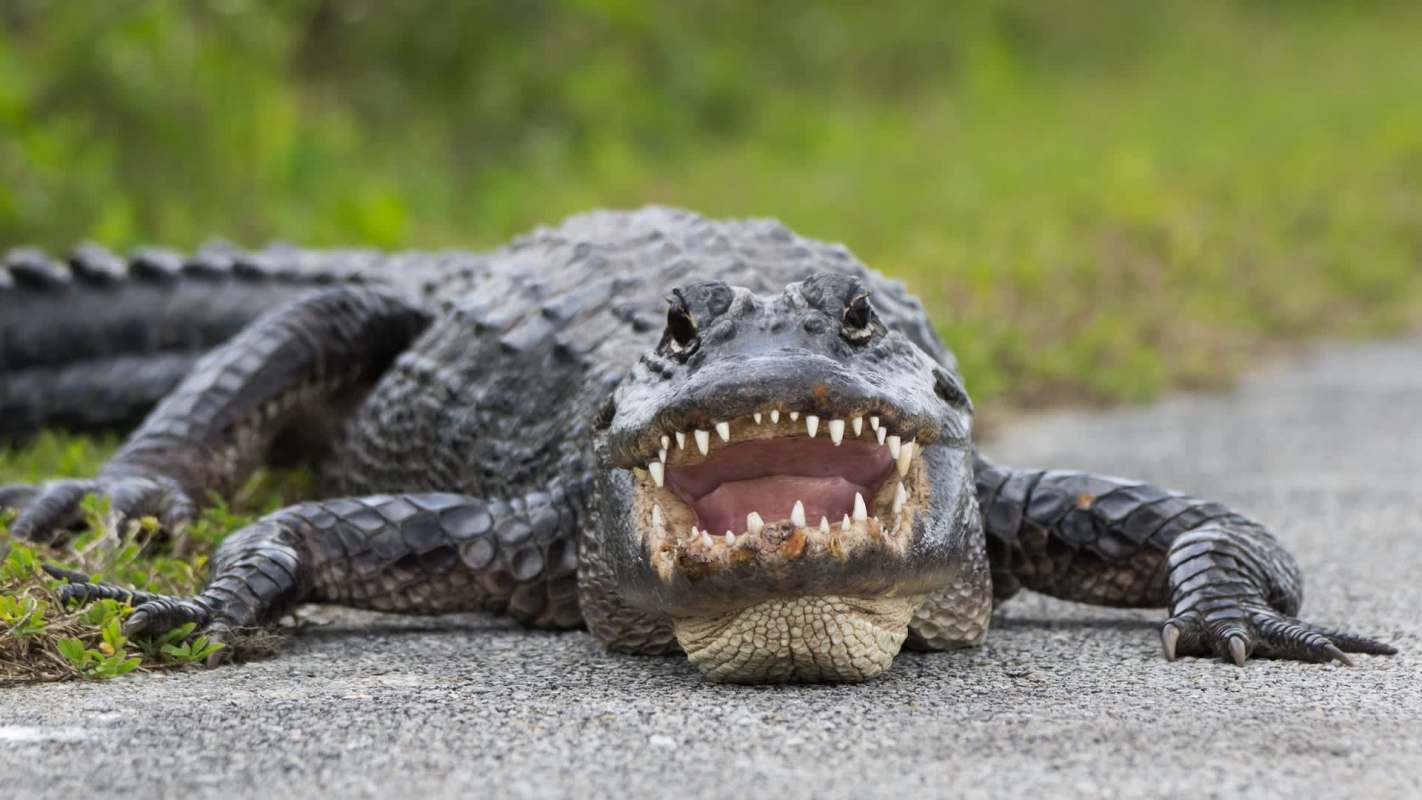
Medical examiners said teeth marks were instrumental in determining which alligator was involved in a deadly Florida river attack.
The marks on victim Brittany Clark's arm matched a row of teeth on the jaw of a 12-foot alligator, giving investigators their first physical link between the animal and the June 28 attack that killed the 31-year-old in a central Florida river.
What happened?
The teeth marks matched one of two alligators the Florida Fish and Wildlife Conservation Commission (FWC) killed after the attack, WBTV reported, citing WESH. A preliminary report from the Orange County medical examiner described teeth on the animal's head as "consistent with teeth marks on the left arm."
Clark had been hiking with her boyfriend and friends near the Barr Street Trailhead in the Little Big Econ State Forest when the group stopped to swim with their dogs. They stood in about 3 feet of water when the alligator clamped onto Clark's arm and began a death roll, the spinning maneuver alligators use to overpower prey, Grant Eller of the FWC told WESH.
Her boyfriend grabbed the animal and tried to pull her loose, but it dragged them both under. The alligator let go for a moment, then bit her other arm before releasing her. Clark died at a hospital.
Clark's death came during a stretch of three alligator encounters in central Florida in seven days.
TCD Picks » Quince Spotlight
💡These best-sellers from Quince deliver affordable, sustainable luxury for all




Why are attacks happening?
Joe Wasilewski, a conservation biologist who has worked with alligators for more than 40 years, told WESH the animal may have been defending its territory. A large alligator claims a stretch of river and doesn't share it.
Florida has grown past 23 million residents, and the FWC associates that growth with more alligator run-ins: more people live on the water, and more of them swim, paddle, and fish in it. The rivers and marshes alligators have used for generations now run past trailheads and subdivisions.
Hotter summers add to the problem. When the heat climbs, a river is the cheapest way to cool off.
Serious bites are rare but may increase in number if current trends continue. The FWC has documented 500 bites since 1948. Before Clark's death, 32 of them were fatal.
What can I do?
Treat any fresh or brackish water in Florida as alligator habitat, the FWC advises. Swim in designated areas, in daylight, when animals are less active. Shallow water isn't safe water, and murky water may hide a predator that relies on stealth.
Keep dogs leashed and away from the water's edge. Dogs resemble an alligator's natural prey, and the FWC warns that barking and splashing can draw one in.
If an alligator bites you, fight. Hit it, kick it, and go for the eyes. Alligators often release prey they can't easily overpower.
Report any threatening alligator to the FWC's nuisance hotline at 866-FWC-GATOR.

Get TCD's free newsletters for easy tips, smart advice, and a chance to earn $5,000 toward home upgrades. To see more stories like this one, change your Google preferences here.







