


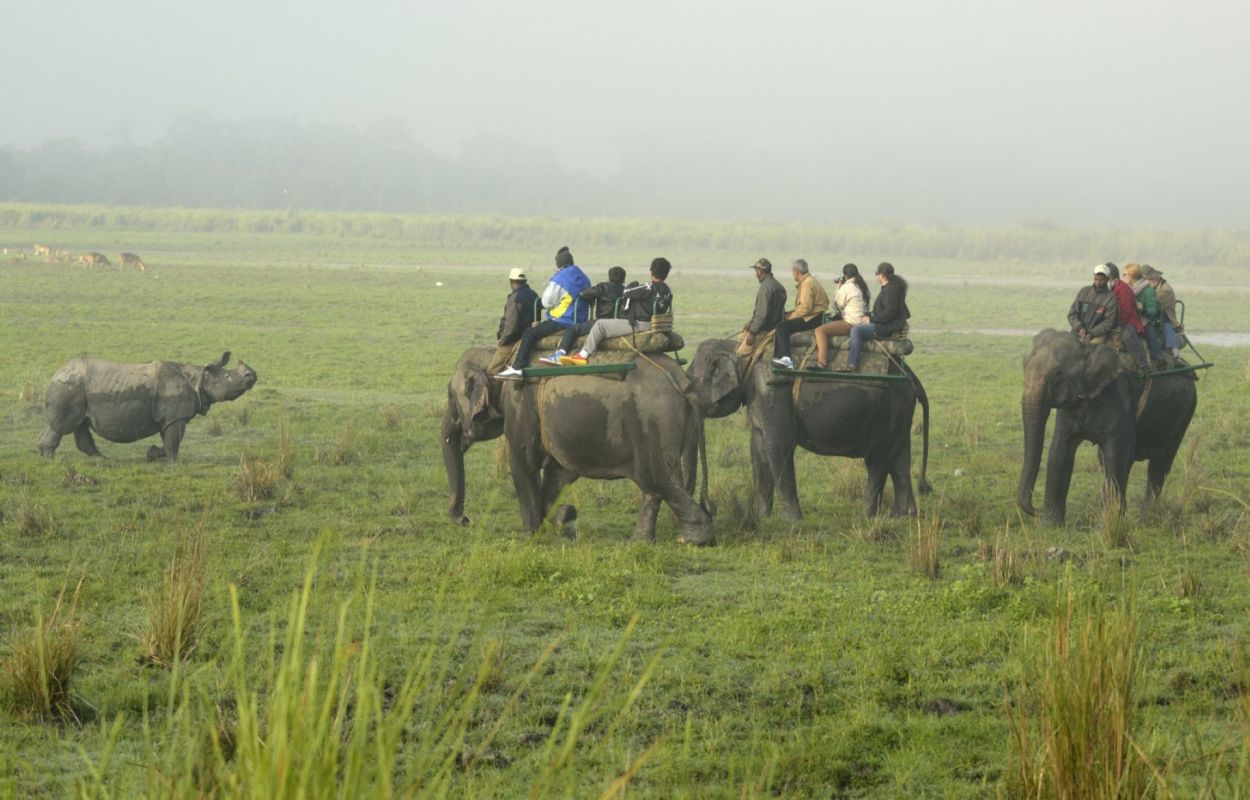
In Kaziranga National Park, India, rhinos are showing signs of distress. The Hindustan Times reported that tourists and vehicles are affecting their behavior. A study published in Scientific Reports showed that these encounters disrupt their natural patterns.
What's happening?
The study tracked 179 disturbance cases and over 5,000 observations of rhino behavior between 2016 and 2018. Researchers observed three defensive responses: alertness, flushing, and chasing.
As the study noted, per the Times: "These behavioral changes occurred at varying distances, with alertness being observed at the highest distance, followed by flushing and then chasing. … However, flushing and chasing behavior indicates a higher level of disturbance, which is intolerable and defensive."
The setting of the rhinos shaped how they responded. In the open grasslands, rhinos could see people coming from a long way off. In the woods, with trees blocking their way, they often came across humans later. Wind played a part, too, changing how quickly they picked up on intruders.
There are over 2,600 rhinos in Kaziranga National Park. This makes it a key refuge for the species. The pressure from visitors has grown alongside the rising number of tourists in the park. During the past tourist season, the park catered to more than 440,000 visitors.
Why is this concerning?
Rhinos that change their daily patterns to avoid people indicate they're disturbed. That strain can lead to missed feedings and less rest. Such disruptions could potentially affect calf survival, which is especially dangerous for species already at risk.
This also impacts tourists. Disturbance due to humans may trigger aggressive or defensive behavior, which could pose risks to guests. Communities can also lose out when rhino sightings become rare.
Park staff in Glacier National Park experienced the same struggle after careless guests spooked the animals there. Heavy foot traffic has damaged the Lost Valley in Scotland. Illegal camping also left deep scars on the ground at Haweswater.
A TikTok callout brought attention to litter piling up on American trails, where human activity is taking its toll on national parks such as Colorado's Rocky Mountains.
What's being done about it?
The study urged guests to keep at least 100 to 200 meters (328 to 656 feet) from the rhinos. Researchers also advised training safari drivers to maintain crowd control and safety.
TCD Picks » Quince Spotlight
💡These best-sellers from Quince deliver affordable, sustainable luxury for all




|
Do you think America does a good job of protecting its natural beauty? Click your choice to see results and speak your mind. |
 Definitely 👍
 Meanwhile, following guides and supporting local conservation initiatives are ways that communities can help strengthen rhino protection.
On a personal level, rewilding yards supports biodiversity closer to home. Discussing environmental issues with others can also foster greater respect for nature.

Join our free newsletter for good news and useful tips, and don't miss this cool list of easy ways to help yourself while helping the planet.
Cool Picks






