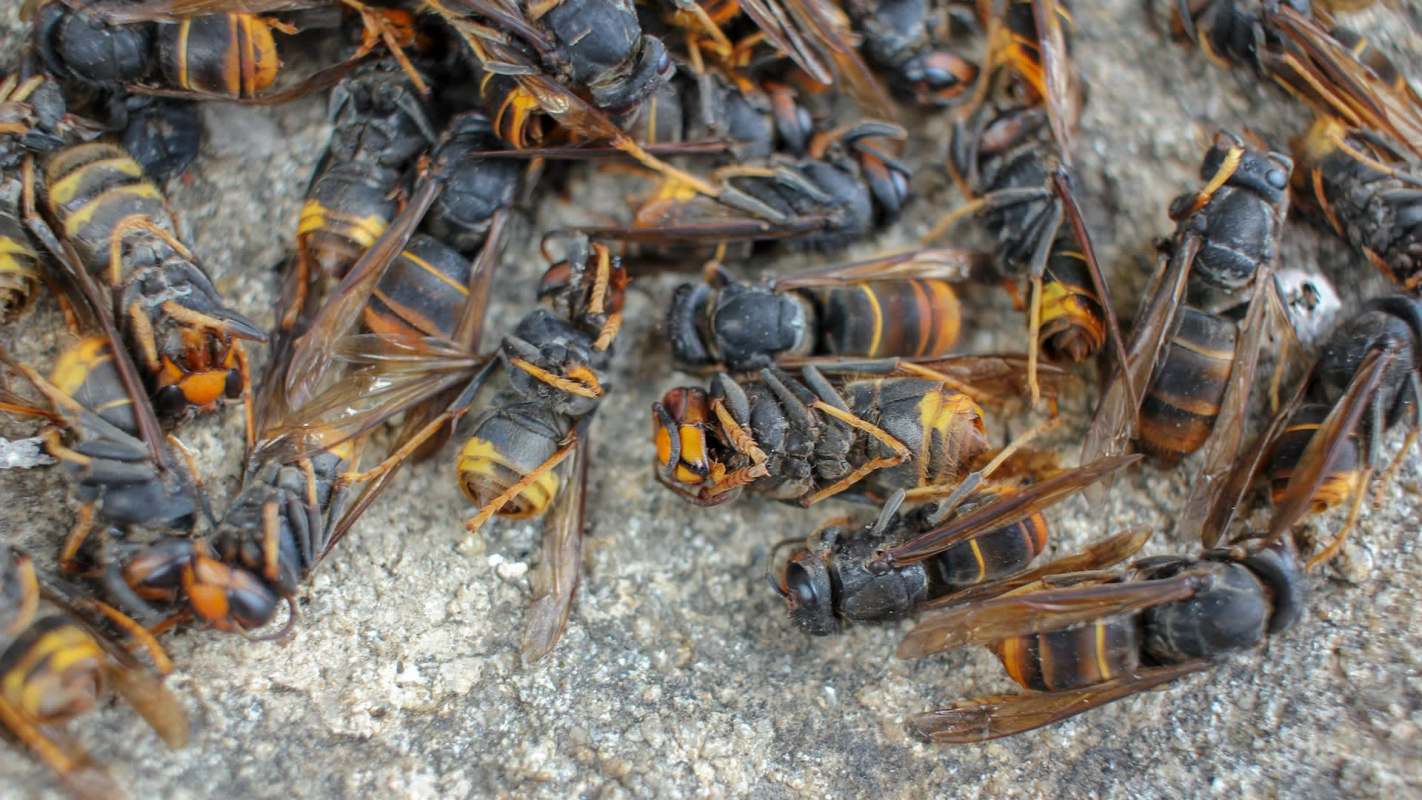
Georgia officials are working to stop the spread of the invasive yellow-legged hornet before it causes deeper harm to the state's bees, farms, and food systems.
So far this year, the state has trapped 866 hornets and eradicated 44 nests, an early but significant sign of how closely the species is being tracked, Fox Weather reported.
What's happening?
As the yellow-legged hornet enters a more active stretch of the year, Georgia is stepping up its response.
The insect is native to Asia, preys on honeybees, and has already spread through parts of Europe and the southeastern United States.
Georgia agriculture officials have trapped at least 866 hornets in 2026 and destroyed 44 nests. The species has been recorded in Bryan, Bulloch, Chatham, Effingham, and Liberty counties.
Georgia first detected the species in 2023, and officials have been trying to wipe it out since then.
TCD Picks » Quince Spotlight
💡These best-sellers from Quince deliver affordable, sustainable luxury for all




The state's public dashboard illustrates how large that effort has become: In 2025 alone, the department dealt with 95,530 yellow-legged hornets.
The insects are often likened to the northern giant hornet, which Fox Weather indicated is often called the "murder hornet."
But yellow-legged hornets bring a serious risk of their own by hovering around hives and attacking bees that are out foraging.
Why does it matter?
Honeybees and other pollinators support gardens, local ecosystems, and many of the crops communities rely on every day.
TCD Picks » Quince Spotlight
💡These best-sellers from Quince deliver affordable, sustainable luxury for all
When an invasive predator targets them, the effects can ripple out to impact farmers, food prices, and biodiversity.
Yellow-legged hornets can multiply rapidly from spring into fall, which makes early detection especially important. When initial nests are missed, queens keep producing workers, and larger secondary nests can emerge later in the season.
According to Fox Weather, the Georgia Department of Agriculture's Plant Protection Division has recently observed more "hawking" near beehives, with hornets hovering outside colonies and picking off bees as they arrive and leave.
Officials view that behavior as a sign that secondary nesting is already underway.
Containing the species now may help limit further establishment across the region.
What's being done?
State agriculture officials want residents to help catch the problem before it grows.
Fox Weather noted that two of the clearest warning signs are hornets hovering around beehives — especially before noon and after 5 p.m. — and large round or oval nests high in trees or other elevated spots.
Secondary nests are typically gray or brown and have a layered, paper-like appearance.
Depending on temperatures, they may remain visible from late summer through winter, giving residents time to report them before the insects spread farther.
Officials told Fox Weather that people should not try to remove a nest themselves.
Instead, suspected nests should be reported to the Plant Protection Division at yellow.legged.hornet@agr.georgia.gov, or referred to a licensed pest management professional so officials can make sure the queen is eliminated.
"Georgia has made significant progress in tracking and eliminating the Yellow-legged Hornet, but our success depends on continued public support," said Georgia Department of Agriculture Commissioner Tyler J. Harper.
"The sooner a nest is identified and reported, the sooner our team can respond. We are asking every Georgian to remain vigilant and help us keep this invasive species from gaining a foothold in our state."

Get TCD's free newsletters for easy tips, smart advice, and a chance to earn $5,000 toward home upgrades. To see more stories like this one, change your Google preferences here.