


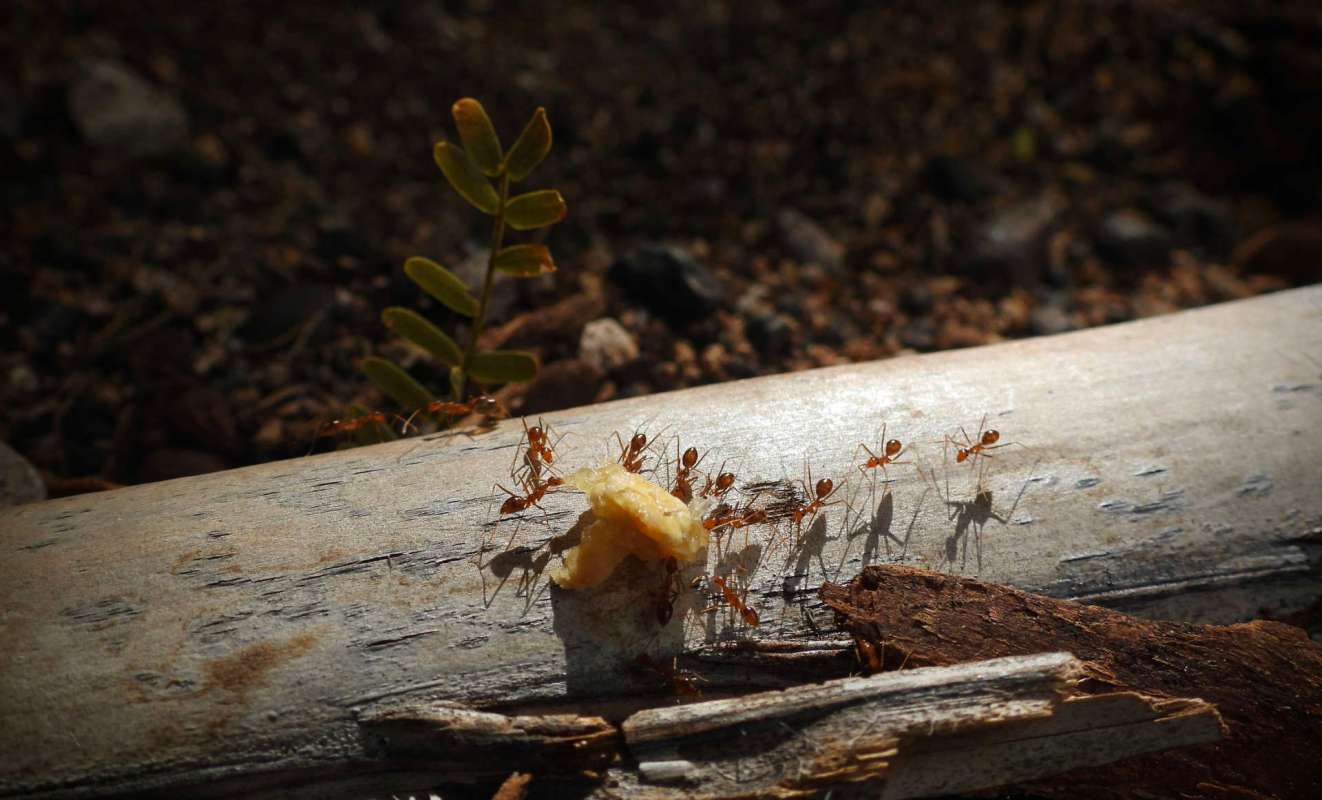
Researchers have said the movement of a small invasive ant now common in cities worldwide can be understood using concepts more often associated with physics.
By recording yellow crazy ants individually in Okinawa, Japan, the team found that a random-walk approach, also used to describe bacterial motion, fits the insects' start-and-stop motion.
Here's what to know
The research, published in the journal PLOS Computational Biology and summarized by Earth.com News, examined Anoplolepis gracilipes, or the yellow crazy ant, an aggressive invasive species that is gaining ground in urban settings.
Jack Featherstone, a PhD student in the Nonlinear and Non-equilibrium Physics Unit at the Okinawa Institute of Science and Technology, and his team gathered worker ants from developed spots near the campus, including parking lots, paths, and seating areas.
Each ant was filmed alone for about 20 minutes in a clear arena, and the final dataset included nearly 100 ants and more than 24 hours of footage.
The analysis suggested that much of the ants' movement could be captured by three basic actions: straight, steady motion; pauses that occurred at random moments; and a randomly chosen turn before moving off again.
TCD Picks » Quince Spotlight
💡These best-sellers from Quince deliver affordable, sustainable luxury for all




As Featherstone explained, per Earth.com News, "Ants are very famous for their collective interactions, mediated by pheromones or other sophisticated communication systems, but the individual motion of an ant is the building block that makes this collective behavior possible."
More background
Because yellow crazy ants are spreading globally as an invasive species, understanding how single ants search for territory and resources may help researchers better anticipate how colonies grow through human-dominated landscapes.
The ants studied here came from paved, developed areas, highlighting how urbanization can create opportunities for invasive species to establish themselves.
The researchers also identified that walls strongly changed the ants' behavior, which added a limitation to the work. The insects spent much of their time moving along the arena edges, which meant the team had to remove data gathered near the walls to isolate the ants' more natural movement.
Larger, more complex test environments will be needed to better understand how these ants behave outside a simplified lab setting.
What's being done?
Researchers created a model that others can test and build on. Featherstone made the trajectories publicly available and posted the tracking code on GitHub.
The next step will be determining whether the same movement rules apply in more realistic environments, especially when food, textured surfaces, obstacles, or other ants are present.
Invasive species are notoriously difficult to stop once they become established, so earlier detection and better predictions of spread can have benefits for communities, and reduce harm on infrastructure and local ecosystems.
A clearer picture of how these ants move through disturbed landscapes could help managers respond sooner.
"Trying to control invasive species is a pretty complex and difficult task, with prevention being particularly challenging; most of the time, the best we can do is find the invaders as early as possible and try to manage their spread," Featherstone said, per Earth.com News.

Get TCD's free newsletters for easy tips, smart advice, and a chance to earn $5,000 toward home upgrades. To see more stories like this one, change your Google preferences here.






