


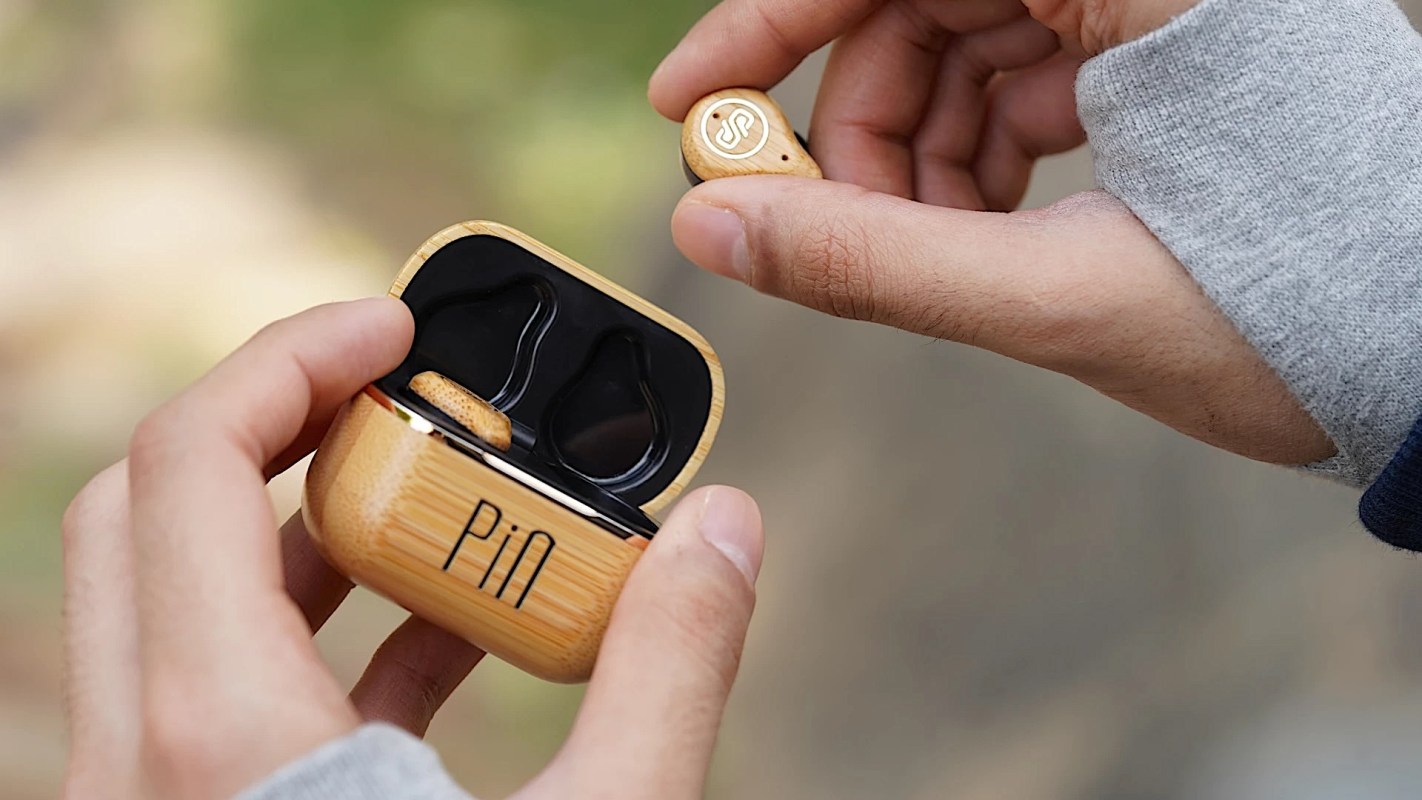
Wireless earbuds are ubiquitous, but most are made from plastic that eventually turns into e-waste. University of California, Berkeley, engineering student Sudeshna Naik knew she could do better — so she designed The Pin, a handcrafted wooden alternative that's impressing people with its mix of style, sustainability, and high-tech features.
Naik explained that many sustainable products fail because people feel they're sacrificing function. "If people feel they're compromising on performance, they won't choose sustainability," she said, per New Atlas. "The PIN was designed to change that."
Her earbuds are crafted from sustainably sourced walnut, cherry, or bamboo, and each pair is unique because of its natural grain. They minimize plastic use, include recycled components, and are finished with water-resistant coating. On the technical side, they support AAC audio codec, dual noise cancellation, and more than 32 hours of use with the charging case.
The project launched on Kickstarter this year and was fully funded within two hours, as it gathered nearly 500 backers in the first week, per New Atlas. Consumers increasingly want electronics that are both stylish and environmentally friendly.
A 2024 review published in the Journal of Cleaner Production found that crowdfunding has become an especially attractive option for sustainability-oriented ventures, since backers are often motivated by ecological and social goals in addition to financial ones. That context helps explain why Naik's design gained traction so quickly.
Using Forest Stewardship Council-certified wood that's sustainably managed instead of plastic lowers the product's environmental footprint, and the packaging is also biodegradable. By replacing plastics and rethinking design, products like these can cut the impact of planet-warming gases that are involved during production and packaging.
Shipping is expected to begin in October, New Atlas said. Pricing starts at $134, with higher-tier options, such as gold-engraved cases, at $399. The companion app works without subscription fees and offers an artificial intelligence translation feature in more than 150 languages, customizable sound profiles, and location tracking for lost earbuds. For every 10 units sold, the company pledges to plant a tree — 78 trees have already been planted.
Naik's project shows how small consumer electronics can be reimagined without leaning on more plastic or dirty energy. These earbuds mix natural materials, advanced audio features, and sustainable practices in an accessible way.
If consumers embrace them, it could send a signal to major plastic-using industries that people want performance and responsibility in the same package. If the industry as a whole begins to shift, fewer everyday gadgets might end up in landfills in the years ahead.
|
Which of these factors would most effectively motivate you to buy a refillable product?
Click your choice to see results and speak your mind. |
 Saving money 💰
Join our free newsletter for weekly updates on the latest innovations improving our lives and shaping our future, and don't miss this cool list of easy ways to help yourself while helping the planet.
TCD Picks » Quince Spotlight
💡These best-sellers from Quince deliver affordable, sustainable luxury for all




Cool Picks





