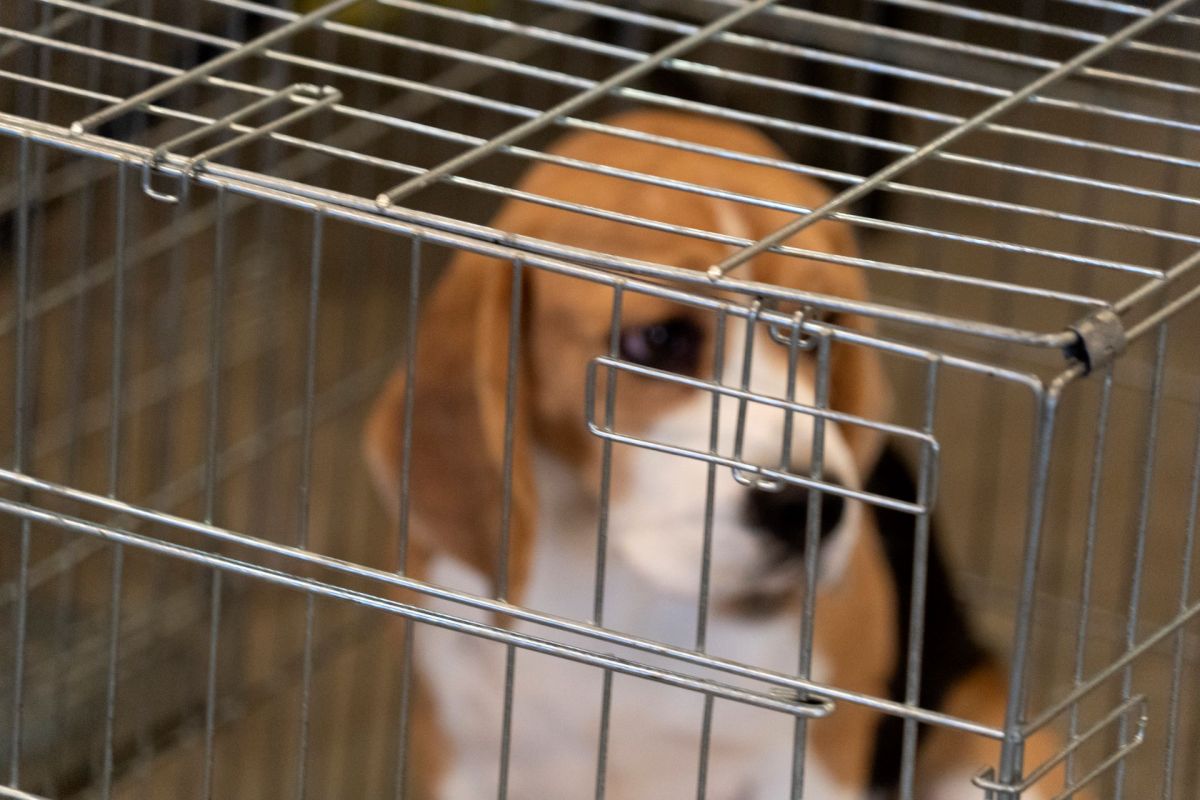
The shutdown of a Wisconsin breeding facility and the rescue of 1,500 dogs have intensified questions about how research laboratories obtain dogs.
A New York congressman says those questions should now lead to the end of taxpayer support for breeding dogs for experiments.
What happened?
Following the closure of Ridglan Farms in Wisconsin amid allegations of severe neglect, Rep. Nick Langworthy, R-N.Y., said he wants legislation that would ban taxpayer-funded breeding of dogs for laboratory research.
His attention is now on Marshall BioResources, also known as Marshall Farms, in Wayne County, New York, according to WENY. Langworthy said the company is the biggest United States breeding facility supplying dogs and other animals to universities, testing facilities, and other companies.
Langworthy said the operation is about 10 times the size of Ridglan, with 60,000 animals and 100 employees.
"That's not enough people to care for 60,000 animals," he said.
TCD Picks » Good Store Spotlight
Get 10% off your next purchase with code TCD10



Marshall pushed back on that description, saying, "Marshall BioResources employs more than 200 people in New York," and also arguing that activists are "overstating the figures" on animal totals.
Kathleen Conlee, the vice president of animal research issues for Humane World for Animals, formerly the Humane Society of the U.S., said breeders occupy the first stage of a system the public rarely sees.
"They are the pipeline. That's where the animals start their lives and then they end their lives in the laboratory and never get to see the light of day," she said, according to WENY.
Why does it matter?
The issue touches animal welfare and taxpayer spending, and raises questions about how useful the research remains. Because beagles are small and have gentle temperaments, they are often used in laboratory work, including toxicity testing for drugs, pesticides, and consumer products.
"The public is blind to what's happening in these places," Conlee said, pointing to the lack of visibility around breeding facilities and research pipelines, per WENY.
There is also growing debate over whether animal testing remains the best scientific tool.
The Food and Drug Administration's Roadmap to Reducing Animal Testing states, "Over 90% of drugs that appear safe and effective in animals do not go on to receive FDA approval in humans predominantly due to safety and/or efficacy issues." The Foundation for Biomedical Research, meanwhile, said, "22 of the top 25 most prescribed drugs have benefited from humane research and testing with dogs."
The National Anti-Vivisection Society said research laboratories housed and used about 41,105 dogs in 2025, and beagles made up most of that number.
What's being done?
Langworthy said he wants the backlash to result in federal law.
"We want to see this process banned. I want to do so legislatively. I want to codify this. Cut off the money and prevent this horrible research from going on," he said, according to WENY.
Marshall BioResources said it raises "dogs, cats, ferrets, and minipigs for required scientific, medical, and veterinary research conducted by our customers."
The FDA's roadmap envisions methods that depend less on animals and more on newer tools that may better predict human outcomes.
"This is barbaric, it's cruel," Langworthy said.

Get TCD's free newsletters for easy tips, smart advice, and a chance to earn $5,000 toward home upgrades. To see more stories like this one, change your Google preferences here.