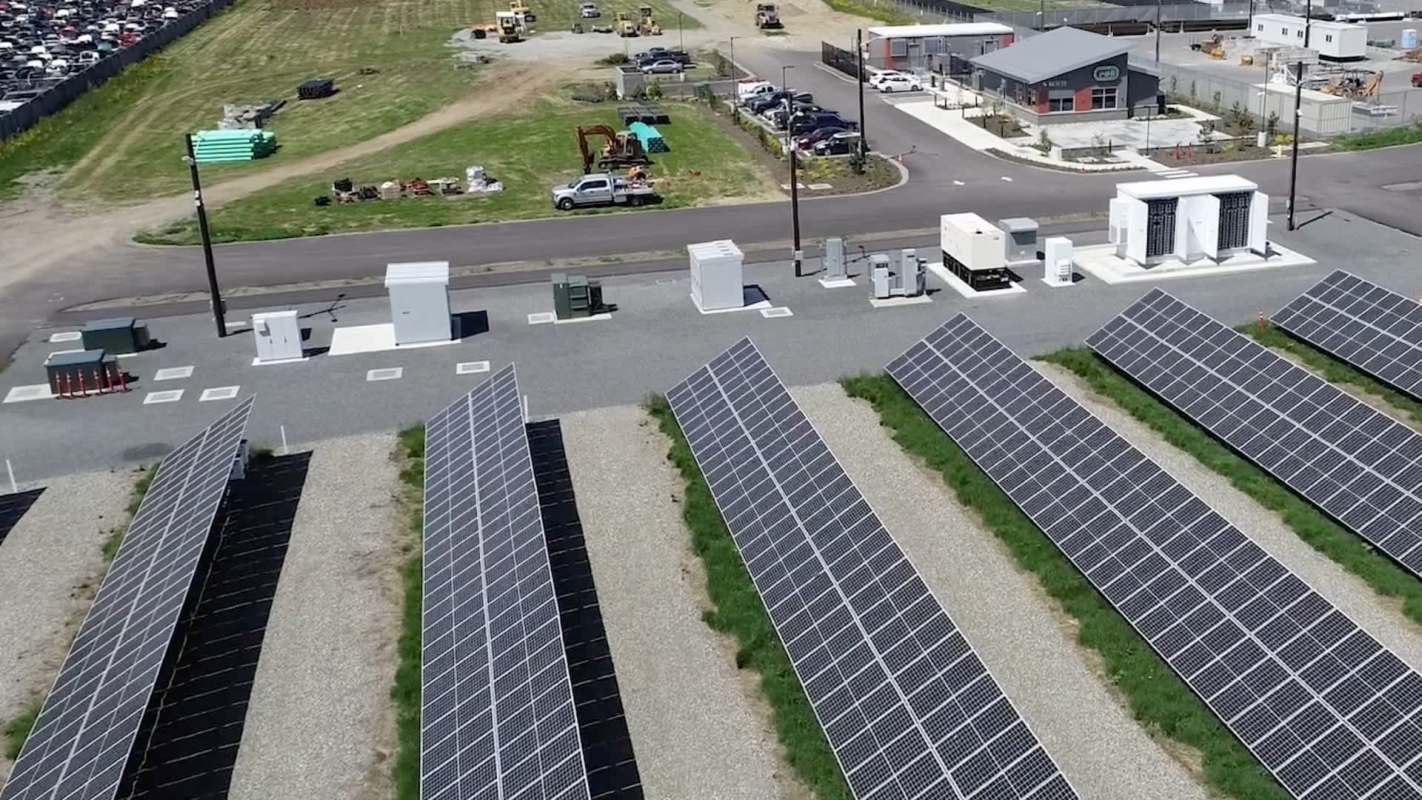
Washington State's Snohomish County Public Utility District is preparing to bring a large-scale battery energy storage system online in Arlington in fall 2026, even as several King County communities have paused similar projects, highlighting a growing divide over the future of energy storage.
Utilities see large batteries as an important way to store clean electricity and lower costs when demand surges, while some residents remain concerned about safety risks.
What's happening?
In fall 2026, the Snohomish County Public Utility District plans to bring online a large-scale battery energy storage system that KNKX described as Washington's first and largest. The project is expected to add enough grid capacity to supply many thousands of homes for several hours.
While opposition has grown in other places, Arlington has a policy meant to support permitting for projects like this one. That has allowed the utility to move ahead with the project at its clean energy campus, where Tesla-made batteries are housed in vented white enclosures spread across a gravel lot.
Gabriel Duran, who is supervising construction for design firm Ameresco, said one of the most notable features is the sophistication of the system that manages the batteries.
"Especially the computer system managing it, and all the data that we can both interpret and respond to, is pretty cutting edge," Duran said.
TCD Picks » Quince Spotlight
💡These best-sellers from Quince deliver affordable, sustainable luxury for all




Even as at least eight King County communities, including Snoqualmie, have temporarily blocked the siting of battery energy storage systems, even larger projects are already underway elsewhere in Washington. One facility under construction in Sumner is expected to be roughly eight times bigger, so Arlington's project may not hold the state's size record for long.
Why does it matter?
Large batteries let utilities save electricity produced by renewable sources such as wind and solar, then deliver it later when homes and businesses need that power most.
That can be especially important during extreme weather, when electricity demand and prices tend to spike.
Program manager Jessica Spahr said the benefit becomes especially clear during major weather events.
"When we have those significant weather events — either a cold snap or a heat wave — and we have to purchase that really high peak-demand power, this will help smooth that out a little bit more and keep those costs low," she said.
Battery storage can reduce how much electricity utilities have to buy on the open market at the most expensive times. That can help protect utility budgets and support more affordable service for customers.
In Snoqualmie, opponents of a planned battery storage facility have repeatedly pointed to the fire at a storage facility in Moss Landing, California, which burned for days and led to evacuation orders affecting more than 1,000 people. Incidents like that have fueled safety concerns in some communities.
What's being done?
To address those concerns, Snohomish County PUD said it chose what it sees as the strongest option and placed the system on its clean energy campus.
Spahr said the Arlington site is equipped with advanced fire detection and fire suppression systems.
That supportive permitting approach in Arlington differs from the temporary bans adopted in parts of King County.
More battery projects are already moving forward in Washington, including the much larger Sumner installation. If those systems work as intended, they could give utilities more ways to store low-cost renewable energy, reduce price shocks, and keep electricity service more stable during periods of high stress.

Get TCD's free newsletters for easy tips, smart advice, and a chance to earn $5,000 toward home upgrades. To see more stories like this one, change your Google preferences here.