


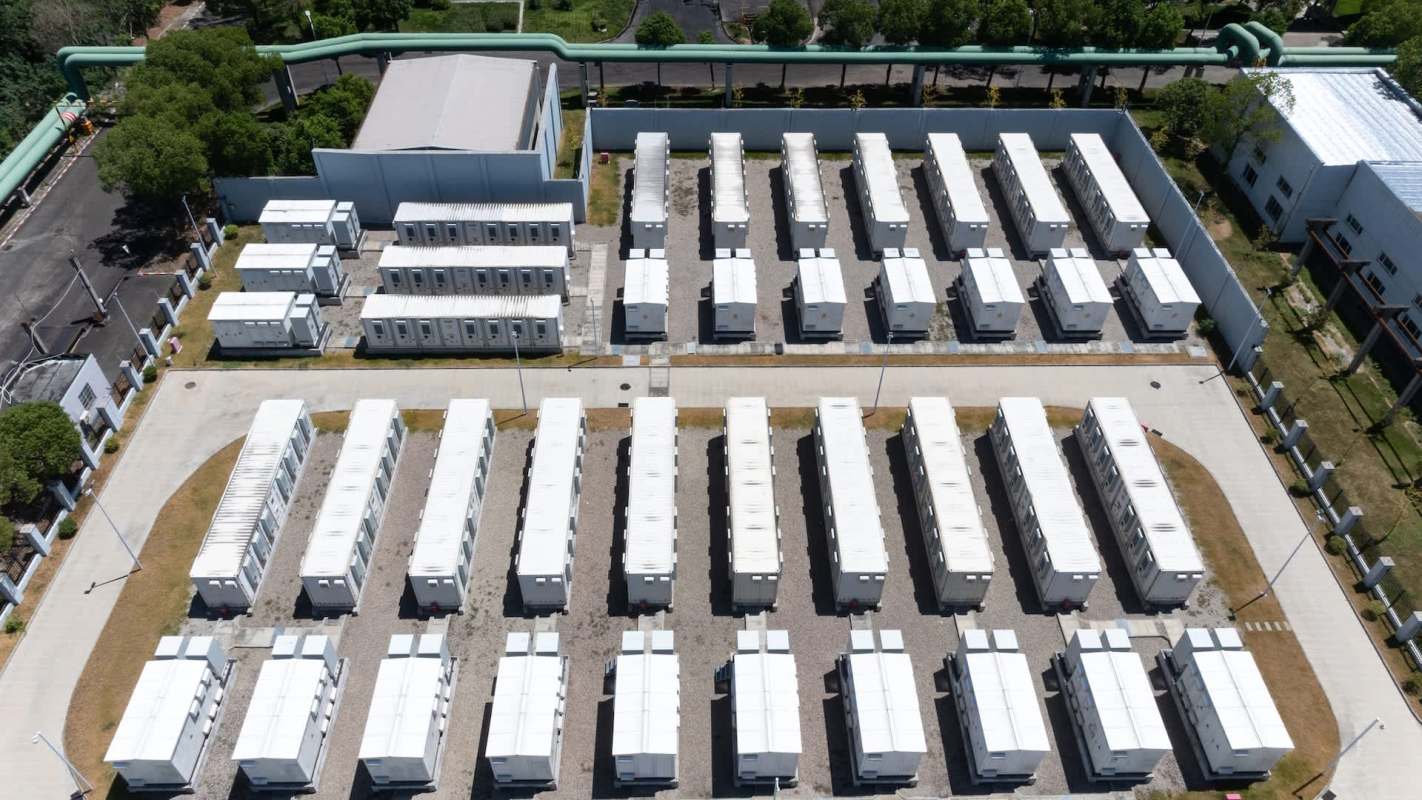
Across western Washington, plans for large battery storage sites are running into delays as cities and counties pause permitting and residents ask for clearer answers about fire risks before projects are built near homes, schools, and farmland.
As the Washington State Standard reported, backers of clean energy say an expanding wave of moratoriums could have far-reaching consequences.
What's happening?
More local governments in the state have temporarily stopped issuing permits for new utility-scale battery storage facilities, the outlet noted. Over that same stretch, developers removed roughly a dozen early-stage battery projects from Puget Sound Energy's interconnection queue, the Standard reported.
These large-scale battery facilities, known as BESS, are designed to store electricity when power is abundant and send it back to the grid when demand rises.
The Standard noted that utilities see them as an important tool for balancing renewable energy, especially near western Washington's population centers, where transmission constraints from east of the Cascades remain a significant obstacle.
Still, many residents are focused on what could happen if something goes wrong.
TCD Picks » Quince Spotlight
💡These best-sellers from Quince deliver affordable, sustainable luxury for all




As the Standard noted, Anacortes resident Elke Siller Macartney wrote in a public comment that there is "a dawning awareness of the awful effects of BESS installations such as thermal runaway fires and toxic smoke, and the horrible noise from cooling fans."
"The moratorium gives cities the time to better study the issue, press pause and look into all of these matters," Snoqualmie Councilmember Dan Murphy said in a council meeting, according to the publication.
Why does it matter?
As more wind and solar power is added in Washington, utilities are looking to battery storage to help keep electricity dependable. The Standard reported that Puget Sound Energy plans to have 1,500 megawatts of storage by 2030, and its first 200-megawatt project is already being built in Sumner.
For people living near proposed locations, though, the worries are immediate. Residents have pointed to difficult-to-put-out fires, toxic smoke, contaminated runoff, and constant noise, and many say they should not be asked to accept those hazards unless stronger protections are in place.
At the same time, widespread resistance to storage projects could create broader energy challenges.
Isaac Kastama, government relations director for Clean & Prosperous, talked about the danger to the Standard.
"This is not infrastructure that is just nice to have," he told the paper. "It's critical infrastructure. We are facing increasing risks of brownouts and blackouts."
The moratoriums could lead to a better outcome if they are used to create stronger safety standards and build public confidence, rather than serving as a barrier to cleaner and more reliable energy.
What's being done?
To ease those concerns, battery companies, unions, and clean energy advocates are highlighting safety improvements in newer systems.
Insurance underwriter Michael Carrington of Tokio Marine GX told the Standard that "the likelihood of any kind of fire is very low." He cited improvements such as off-gas sensors that can detect overheating early and greater spacing between battery modules to help keep flames from spreading to the paper.
Meanwhile, local governments are using the temporary pause to write new rules focused on setbacks, screening, and emergency response. The hope is that the fits and starts in Washington are good-faith efforts to ease community fears. The alternative is unsettling to BrightNight, one of the developers stuck in the pause.
"If these moratoriums are communicating, we just don't want these solutions; that's very troubling at the end of the day because, you know, if not this, then what?" Scott Bolton, senior vice president of external affairs, said to the Standard.

Get TCD's free newsletters for easy tips, smart advice, and a chance to earn $5,000 toward home upgrades. To see more stories like this one, change your Google preferences here.






