


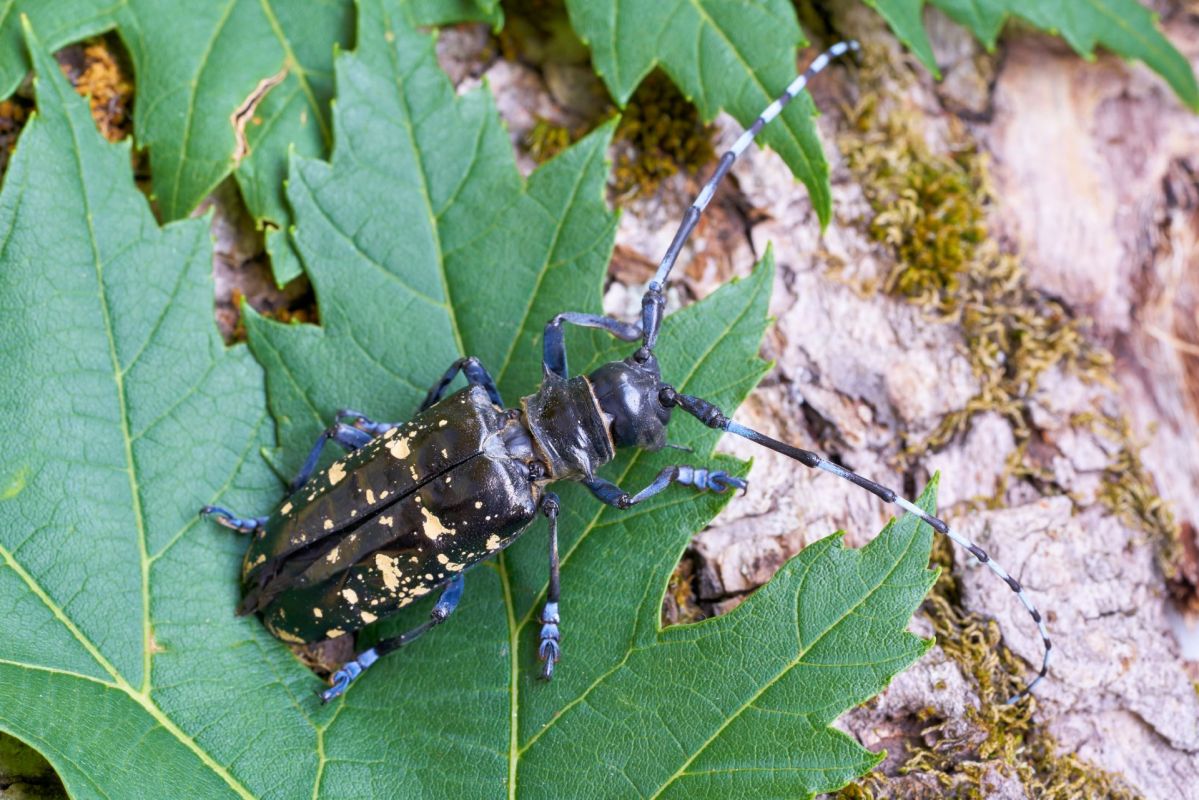
Tree Check Month is a reminder for residents to take a closer look at trees in their neighborhoods and parks to look for signs of the invasive Asian longhorned beetle. Officials are hoping to catch new infestations early before the pest can spread to more hardwood trees.
What's happening?
In Michigan, the state's Invasive Species Program and the U.S. Department of Agriculture's Animal and Plant Health Inspection Service are asking people to stay alert for the Asian longhorned beetle. The insect is not native and is known to attack more than a dozen hardwood tree species.
APHIS designates August as Tree Check Month since both the beetles and the damage they leave behind are easier to spot this time of year, according to APHIS, as reported by EUP News. Since the signs left behind are often more visible than the adult bugs themselves, officials are urging people to carefully inspect tree trunks and branches in areas such as yards and public spaces.
Adult beetles can be identified by a few recognizable characteristics: a glossy black body with white spots, black-and-white antennae that extend beyond the length of the body, and six legs with bluish-looking feet. They are generally about 1 to 1.5 inches long.
Residents are also being asked to look for evidence on the tree itself. Warning signs include pencil-width round exit holes, bark scars left where eggs were deposited, wood-shaving-like debris near the base, and dead limbs dropping from hardwood trees that otherwise seem healthy.
Why does it matter?
A tree does not recover after it becomes infested. Females can lay as many as 90 eggs, and the larvae that emerge bore into the heartwood, weakening the tree from the inside.
TCD Picks » Quince Spotlight
💡These best-sellers from Quince deliver affordable, sustainable luxury for all




That damage can turn infested trees into safety risks, increasing the chances that branches will snap or that entire trees will fall during storms.
Because the pest feeds on commonly planted hardwoods such as maples, elms, birches, horse chestnuts, and willows, an outbreak can threaten both residential streets and public green spaces.
Officials say control becomes difficult once the beetle is established. In many cases, managing an infestation means removing the affected tree as well as other nearby trees considered vulnerable.
Early detection matters even more since North America doesn't have effective predators that eat these beetles or diseases that can keep Asian longhorned beetle populations under control.
What can I do?
APHIS says eradication efforts have already succeeded in Illinois; Boston, Massachusetts; New Jersey; multiple areas in New York; and part of Ohio. Efforts are still underway in parts of Massachusetts, New York, Ohio, and South Carolina.
A visual check is one of the easiest ways to catch an infestation. Hardwood trees in yards, parks, and along neighborhood streets may all show signs, especially in August, when adults emerge and leave the round exit holes behind.
If you believe you have found the beetle or damage associated with it, officials recommend reporting it through the ALB hotline at 866-702-9938 or via the ALB webpage. Taking a photo can help, and if possible, the beetle can be captured in a durable container and frozen so it can be preserved for identification.
People can also help prevent the insect from spreading by avoiding the movement of untreated firewood. The beetle does not travel far on its own, but it can be transported to new areas in infested wood.
As APHIS warns, travelers should "leave firewood at home and purchase what you need locally" or use "certified, heat-treated firewood" to keep "this destructive pest" from spreading to new places.

Get TCD's free newsletters for easy tips, smart advice, and a chance to earn $5,000 toward home upgrades. To see more stories like this one, change your Google preferences here.







