


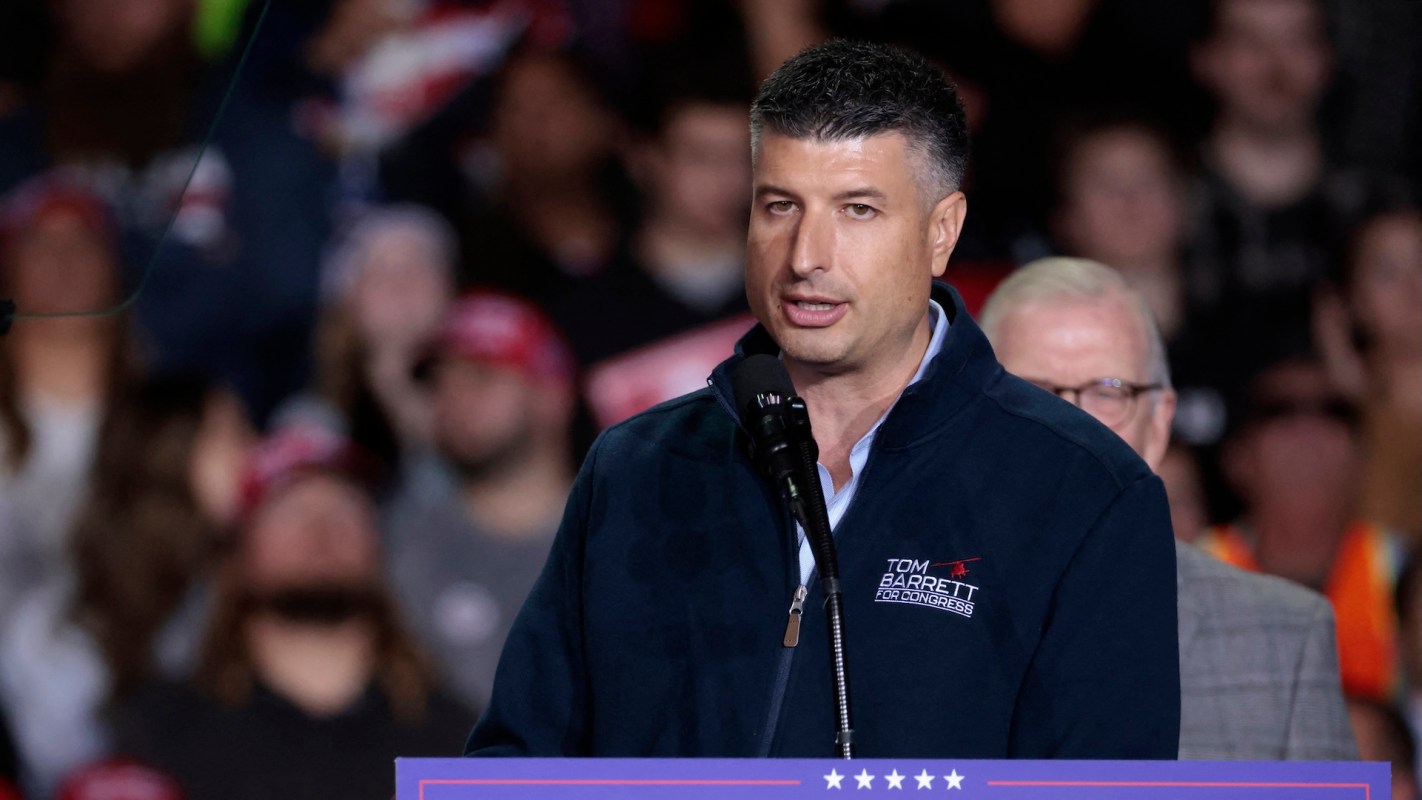
Republican Representative Tom Barrett is trying to reposition himself as a critic of data centers in Michigan's closely watched 7th Congressional District, but the effort is drawing scrutiny over his past record.
As The American Prospect reported, his latest ad highlights a 2015 vote against subsidizing a data facility in Grand Rapids. Opponents say that example is a poor fit for the current dispute, which involves a far larger AI-driven buildout that could use enormous amounts of land, electricity, and water while reshaping nearby communities.
Here's what to know
Barrett says in the ad, "Michigan water, Michigan land, and Michigan's future belong to Michiganders," and adds that he "voted against giving your tax dollars to data centers." He is aiming that message at voters who are worried about large facilities being pushed into their towns.
Here's Barrett's data center ad, he attempts a local control message but otherwise he's chasing Lawrence, who's already established authenticity on this.
— David Dayen (@ddayen) August 19, 2026
A revealing (also probably a losing) Republican catch-up message. pic.twitter.com/v5EWzBZrcb
Data center opposition, however, is already a central theme for Barrett's opponent, progressive organizer Will Lawrence. Lawrence said, "I've been running against Tom Barrett since last August, focused on issues that we know have the potential for cross-partisan support. Data centers are perhaps the exemplar of that."
Large new data centers can bring persistent noise, strain infrastructure, and put pressure on farmland and water resources. When tax breaks are part of the equation, residents can also end up subsidizing projects they never asked for in the first place.
Critics also point to Barrett's wider voting record. Among the votes they cite is his support for the One Big Beautiful Bill Act, which the Prospect said helped extend corporate tax benefits for AI-linked companies such as Microsoft, Google, Amazon, Meta, and Nvidia.
TCD Picks » Quince Spotlight
💡These best-sellers from Quince deliver affordable, sustainable luxury for all




More background
In Michigan, the fight has become especially intense because it touches on who controls local land, water, and other shared resources. The Prospect reported that one proposed project in Mason would cover 400 acres of farmland, and many residents see that plan as a direct threat to their communities.
Barrett has tried to frame the issue in terms of local control. In the ad, he said, "I believe you should decide on data centers, not Washington." But critics argue that stance clashes with his support for measures that could weaken environmental review or make it easier for major projects to move forward.
That includes Barrett's backing of the SPEED Act, a permitting bill that would reduce federal environmental reviews, including for data centers. That could mean less scrutiny of impacts on air, water, land use, and overall quality of life before construction begins.
The concerns extend beyond the facilities themselves. Lawrence tied data center expansion to broader surveillance issues, pointing to Flock license plate reader systems and warning about "these massive storehouses of data on all of us."
What's being done?
Grassroots organizing has been one of the main responses. Lawrence gained traction by attending town halls and working with activists opposed to specific projects in the district.
Political organizations are also ramping up their criticism, the Prospect reported. Ravi Mangla, a spokesperson for the Working Families Party, said, "Tom Barrett wants to reinvent himself as a data center fighter, but his record says the opposite. He voted to give data center developers billions in tax breaks and left Michiganders holding the bag."
There have also been efforts in Congress to curb the use of related surveillance tools. A bipartisan amendment introduced in May would have barred federally funded highway recipients from using automated license plate readers except for toll collection, though it ultimately failed in committee.
Public meetings, permitting fights, and elections can all shape whether communities are forced to absorb the environmental and economic costs of Big Tech expansion without meaningful input.
"We have an opportunity to unite people across the political spectrum," Lawrence said.

Get TCD's free newsletters for easy tips, smart advice, and a chance to earn $5,000 toward home upgrades. To see more stories like this one, change your Google preferences here.






