


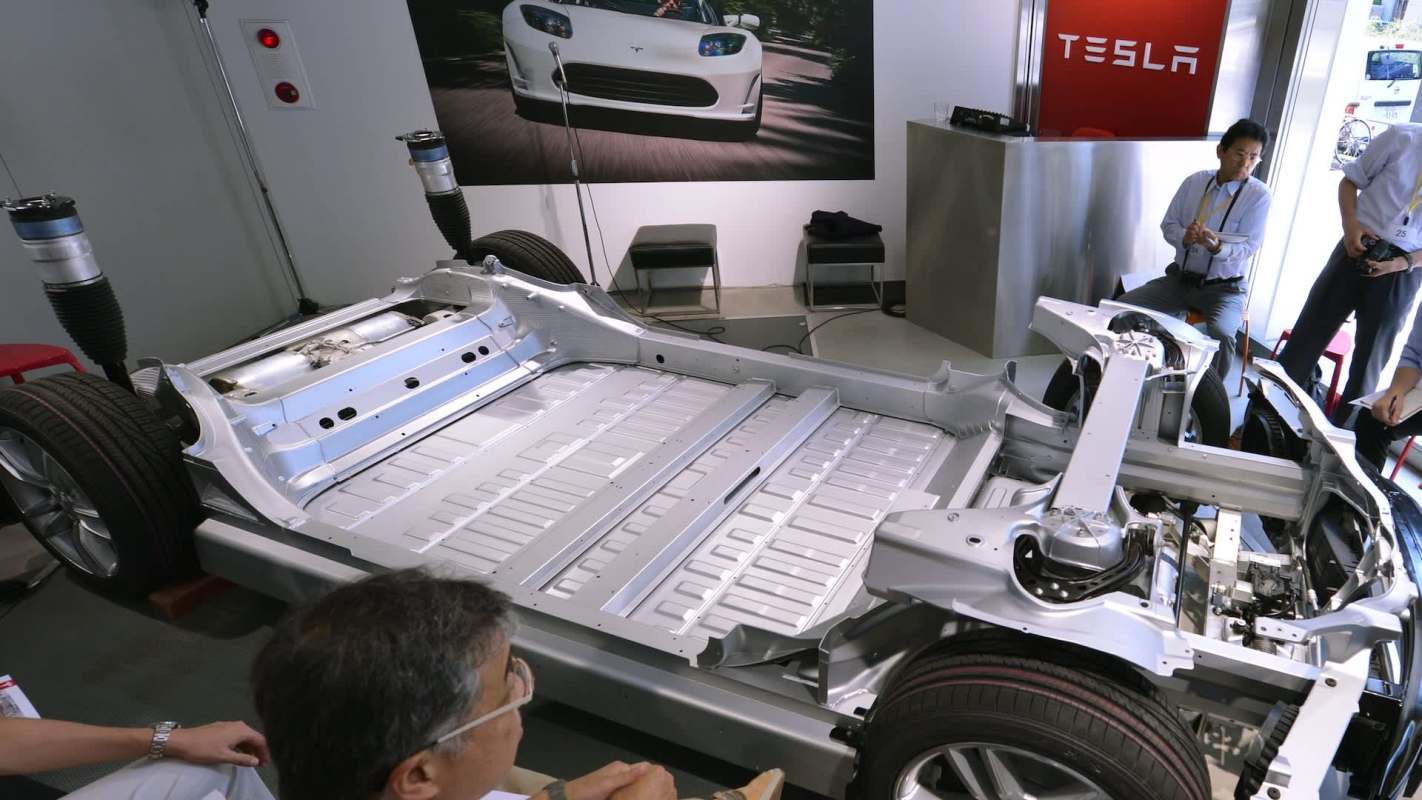
Researchers studying electric vehicle technology made an unexpected discovery while taking apart a car battery from Tesla and another battery from BYD — an examination that provided insights about current technology and possible implications for the next generation of EV batteries.
ZME Science broke down the battery study, which was published in Cell Reports Physical Science. The team compared a Tesla battery and a BYD battery, as the companies are the leading automakers on the EV scene.
Tesla's 4680 battery appeared to prioritize power and range, holding a higher energy density in a more compact design, ZME Science detailed. This, however, makes the battery more expensive to produce. Meanwhile, the BYD battery is made at a lower cost while prioritizing stability, safety, longevity, and affordability, per the news outlet.
Though the differences stuck out the most, the team found some similarities, including at least one aspect that was unexpected.
"We were surprised to find no silicon content in the anodes of either cell, especially in Tesla's cell, as silicon is widely regarded in research as a key material for increasing energy density," said the study's lead author Jonas Gorsch in a news release.
Each battery had its strengths and weaknesses. While the Tesla battery was manufactured at a cost disadvantage, it is better suited for high-performance and luxury vehicles, according to ZME Science. However, its design can lead to more heat buildup, potentially causing more issues for fast charging and shortening its lifespan.
On the other hand, the BYD lithium iron phosphate battery is more resistant to thermal runaway, reportedly making it safer. The researchers indicated that its features also make it better suited to the mass market and affordable EV models.
EVs are widely considered an essential part of our transition to cleaner energy. Not only are they more affordable to operate over their lifetimes than fuel-burning cars, but they're capable of slashing pollution that dirties the air and contributes to the planet's overheating.
EV drivers save money on fuel and maintenance in the long run, and those savings are enhanced by charging at home with solar power and battery storage. Solar is not only cheaper and more dependable than relying on the public grid, but generating your own electricity also slashes your overall home energy bill.
For homeowners interested in learning more, TCD's Solar Explorer helps connect people with vetted installers and save money on solar installation.
TCD Picks » Quince Spotlight
💡These best-sellers from Quince deliver affordable, sustainable luxury for all




|
Which of these savings plans for rooftop solar panels would be most appealing for you?
Click your choice to see results and earn rewards to spend on home upgrades. |
 Save $1,000 this year 💸
 The teardown of the batteries was one of the first looks at the inner workings of the cells from two of the most popular EV makers, according to news outlets.
"There is very limited in-depth data and analysis available on state-of-the-art batteries for automotive applications," Gorsch said in the news release.
In their report, the researchers wrote, "This article provides insights into the design and characteristics of state-of-the-art LIBs for automotive applications. The comparative analysis of the Tesla 4680 cylindrical cell and the BYD Blade prismatic cell highlighted significant mechanical, electrical, and material differences that could influence future cell design iterations."

Get TCD's free newsletters for easy tips to save more, waste less, and make smarter choices — and earn up to $5,000 toward clean upgrades in TCD's exclusive Rewards Club.
Cool Picks





