


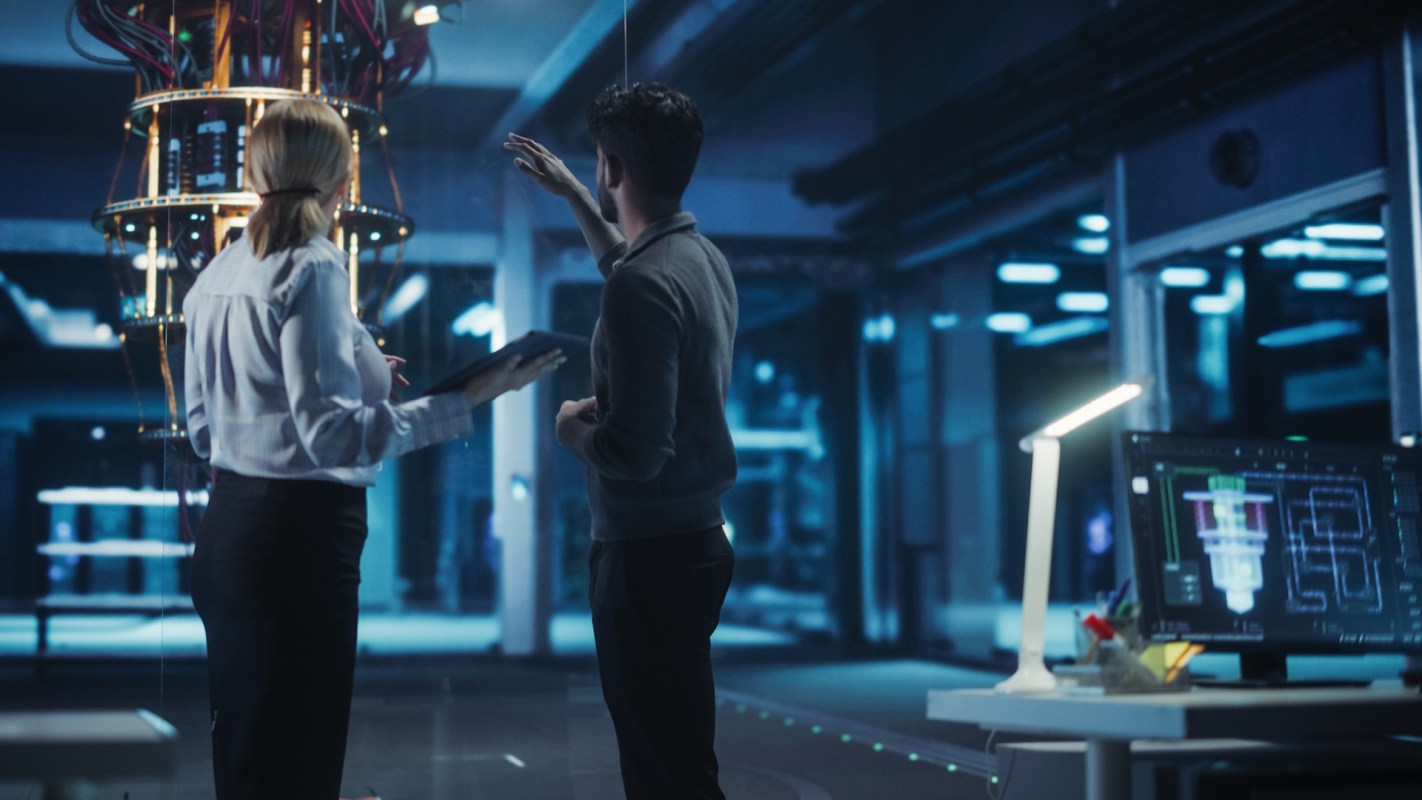
In a major push to accelerate the development of fusion energy, U.S. researchers have unveiled a next-generation computing platform aimed at reducing months-long simulation timelines to near-real time.
The platform, dubbed Stellar-AI (Simulation, Technology, and Experiment Leveraging Learning-Accelerated Research enabled by AI), is being pioneered by the Department of Energy's Princeton Plasma Physics Laboratory, as reported by Interesting Engineering.
It directly tackles one of fusion research's biggest bottlenecks: the immense computational cost of modeling plasma, the ultra-hot, electrically charged gas at the heart of any fusion reactor.
Traditional high-fidelity simulations, which are essential for understanding plasma behavior and designing reactors, can take months to complete on even the most powerful supercomputers, slowing down experimentation and design iteration.
Stellar-AI changes the game by tightly coupling artificial intelligence with high-performance computing. The system integrates central processing units, graphics processing units, and even quantum processing units to handle different facets of the computation. CPUs are used for general tasks, GPUs for training sophisticated AI models, and QPUs for solving certain complex calculations that conventional chips struggle with.
A key innovation is connecting the computing backbone directly to experimental fusion devices, such as PPPL's National Spherical Torus Experiment-Upgrade, which is expected to be operational later this year. By analyzing experimental data as it's generated, Stellar-AI can support real-time adjustments and rapid model refinement — a huge leap from waiting months for results.
Beyond speeding up physics simulations, the platform supports broader commercial fusion goals.
"One effort will create a digital twin of NSTX-U: a computer model that mirrors the physical machine so closely that scientists can test ideas virtually before running actual experiments," researchers noted in a PPPL press release.
"Another project, called StellFoundry, uses AI to speed the design of stellarators, a type of fusion device with a twisted, pretzel-like shape that some scientists believe could offer advantages over other designs."
Stellar-AI also involves a new collaborative model with private industry partners. The initiative brings together national labs, universities (including Princeton and MIT), tech companies like NVIDIA and Microsoft, and private fusion firms such as Commonwealth Fusion Systems. The partnership aims to equip researchers and startups alike with the tools needed to iterate on designs faster and bring commercial fusion power plants closer to reality.
TCD Picks » Quince Spotlight
💡These best-sellers from Quince deliver affordable, sustainable luxury for all




|
What's the most you'd pay per month to put solar panels on your roof if there was no down payment?
Click your choice to see results and speak your mind. |
 $200 or more 💰
 In a field where years of computation could previously stand between discovery and implementation, Stellar-AI represents a breakthrough that could transform fusion from a decades-away dream into a more immediate energy future.
Fusion is often viewed as safer and cleaner than traditional nuclear power, but challenges remain. Unlike today's nuclear fission plants, fusion does not produce long-lived radioactive waste or carry the same meltdown risks. However, fusion reactors can still create some radioactive materials that require careful handling, and the technology remains extremely complex and expensive to develop.
Despite these hurdles, tools like Stellar-AI could help scientists solve key engineering challenges faster and reduce overall development costs. If successful, fusion could provide abundant, reliable, clean energy — helping reduce planet-warming pollution while meeting rising global electricity demand.

Get TCD's free newsletters for easy tips to save more, waste less, and make smarter choices — and earn up to $5,000 toward clean upgrades in TCD's exclusive Rewards Club.
Cool Picks





